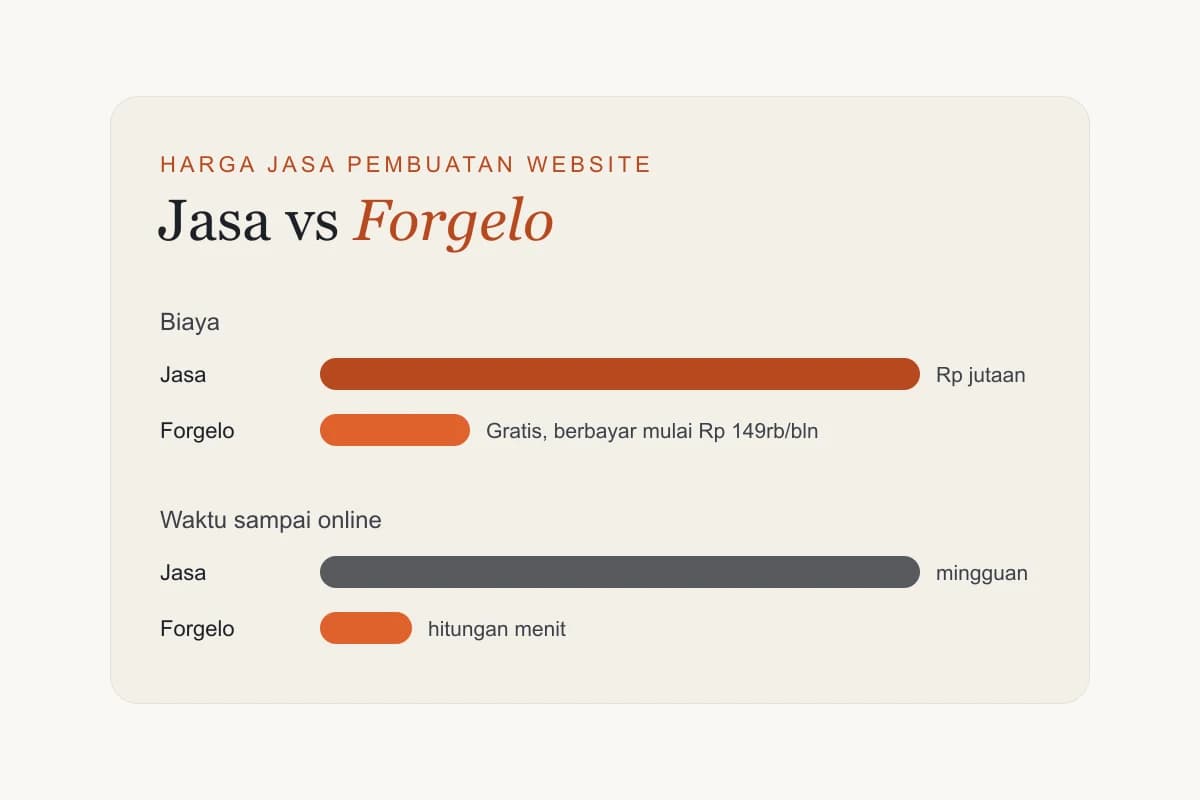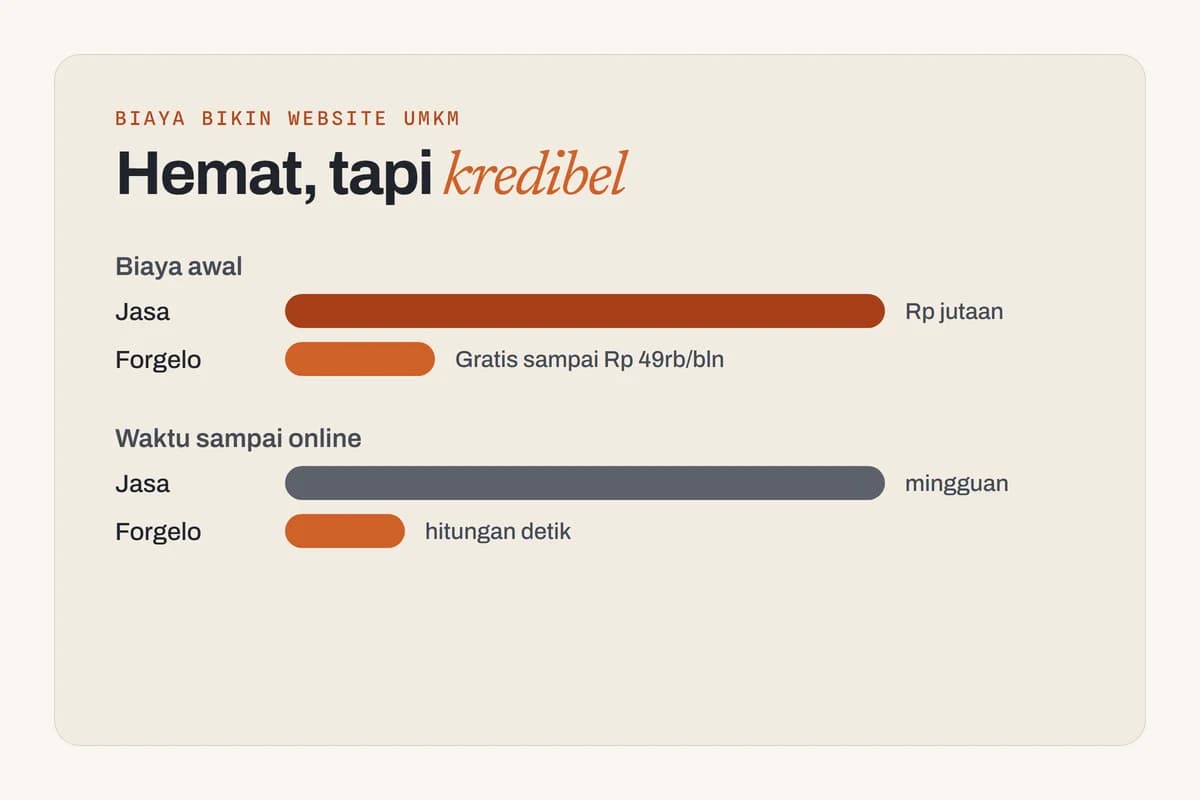
The cost of building a small business website in 2026 can actually be pushed close to zero, even though many people still assume it takes a fortune. Through a service, a simple company profile site does range from a small fee up to a steep price tag depending on who builds it. But there is now a far cheaper route: just describe your business in one sentence to an AI website builder, and the site goes live in a few minutes, free on a subdomain.
This article breaks down the cost of a small business website honestly: the rough range for each type of builder, which cost components tend to catch owners off guard halfway through, why small businesses often pay more than they actually need, and when the cheaper AI route truly makes sense. Every figure here is a rough range for the Indonesian market, not a firm quote, because prices depend heavily on the city, the builder's experience, and how complex your needs are.
How much does a small business website cost in 2026
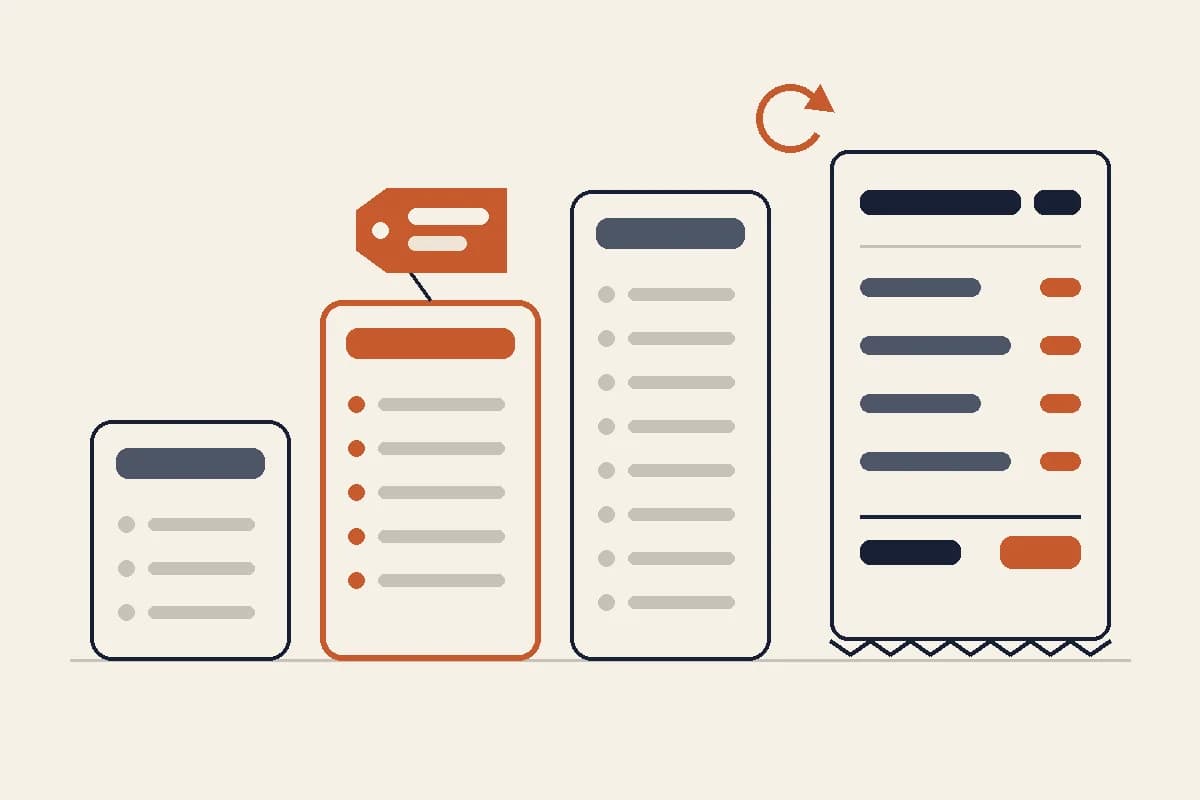
The cost of a small business website moves across a very wide range, so naming a single number would only mislead. It is more useful to look at it by type of builder, then match that to what your business really needs. Here is the rough picture.
| Build route | Cost range | Best suited for |
|---|---|---|
| AI website builder | Free on a subdomain, from about $9/month when you connect a domain | Standard small businesses: company profile, small shop, landing page |
| Freelancer | A small fee up to a few hundred dollars (one time) | Tight budget, needs a little manual touch |
| Software house / agency | A few hundred up to several thousand dollars | Multi-page, custom design, tidy process |
| Large custom project | Thousands to tens of thousands of dollars | Web app, system integration, complex e-commerce |
For most small businesses, the need sits at the very top and very bottom of the price spectrum, not in the middle. In other words, most warungs, shops, local services, and home-based businesses really only need a clean company profile or small shop. From what we often see, this is exactly where many small businesses get their budget wrong: they pay a mid-tier project price for what is actually a simple need. If you want to compare service pricing more deeply, take a look at the breakdown of website development pricing that covers each tier in more detail.
Cost components that often catch small businesses off guard
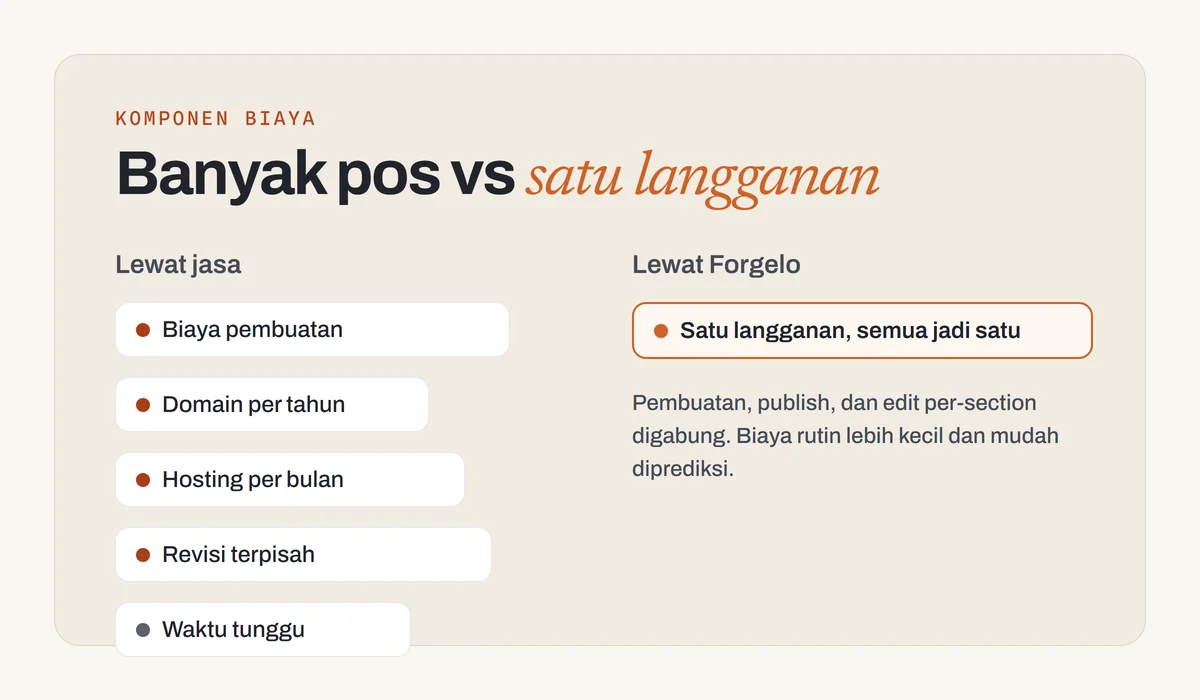
The number in a proposal usually only shows the build cost. In reality, the total cost of owning your website is more than that, and these extra components are what often surprise small business owners after they sign.
- Domain: your site's address, rented per year. The amount is relatively small, but it is still recurring and easy to forget when it comes due.
- Hosting: where your site lives, paid monthly or yearly. The more traffic you get, the higher the plan.
- Revisions and updates: changing a price, adding a promo, or updating product photos is often billed separately, or wrapped into a monthly maintenance package.
- Waiting time: not direct money, but still a real cost. From brief to launch can take several weeks, and during that time your business cannot be found online.
Try adding it all up over one year. Say the upfront build cost is a few hundred dollars, plus annual domain and hosting, then two or three rounds of revisions billed separately. The total first-year cost can be far larger than the number written in the original proposal. This figure, not the build cost alone, is what your comparison should be based on.
What rarely gets discussed is that this revision cost is the one that quietly balloons the most for small businesses. Small businesses often need to change content: stock changes, prices go up, there is a holiday promo. Every small change that has to pass through the builder's queue means extra cost and time. This is where the way you think about cost needs to shift, from build it once to how easy and cheap the site is to maintain every month.
Why small businesses often pay more than they need
It is important to be fair: a high service price does not mean it is expensive for no reason. What you pay for is expertise and accountability, not just the look of a page. A good website builder spends time understanding your business, structuring the pages, writing the content, then making sure everything works after launch. For complex needs, that is worth it.
The problem is that many small businesses pay a "complex" price for a need that is actually simple. A five-page company profile does not need the team and process of an e-commerce project. A small shop with twenty products does not need an enterprise-grade inventory system. When your needs are standard, most of the service fee actually goes to things that can now be automated.
In our view, the root of the problem is a lack of clarity. Many small business owners do not know exactly what they need, so they say yes to every feature offered because it sounds important. Yet a more useful question is simple: does this feature change how customers find, contact, or buy from me? If the answer is no, it is very likely a cost you can save. To understand when a service is truly worth it, the guide to website development services in 2026 covers it thoroughly.
How to save: from one sentence to a website
This is where an AI website builder changes the cost math for small businesses. Instead of writing a brief and then waiting several weeks, you just describe your business in one sentence, and a complete website is built in a few minutes. Not a thin landing page, but a full site with a hero, a list of services, social proof, and a call to action.
Forgelo is designed for people who are not developers, so the flow is deliberately as simple as possible. You write something like "a home-based cake shop in Yogyakarta with a catalog and ordering via WhatsApp", and the site is forged in a few minutes. What makes it different is that you do not touch code and you do not drag blocks around on a canvas. To change something, you click the part you want to change and type the instruction, for example swap the menu photo or add a price table for the packages. Forgelo rebuilds only that part, leaving the rest intact.
For small businesses, two things stand out the most. First, the savings are real because it cuts out labor, waiting time, and revision queues, not just offers cheaper hosting. Second, daily control stays in your hands, so changing a price or adding a promo does not require waiting on anyone. Leads from your form can also go straight to WhatsApp, where small businesses actually close, and you can read how to set that up in the guide to turning visitors into WhatsApp leads. You can see the full flow on the how Forgelo works page, or start from a template by industry.
Cost comparison: service vs AI website builder
To keep it concrete, let us line them up directly from a small business owner's point of view. The shape of the comparison is consistent, even though the exact numbers are always relative to your needs.
| Aspect | Service (freelancer/agency) | AI website builder (Forgelo) |
|---|---|---|
| Upfront cost | A small fee up to tens of thousands of dollars, one time | Free on a subdomain |
| Recurring cost | Domain and hosting every year, revisions often separate | From about $9 per month when you connect your own domain |
| Time to go online | A few days to weeks | A few minutes |
| How to change content | Send a revision, wait in the queue | Type an instruction, that part is rebuilt |
| Daily control | Through someone else | Directly in your hands |
| Best suited for | Complex and custom projects | Company profile, small shop, small business |
Notice the "time to go online" row. This is the gap most often underestimated, yet its impact on small businesses is huge. A business that is online this week can be found right away and start receiving questions from potential customers, while one still waiting on a first draft has produced nothing yet. Speed is not just about convenience, it is about when your website starts working to bring in buyers. If you want to compare the cheaper route in more detail, read cheap service vs building it yourself with AI.
When a small business should still hire a service
This does not mean a service always loses. There are situations where paying a professional is the best decision for a small business that is leveling up, and forcing the cheapest route would only cause headaches. Lean toward a service if your need fits one of these.
- System integration: a site that has to connect to a point-of-sale, warehouse stock, or a complicated booking flow. This is developer territory.
- Deep art direction: a brand that needs a very specific visual identity, custom illustration, or an unusual interactive experience.
- A web app, not a website: when what you actually need is an application with a dashboard, user roles, and complex transactions.
If your need is on this list, the higher service cost is worth the result. But honestly, here is what is rarely admitted: most small businesses are not at that point yet. In the early stage, what you need most is to be present online credibly and quickly, then validate whether customers actually show up. The cheaper approach gives you room to test that without locking up a lot of capital upfront.
A cost-saving checklist for small business websites
The most cost-effective strategy is not always choosing the cheapest option, it is matching your need to the right route. A few practical steps to cut costs without sacrificing quality:
- Start with the free plan first, and only pay when you genuinely need to connect your own domain.
- Use a template by industry as a starting point, then adjust it with instructions instead of starting from scratch.
- Split your budget firmly: AI for standard pages, set aside a service budget only for the parts that are truly custom.
- Hold off on complex features until there is proof that customers actually need them.
- Calculate the cost for a full year, not just the build cost, so your decision is based on honest numbers.
The fastest way to decide is to try it yourself. You can write one sentence about your business and watch the finished website appear in a few minutes, free, no credit card required. If it works for you, just connect your own domain with a small subscription. If it turns out your needs really are complex, you now have a clear picture before hiring a service, and your bargaining position with a website builder is stronger too. To choose a transparent builder, the checklist for choosing a website service can be your guide.
Try Forgelo for free and turn one sentence into a ready-to-publish website. From prompt to website in a few minutes, then just chat with it to refine.