If you run a network marketing business and you're shopping for MLM website help, there's one thing worth understanding before you wire a deposit to any vendor: the phrase "MLM website" covers two very different things. The first is a heavy corporate system with member logins, a downline genealogy tree, a digital wallet, and a commission engine. The second is far simpler, just a page that sells a product or recruits a prospect and points them to your WhatsApp. The price gap between the two can be hundreds of times over, and plenty of people pay for the first when all they really need is the second.
This article separates the two layers, explains the replicated-site feature that vendors love to headline, gives you rough cost ranges, and shows a cheaper path if you're just a distributor who wants more leads. Every figure here is a loose range, because pricing depends heavily on the size of the network, the complexity of the system, and who does the work.
The two layers of an MLM website people mix up
The first layer is the company website. This is what the MLM brand itself owns. It's heavy: member login areas, a genealogy or network tree, a product catalog, transaction history, bonus and commission tracking, and a generator that spins up a replicated site for each member. This isn't really a website, it's an application. Building it is the same as building software, complete with a database, security, and long-term maintenance.
The second layer is the member's own site. A distributor doesn't need to build a commission engine. What they need is a place to tell their story, explain the product, build trust, and capture people who are interested. The job is marketing, not operations. And this is exactly where most money gets misspent, because people assume they need something as complex as the first layer.
Take a real example: a health-supplement rep or a skincare reseller isn't building a company system. They just need one clean page that shares their experience, shows a few hero products, and has a chat button. If you are the company, you genuinely need serious developers. If you are the member, you almost certainly don't.
Note: Before you ask "what does an MLM site cost," figure out which layer you're in. Guessing wrong is the fastest way to burn budget on features you'll never touch.
Replicated sites: the headline feature with a hidden catch
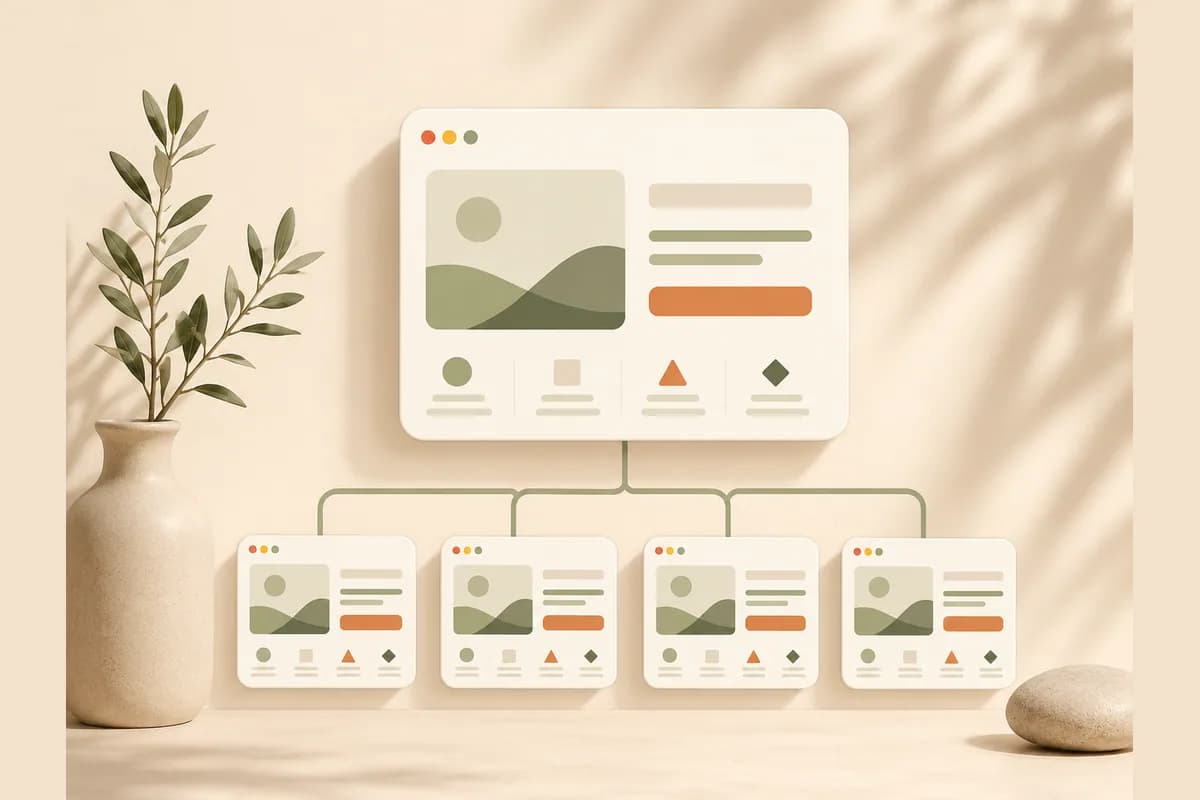
A replicated site is an automatic copy of the company site, spun up for each member with a personal ID baked in. When someone signs up or buys through it, the transaction is credited to you. The URL usually looks like companyname.com/yourname or yourname.companyname.com. As a feature, it's convenient. You instantly have an "official" site without building anything, and the commission system is wired in automatically.
But there's a catch vendors rarely mention while they're selling it. Because thousands of members use the exact same template, copy, and images, Google sees thousands of near-identical pages. Search engines treat that as duplicate content and tend not to surface any single one of them. So if your hope is that someone types "weight loss supplement" into Google and finds your replicated site, that most likely won't happen.
Here's the part I'll say plainly, even if it isn't popular: replicated sites are good for recording orders from people you already brought in, and poor at attracting new people from the internet. They work as a transaction machine, not a marketing machine. The members who actually grow a network from online search are almost always the ones with a unique page outside the replicated system, written in their own voice.

What MLM website development actually costs
Because "MLM website" means several things, its price moves across a very wide range. Here's the rough picture so a quote doesn't blindside you.
| Type | What you get | Cost range |
|---|---|---|
| Custom corporate MLM system | Full app: member area, commissions, genealogy, replica generator | Tens of thousands of dollars, plus monthly fees |
| Replicated-site package from the company | Uniform per-member template, wired into the system | Often bundled into membership |
| Freelance distributor landing page | One custom marketing page | A few hundred to a few thousand dollars, edits billed separately |
| Build it yourself with an AI website builder | A unique site you fully control | A monthly subscription, from around $9 |
What matters isn't only the sticker number, it's the cost over the site's whole life. A freelance page looks cheap upfront, but every time you want to swap a photo, add a testimonial, or update a promo, you send a message and wait, often with a bill attached. If you're the type who updates often, those edit fees can quietly outgrow the original build cost. I've unpacked that math in the guide on how much a website costs, and the same logic holds for network marketers.
When custom MLM website development is worth it
To be fair, there are situations where paying custom developers is the smart call. If you're the company or a leader building a system for the whole network, you need the following and there's no shortcut:
- A commission and bonus engine that calculates automatically from the network tree.
- A member area with logins, dashboards, and transaction history.
- A replicated-site generator that's secure for thousands of members.
- Integrations with payments, inventory, and other internal systems.
Needs like these are a real software project, not a "make a website" project. Don't try to force any website builder to do a job it wasn't built for. You'll spend more time fighting the tool than you'd save. At the corporate layer, serious MLM website development earns its high price because you're buying the reliability of a system that handles a lot of people's money.
The trouble starts when this logic gets dragged down to the distributor level. A member doesn't need a genealogy tree. They need a page that convinces. Hiring a custom developer for that is like hiring an architect to hang a shelf.
Tip: Split the corporate budget from the distributor budget. Money for back-office software shouldn't mix with money for a marketing page. They solve genuinely different problems.
The cheaper path: build your own distributor page with AI
This is where the choice has shifted in recent years. If you're a distributor, you no longer have to pick between a uniform replicated site and an expensive freelancer. You can build a unique personal page yourself, with no coding, in less time than a lunch break.
With Forgelo, you describe your business in a single sentence, say "herbal supplement distributor for young moms," and a complete, publish-ready site is generated in a few minutes. After that you refine it not by dragging blocks or opening design software, but by typing what you want. "Make the headline more persuasive." "Add a testimonials section." "Move the WhatsApp button up." The AI rebuilds only that section and leaves the rest intact.
Three things make this approach fit network marketing. First, the lead form routes straight to your WhatsApp, so everyone who's interested lands in the chat you actually check, not an email inbox you rarely open. Second, the SEO basics ship with it, so your page has a clean structure and can appear in search, the exact edge a replicated site loses. Third, you can publish to a free subdomain first, then connect your own domain when you're ready. Check the pricing for real numbers, starting at around $9 per month.
For network leaders who want their whole team to look consistent, there's a white-label option too, so you can provide branded sites to your downline without them starting from scratch. If you want the fundamentals of a page that actually converts, the guide on small business website essentials walks through them.
The features that actually get a distributor leads
Forget the shiny feature list vendors pitch for a moment. For a distributor, only a handful of things really decide whether a page brings in prospects or not:
- An honest personal story. People join an MLM because they trust the person, not the template. Your page should sound like you.
- A clear product explanation. Benefits first, features second. Don't paste the company brochure verbatim.
- Social proof. Before-and-after photos, testimonials, or real results you can stand behind.
- One obvious call to action. One button, one goal: start a WhatsApp chat.
- Speed and a mobile-first look. Most MLM prospects arrive from a phone via links shared in groups and status updates. If the page is slow, they leave before they read.
Notice that none of this is "genealogy" or "commission engine." The things that actually move prospects are simple, and you can set all of them yourself on a personal page. Since the chat button is the lifeblood of the page, it's worth learning to do it well, which the guide on turning visitors into WhatsApp leads covers.
Tip: Test one page on ten real prospects before you polish the design. If five of ten tap the chat button, you've already won. A gorgeous page nobody messages is far worse than a plain one that fills your inbox.
The bottom line
MLM website development lives on two levels you shouldn't mix. If you're a company building a member, commission, and replica system for a whole network, that's a serious software project and it deserves real money and the right developers. If you're a distributor who wants more leads, you don't need a giant system. You need one unique page that tells your story, explains the product, and points people to WhatsApp.
Replicated sites are useful for recording transactions, but they rarely bring new people in from search because every member looks identical. A personal page you build yourself with AI closes that gap: unique, fast to launch, easy to change, and cheap. Start with what you can control today, publish something real, and let your network's growth tell you the next move.