Typing "AI clone website" into a search box usually means one thing: you found a site you like, maybe a competitor's or a slick brand from abroad, and you want AI to build you something similar. That's a reasonable instinct. Why start from scratch when a good example is sitting right there? But this is where the line gets thin. There's a way to imitate that's legal and productive, and a way that can land you in legal trouble while also producing a worse website.
This article separates the two honestly. We'll cover what people actually mean by "clone website," which parts are safe to imitate and which you should never touch, why copying a competitor outright is often the wrong move, and how to use AI to borrow a proven structure without lifting a single line of anyone else's work.
What people actually mean by "clone website"
The phrase gets used for three very different things, and the difference matters because the consequences differ wildly.
The first is a visual clone: you like how a site looks, the colors, the hero layout, the way they place testimonials, and you want something that feels similar. This is about taste and design reference.
The second is a technical clone: copying a page's HTML, CSS, and JavaScript as-is and hosting it on your own domain. Some tools promise exactly this with a single URL paste. This is where the trouble usually starts.
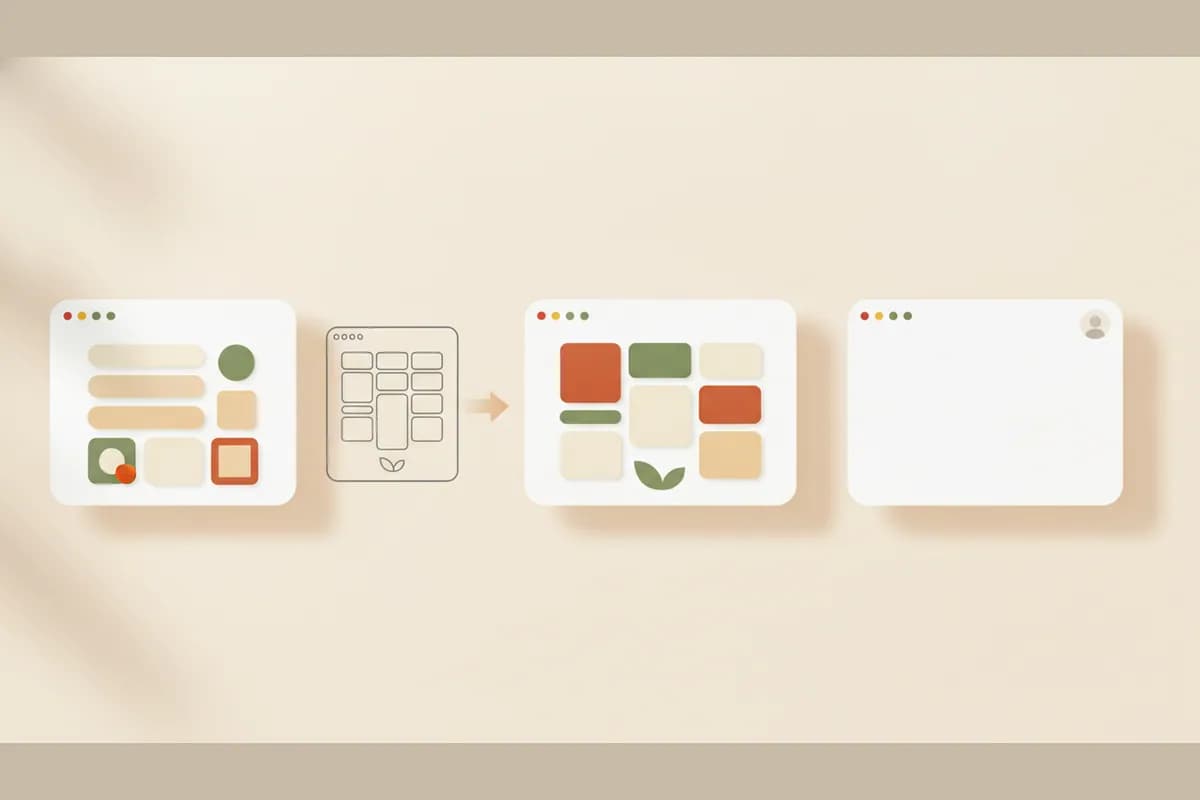
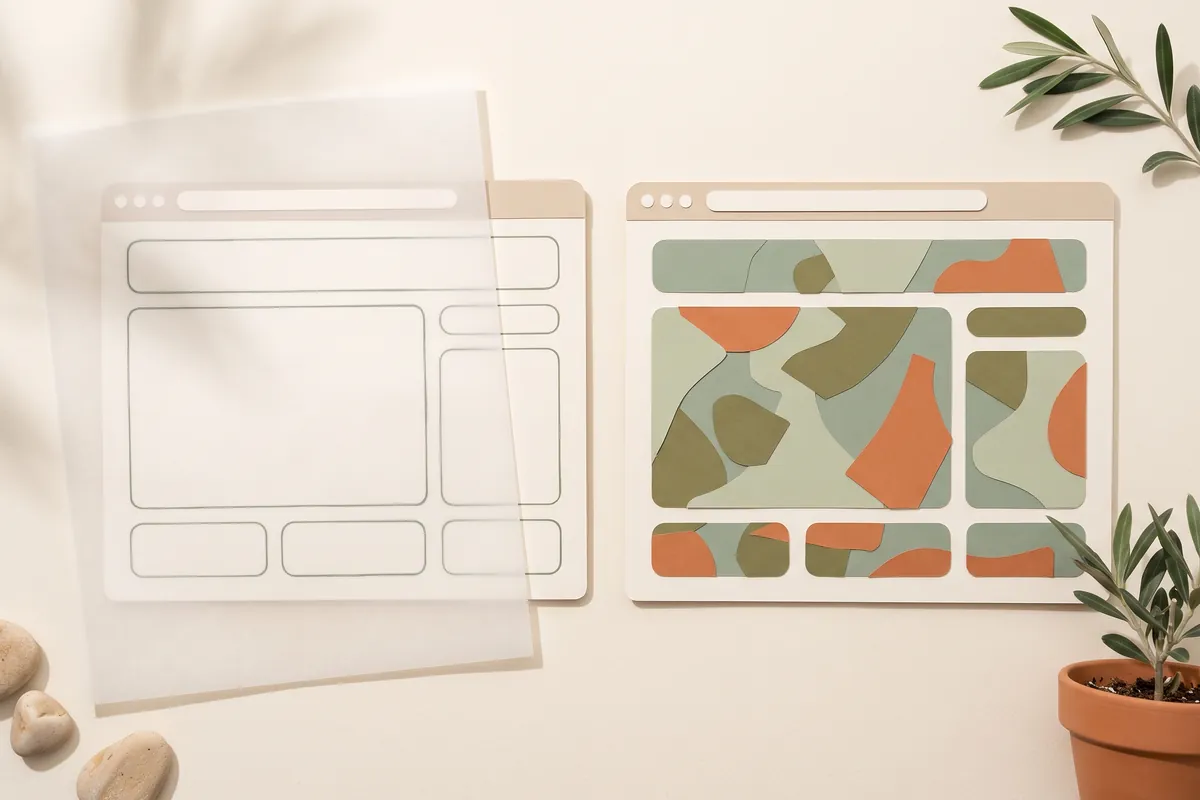
The third, and the genuinely useful one, is copying structure: taking the pattern that works (the order of sections, the flow from headline to call to action, the types of content shown) and filling it with your own business. This is what you should aim for, and it's the one AI is best at.
What's legal and what's not when you AI clone a website
Let's be clear. Copyright law in most countries protects the concrete expression of a work, not the general idea behind it. So the "idea" of putting testimonials below pricing belongs to no one, but the specific testimonial text, the customer photos, and the code that displays them belong to whoever made them. Trademark adds another layer: brand names and logos are protected separately.
Here's the practical split.
| Safe to imitate (general ideas and patterns) | Risky or illegal (someone's expression) |
|---|---|
| Section layout (hero, features, testimonials, FAQ, CTA) | Page text copied word for word |
| Order and flow of the page | Their photos, illustrations, and product images |
| Navigation and menu patterns | Logo, brand name, and identity assets |
| Feature ideas (order form, calculator, catalog) | Scraped proprietary source code |
| Color feel and font choices | Licensed paid icons or templates |
| The types of content shown | Their distinctive slogan or tagline |
The left column is where you're free to learn. The right column is where you stop and build your own version.
Note: This is general explanation, not legal advice. For genuinely sensitive cases, say you're imitating a direct competitor in the same town, talk to a lawyer. But for most small businesses, the simple rule is enough: copy the pattern, write your own content.
Why cloning a competitor outright is a bad strategy
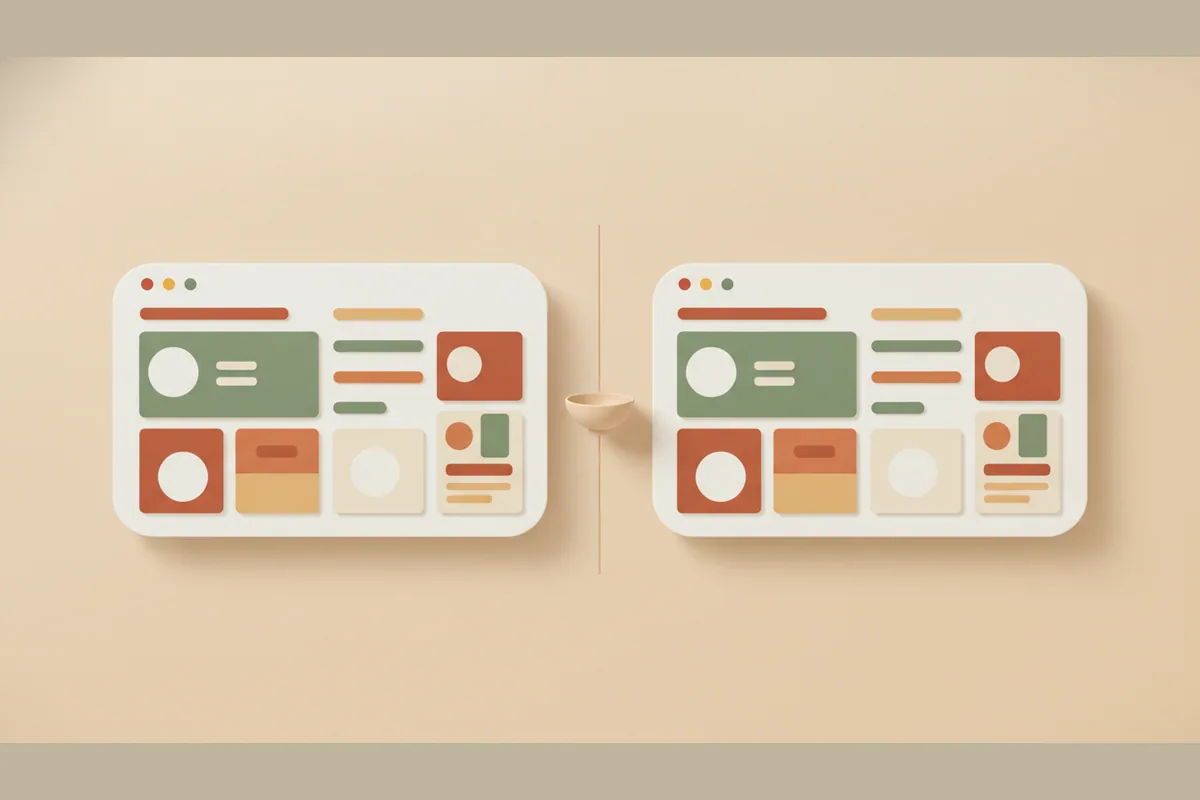
Now the part few people say out loud. Even if you could copy a competitor's site without getting caught, you still shouldn't. This is an opinion that may not be popular, but I hold it firmly: lifting someone else's site wholesale almost always produces a weaker site, not a stronger one.
Here's why. You don't know what's actually working on that site. Maybe their hero is pretty but confusing to visitors, and their sales come from ads, not the website at all. When you copy, you copy their mistakes too, without knowing which parts are the mistakes.
Then there's fit. A competitor's site was built for their business: their scale, their products, the way they serve people. Yours is different even in the same industry. A home cook taking daily orders needs a different page than a corporate caterer serving large events, even though both sell food.
Finally, there's brand credibility and SEO. A site that reads like a cheap knockoff makes prospects hesitate. And if you copy raw text, Google flags it as duplicate content. Copycat sites rarely rank well, so you lose twice.
How to AI clone a website without plagiarizing: copy the structure, not the content
Here's how to use AI the right way. Instead of telling AI to "copy this site," turn the site you admire into a brief. Study its structure, then describe the structure, not the content.
The process is simple:
- Open the reference site and note its skeleton. Which sections exist, in what order. For example: big headline, three value points, a gallery, testimonials, pricing, contact form.
- Translate that skeleton into a description of your own business. "Build a page for a home catering business with a hero, three benefits, a menu gallery, customer testimonials, three price tiers, and an order form that goes to WhatsApp."
- Let the AI write original copy and lay out the page from that description. With Forgelo, you describe your business in one sentence and get a publish-ready site in a few minutes. Not one piece of anyone else's text or images comes along.
- Refine by typing changes. "Shorten the headline." "Move pricing above the gallery." "Make the tone more casual." You edit by describing, never touching code. The how it works page walks through that edit loop.
This gives you the best part of the reference site (a proven structure) with none of the risk. If you want to understand how this works under the hood, our guide on how AI generates a website breaks it down. And if you want sharper instructions, how to build a website with AI walks through it step by step.
Tip: Take the skeleton from one site you like, then blend in one good part from another. Copying structure from two or three references at once produces something that feels original, because you're no longer imitating any single site in full.
An illustrative scenario: imitating the right way
Picture Maria, who runs a small home bakery. She finds a bakery site she thinks is clean: packages laid out clearly, a photo for each item, testimonials in place, and an order button straight to WhatsApp. The temptation is obvious, just copy it.
What she does instead: she writes down the structure on paper. Hero with a clear promise, three package types, a product gallery, testimonials, a service area, and a WhatsApp order form. Then she describes that structure to an AI builder using her own details, her own prices, her own signature items, and testimonials from her own customers.
The result is a site with the same strong flow as the reference but that's 100 percent hers. Her own photos, her own local prices, and a lead form that lands in the WhatsApp number she actually watches. No legal risk, no duplicate content, and a site that genuinely fits how she sells. That's what a healthy "clone" looks like.
If you're weighing this against other approaches, our take on AI website builder vs a web designer covers when to build it yourself and when to pay someone.
A safety checklist before you "clone" any site
Before you imitate anything, run this list. If everything checks out, you're on the safe side.
- I'm copying the order and type of sections, not the text.
- Every word on my site is rewritten in my own voice.
- All photos and images are mine or properly licensed.
- I'm not using any other brand's logo, name, or tagline.
- I haven't pasted any scraped source code from someone else.
- Colors and fonts can be inspired, but the brand identity is mine.
- My content describes my business, not the one I looked at.
If a single point isn't met, fix it first. Copying the pattern is smart. Copying the property is not.
What to do if someone clones your website
The same tools that make imitation easy also make it easy for someone to copy you. If you find a site using your text or photos, a calm, documented response works better than an angry message.
- Collect evidence first. Take dated screenshots of the copied pages and note their addresses. Keep proof that your version came first, such as your publish dates or the original image files.
- Contact the site owner. Many copies are careless rather than malicious. A short, polite request to remove your text and images within a few days often settles it.
- Report it to the host. If the owner ignores you, find out who hosts the site and use the host's abuse or copyright reporting channel. Most hosting providers have one.
- Ask Google to remove the copied pages from search. Google accepts copyright removal requests for content that copies yours. This does not take the site offline, but it stops the copy from competing with you in search results.
- Get legal advice for serious cases. When a competitor copies your brand, logo or whole site to mislead customers, talk to a lawyer about your options.
Meanwhile, keep improving your own site. A page that is clearly more useful and more up to date than any copy is still the best defence.
The bottom line
"AI clone website" isn't a bad idea, but how you execute it decides everything. Copying someone's code, text, and images is legally risky, bad for SEO, and produces a site that doesn't fit your business. Borrowing a proven structure and filling it with your own content is smart, safe, and actually faster.
Use the site you admire as a map, not as material to copy. Describe its structure to AI, let it build an original version for your business, then refine by typing. When you're ready to try, Forgelo turns one business description into a publish-ready site in a few minutes. You get the good skeleton without plagiarizing anyone.