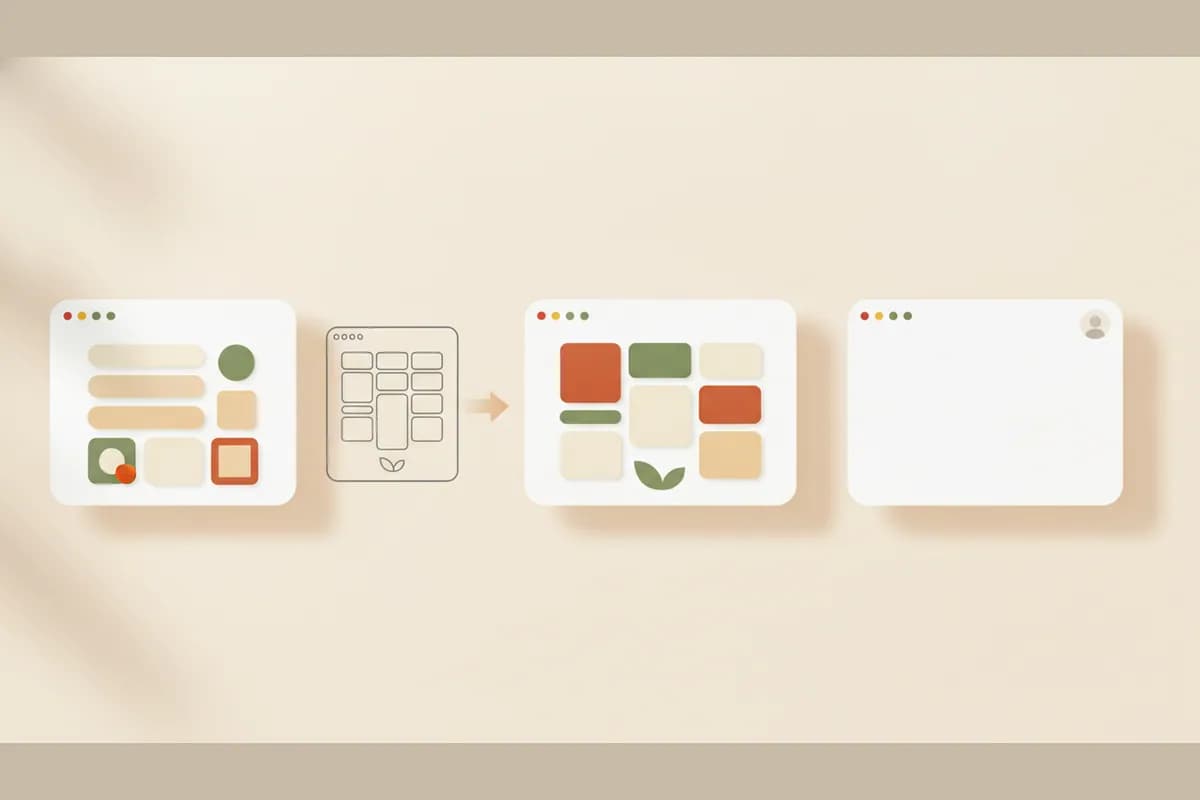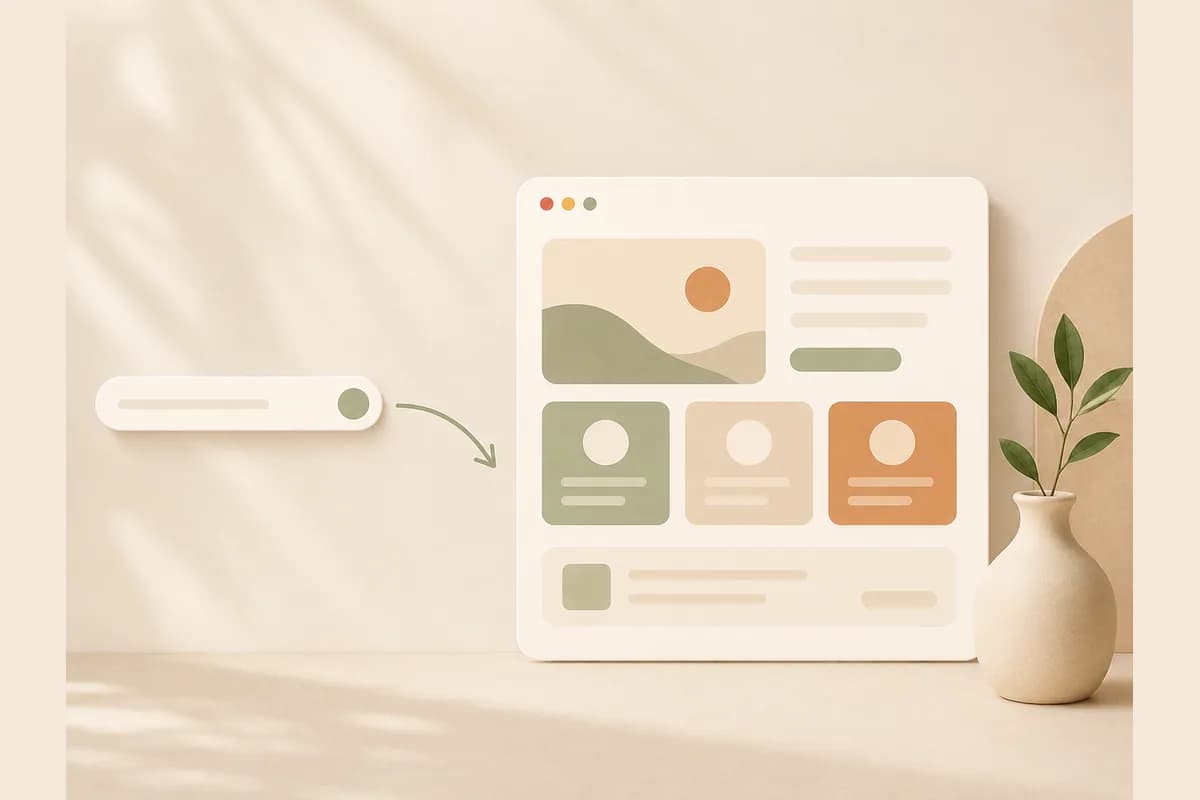
AI design website means using artificial intelligence to create a site's layout and structure, where you describe your business in a single sentence and the AI arranges the layout, colors, typography, and the actual copy on every page. For the owner of a coffee shop, a laundry service, a small clinic, or a solo consultant who has no time to learn design, that sounds like a shortcut too good to be true. The reality is more grounded than the hype, and that's exactly what makes it worth understanding.
This article breaks down three things the marketing rarely explains fully: how AI design website actually works under the hood, where its honest limits are, and what the real result of a one-sentence prompt looks like. The goal isn't to sell a dream. It's to help you decide whether this technology fits your business, or whether you're better off with a different route.
What "AI design website" actually means
For years, having a website meant one of two things: hire a designer for a few hundred to a few thousand dollars and wait weeks, or wrestle with a template yourself and stay frustrated because the layout never quite fits. AI design website offers a third path. Instead of drawing each layout by hand, you describe what you sell and who you serve, and the AI translates that into cleanly structured pages.
What's pushing this into the mainstream isn't just buzz. There's a real shift in how sites get made. Design skill used to be the gate. Now the ability to describe your business clearly matters more than the ability to use design software. That's good news for most business owners, because they understand their own business better than anyone, they just never had a tool to turn that understanding into a site.
Note: AI design website is different from "a template with AI sprinkled on." A template gives you an empty frame you have to fill in yourself. AI design website builds the layout, copy, and page order around the context of your business, so your starting point is already relevant, not a blank canvas that leaves you wondering where to begin.
How AI design website works: one sentence to a live page
The process is simpler than people assume. You type a short description, say "home catering for office events and gatherings in Austin." From that sentence, the AI infers several things at once: this is a food business, the audience is companies and communities, so it needs a menu page, a gallery, testimonials, and a prominent ordering button. Then it assembles everything, drafts the starting copy, picks a fitting color palette, and hands you a site you can actually see.
With a tool like Forgelo, that whole process finishes in a few minutes. The part people misunderstand is thinking the AI just pastes random images. What it's really doing is making structural decisions: which section comes first, what belongs above the fold, and how to guide visitors toward the action you want. If you're curious about the mechanics behind it, we explain it in more detail in our guide on how AI generates a website.
The next part is what changes the game: editing. AI web design doesn't stop at the first draft. You refine it by typing the change you want: "make the headline shorter," "switch the button color to green," "add a pricing section with three plans." No code, no Photoshop, no waiting on someone else's calendar. This is what separates AI design website from a one-shot generator. You keep full control after the site is built.
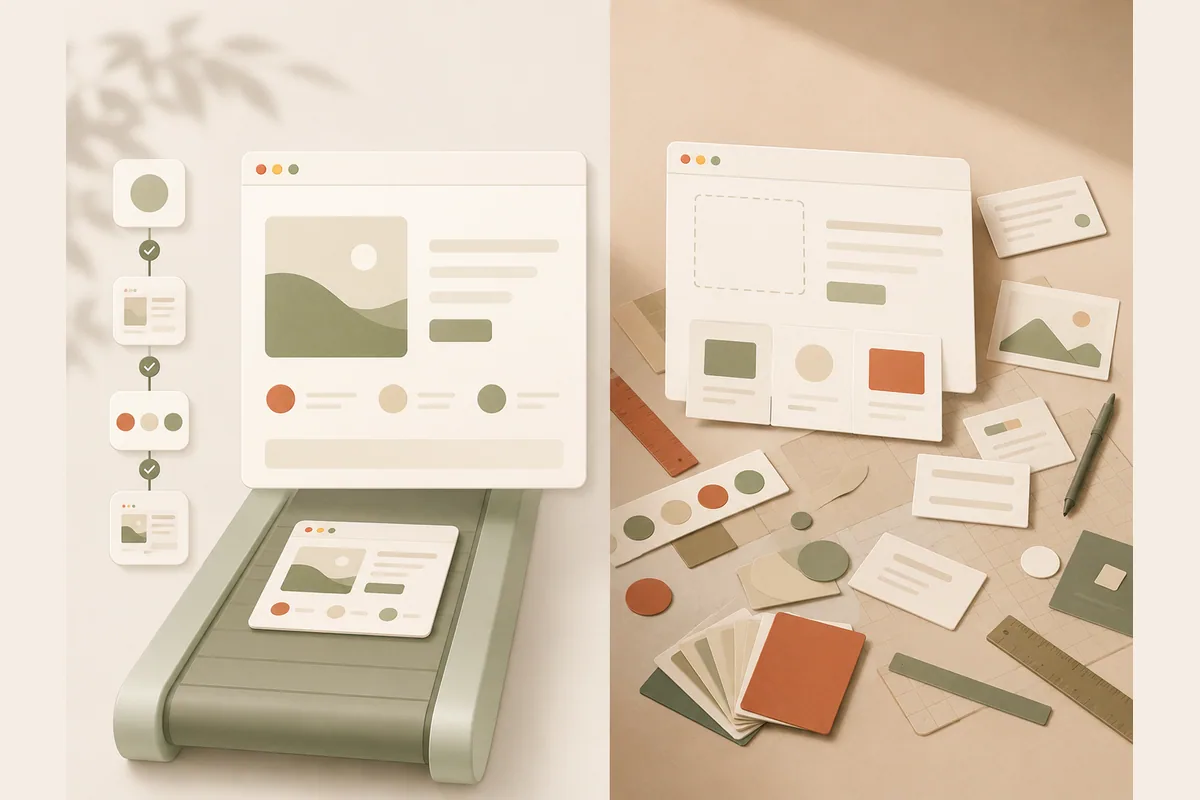
AI web design vs manual design: an honest comparison
To be fair, there's no absolute winner. Each solves a different problem. Here's the quick picture.
| Factor | AI design website | Manual design (designer/agency) |
|---|---|---|
| Time to launch | Minutes to hours | Two to eight weeks |
| Cost | Affordable monthly subscription | A few hundred to several thousand |
| Who makes changes | You, by prompt | The designer, usually per revision |
| Visual uniqueness | Good, within sensible limits | Can be fully custom |
| SEO and technical | Built in automatically | Depends on the agreement |
| Best for | Speed, budget, self-control | Premium brands, complex features |
Notice that "visual uniqueness" is the only column where manual design clearly wins. For most businesses, visual uniqueness isn't the deciding factor for winning work. A catering customer doesn't cancel an order because your button color resembles another site. They cancel because they couldn't find the menu, the price, or the contact number fast enough. This is exactly where AI design website is strong, because it's built from patterns proven to move visitors toward action.
What AI web design can and can't do
This is the most honest part, and the one promotional material tends to hide. AI design website is great at a lot of things, but it isn't a magic wand.
What it does well:
- Builds a sensible page structure for your type of business.
- Writes starting copy that already connects to your offer, ready for you to polish.
- Produces a site that's responsive on phone and desktop without you managing it manually.
- Lays down basic SEO foundations so you can start getting found.
- Wires the contact form straight to WhatsApp, so inquiries land where you already reply.
What it can't, or shouldn't be expected to, do:
- Guess your business strategy. If your own offer is confusing, a tidy site won't rescue it.
- Invent a brand identity nobody has ever seen. It gets close, but for a look that must feel unlike anyone else's, a human touch still wins.
- Build deeply complex features like a multi-layer custom booking system or a deep integration into a company's internal tools.
Tip: Before you judge an AI-designed result as "not good enough," check whether the problem is the design or the input. Sites often feel flat not because of the layout, but because the business description was too generic. A specific prompt produces a specific site.
Here's where I'll put an opinion that might not be popular: design is the smallest part of a website's job. Plenty of people obsess over fonts and colors, when a beautiful site that can't be found on Google and has no clear way to get in touch is basically a business card stuck in a drawer. AI design website wins precisely because it handles the boring parts (structure, speed, SEO, lead routing) that actually decide whether a site brings in money.
Example scenarios: who an AI-designed site fits
Let's look at who benefits most, with concrete examples.
A home baker whose orders spike before the holidays doesn't need a fancy site. She needs a page that shows product photos, a price list, and an order button, live before the busy season starts. AI design website gives her that in an afternoon, and when ingredient costs rise, she just types the change herself without waiting on anyone.
A small dental clinic that used to rely only on Instagram finally gets a professional site with opening hours, a service list, and a map location. A solo tax consultant can look credible with a services page and a consultation form without spending thousands. The same pattern holds for repair shops, salons, event rental businesses, and small food brands.
The common thread is clear: businesses with standard needs, a limited budget, and an owner who wants to manage the site themselves are almost always well served by AI web design. If you're still weighing hiring a service versus building it yourself with AI, we cover that at length in website service vs building with AI.
On the flip side, if you're a creative studio whose entire value lives in an unusual look, or a large company with hundreds of pages and a complex system, the designer or agency route still makes sense. Nothing wrong with that. What's wrong is forcing one tool to do a job it wasn't built for.
How to get the best out of AI design website
The result of AI design website depends heavily on what you feed it. Here's how to get the best site.
First, describe your business as specifically as you can. "Clothing store" produces a generic site. "Kids' modern modest wear in premium cotton for young moms in big cities" produces something far more relevant. The AI is only as good as the context you give it.
Second, think about the main action you want from visitors. Order via WhatsApp? Fill a form? Visit the shop? Name it, so the AI points the whole page toward one clear goal instead of scattering attention.
Third, use edit-by-prompt to refine, not to give up at the first draft. The initial draft is a starting point, not the final result. Change what feels off, one piece at a time, until the site genuinely feels like yours. If you want the full step-by-step from scratch, our guide on how to build a website with AI lays it out in order.
Tip: Once the site is live, connect your own domain if the budget allows. A free subdomain is fine to start, but your own domain (like yourbusiness.com) adds credibility in a prospect's eyes, and with Forgelo you can do this without switching platforms.
On cost, AI design website is clearly lighter. Forgelo starts at $9 a month, the higher tiers ($19 and $39) add capacity, and a custom Agency plan covers anyone managing sites for clients, with full white label on the roadmap. Compare that to a one-time service fee that can run into the thousands, plus revision costs every time something changes. You can see the breakdown on our pricing page.
A pre-publish check for an AI-designed site
An AI draft can look finished before it is. Spend a few minutes on this check before you share the link with anyone.
- Read every sentence as a customer. Remove any claim you cannot back up, such as years in business, awards or prices that are not yours. Starting copy is a draft, and your name is on it.
- Swap placeholder images for real ones. Photos of your actual products, premises or team build more trust than generic visuals, and they stop the site from looking like everyone else's.
- Tap the main button on your phone. Make sure the contact or order button opens the right channel and that a test message actually reaches you.
- Check names, hours and contact details twice. These are the facts visitors act on. One wrong digit in a phone number quietly costs you every lead.
- Set the page title and description. They are what people see in Google results, so make them say what you do and where, in plain words.
Once those five are done, publish. Improvements after launch are easier when real visitors show you what is unclear.
Should you let AI design your website?
The honest answer: for most small and medium businesses, yes, at least to start. AI design website gives you a site that's clean, fast, ready to be found, and editable by you anytime, at a cost that doesn't cause a headache. That combination used to be impossible without spending deeply.
Keep in mind this technology is strongest when your needs are standard and you want to move fast. It isn't a replacement for human taste when a brand must look extraordinarily distinctive, and it isn't the answer for extremely complex systems. But for turning one sentence about your business into a real site that brings in customer inquiries, it's hard to find anything faster and cheaper.
The worst choice is still the same as it always was: having no site at all while waiting for a perfect moment that never comes. If you're curious, describe your business in one sentence and see what Forgelo builds for you. Refining it can come later. What matters is that you have something real to show today.