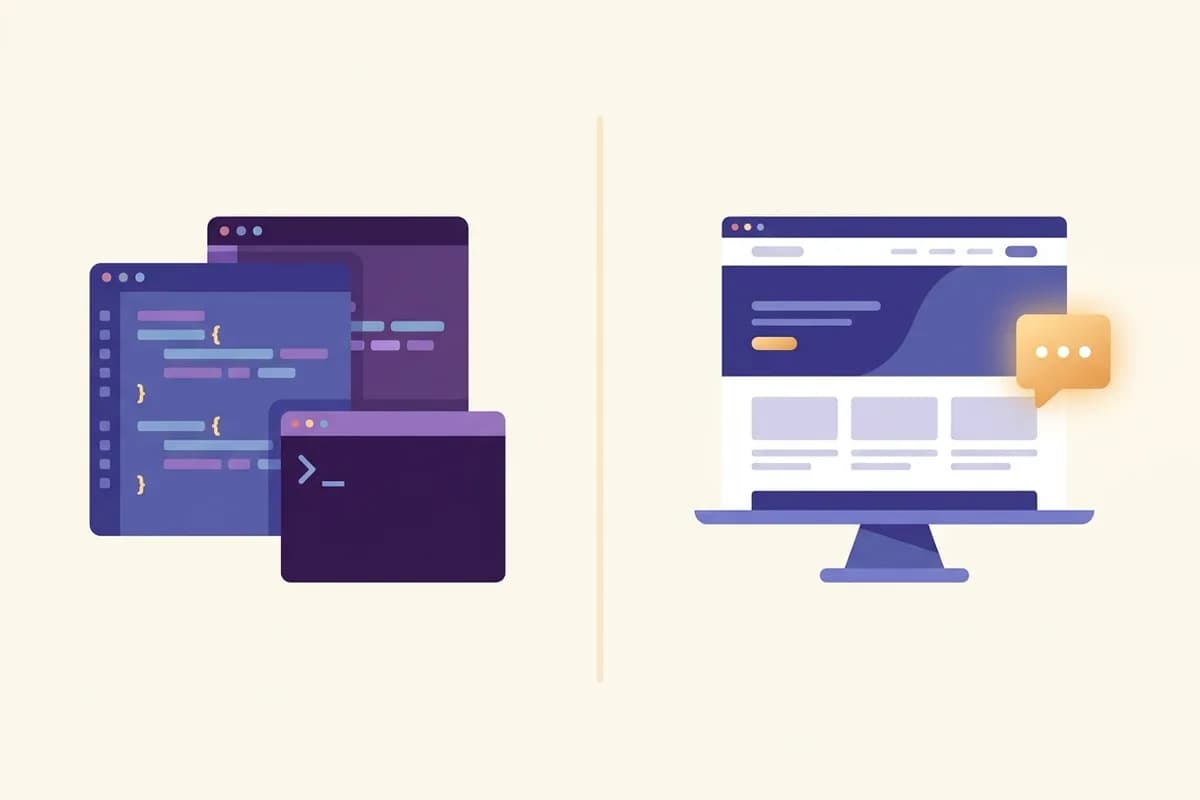
Here's the short version. Durable and Forgelo solve the same first problem, a real website from a prompt, and then take completely different paths. Durable can produce that first site in under a minute, while Forgelo takes a few minutes. Durable is a business-in-a-box: site, CRM, invoicing, and AI marketing bundled together, with editing that mostly stays inside its templates. Forgelo treats the first draft as the starting point: you keep reshaping any section of the live site by describing the change in plain language. If you want the widest bundle of business tools for the money, Durable is a fair pick. If the website itself is the thing you'll keep improving, Forgelo is built for exactly that.
Credit where it's due before we compare anything. Durable did more than almost anyone to prove that "type a sentence, get a business site in 30 seconds" is a real product and not a demo trick. Solopreneurs love it for good reasons. So this is not a takedown. It's a map of where each tool genuinely wins, so you pick the right one the first time.
What is Forgelo?
Forgelo is an AI website builder that turns a prompt into a complete, publishable business website. You describe what your business does, who it serves, and the feel you want. It generates the pages, structure, and copy, live on a free subdomain within minutes.
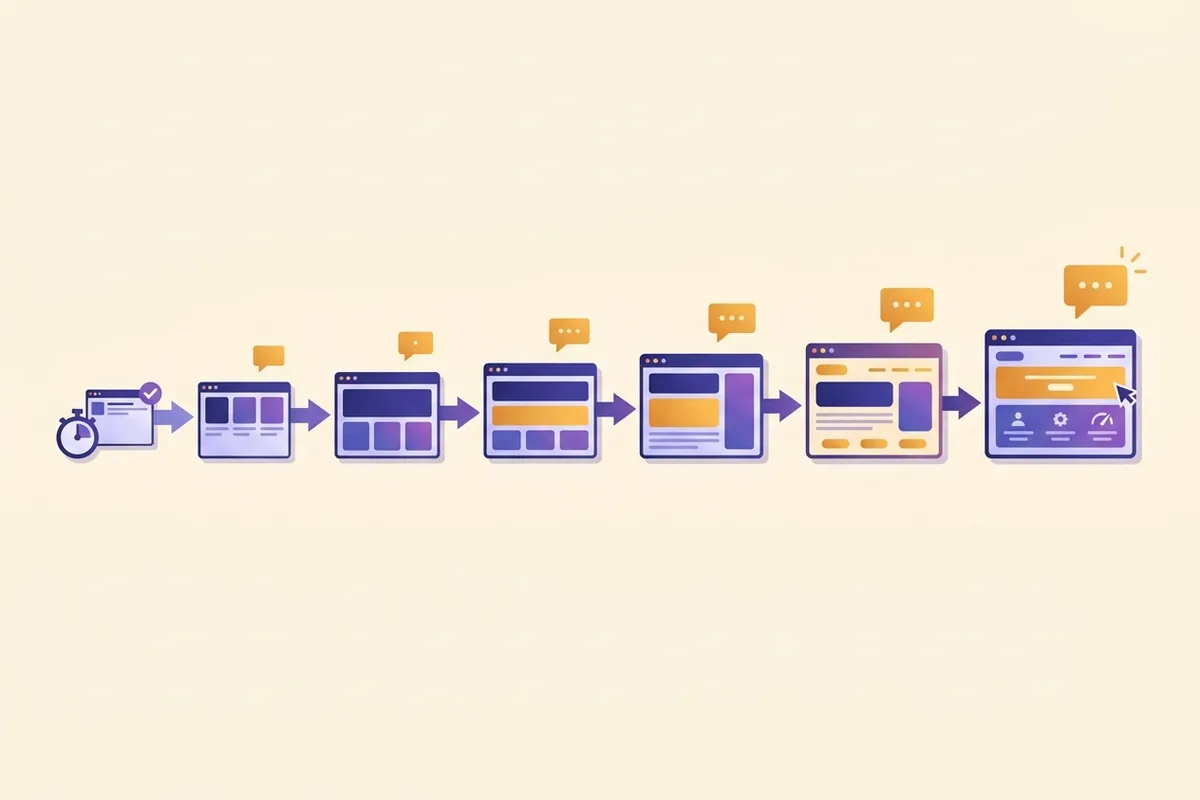
The part we defend as the actual differentiator: editing is a conversation. You don't get dropped into a drag-and-drop canvas or a regenerate-everything button. You say "make the pricing section three columns and mention the free consultation," and Forgelo rebuilds just that section. The rest of the site stays untouched. How it works shows the full loop.
Every site ships with SEO basics handled, clean titles, meta descriptions, schema, and a sitemap, plus lead forms that route straight to WhatsApp. That last bit sounds small until you remember where most small businesses actually answer customers.
What is Durable?
Durable positions itself as a complete AI business builder rather than just a website tool. The famous pitch is a working business website in about 30 seconds, and in our testing that claim holds up. Type your business type and location, and a credible-looking site appears with sections, images, and copy already in place.
Around the website, Durable bundles a lightweight CRM, invoicing, and AI marketing tools. For a solo service business, a cleaner, a landscaper, a tutor, that bundle is genuinely useful: one subscription covers the basics of looking legitimate and getting paid.
The honest limitation is depth. Durable's sites are built on a template system, and its editing, AI-assisted or inline, mostly works within that structure. Output can feel generic, and reshaping a site into something distinctly yours takes more fighting than the 30-second start suggests.
How do Forgelo and Durable compare at a glance?
Durable is faster to a first draft, about 30 seconds, and bundles a CRM, invoicing, and AI marketing. Forgelo takes a few minutes but generates the site around your business and lets you rebuild any single section by typing. Both include SEO basics. Durable leads go to its CRM, while Forgelo forms route to WhatsApp.
| Forgelo | Durable | |
|---|---|---|
| First draft | Full site in a few minutes | Site in about 30 seconds |
| Editing model | Conversational, per-section rebuilds | Template-based, AI-assisted and inline edits |
| Design range | Generated per business, keeps reshaping | Template-driven, can feel generic |
| Built-in SEO | Yes, on every site | Yes |
| Lead capture | Forms straight to WhatsApp | Forms plus built-in CRM |
| Extra business tools | Focused on the website | CRM, invoicing, AI marketing bundled |
| Best for | Owners who keep improving their site | Solopreneurs who want one bundle |
Competitor features and pricing change often. Treat this as a mid-2026 snapshot and check both pricing pages before you decide.
The 30-second website is a tie. What happens next isn't.
Both tools nail the moment that used to take weeks. Durable claims about 30 seconds, while Forgelo takes a few minutes in production. Nobody chooses a website builder over a small gap in first-draft timing.
What we keep seeing, though, is that the first draft is maybe 20 percent of a website's life. The other 80 percent is everything after: the new service you add in March, the testimonial you got in June, the pricing change, the rewrite of a headline that never quite landed. A builder should be judged on how it handles month six, not second thirty.
This is where the two products diverge sharply. On Durable, later changes mean working within its template editor. It's serviceable, but you're arranging what the template allows. On Forgelo, later changes are the same action as the first prompt: describe what you want different, and the relevant section is rebuilt. The tool you learned in minute one is the tool you use forever.
Jargon note, since "per-section editing" gets thrown around loosely: we mean the AI regenerates one named section of the page, hero, pricing, FAQ, testimonials, in place, without touching anything else. Not a full-page regenerate that scrambles work you already approved.
Editing depth: template boundaries vs open conversation
Durable's editing is honest about what it is: pick from layout options, swap images, rewrite text inline, ask the AI to adjust within the template. If your ambition is "credible site, minimal effort," those boundaries are a feature. You can't really break anything.
The frustration arrives when you want something the template didn't anticipate. A comparison table for your two service tiers. A section that alternates image left, image right. At that point Durable users tend to either settle or export their ambition to a different tool entirely.
Forgelo's answer is that there is no template boundary to hit. Sections are generated, not selected, so "add a three-column comparison of my packages with the middle one highlighted" is a sentence, not a support ticket. The trade-off, and we'll own it, is that an open-ended system depends on you describing what you want. People who prefer picking from a fixed menu of layouts may find prompting takes a little adjustment. Our experience is that non-technical owners adapt within a session or two, because describing a change in words is what they were already doing when they emailed their old web designer.
Business tools: Durable's bundle is real. So is the trade-off.
We'd rather concede this plainly than dance around it: if you want CRM, invoicing, marketing emails, and a website under one roof for one low price, Durable's bundle is the strongest argument for choosing it. For a one-person service business with simple needs, that consolidation is worth money and mental overhead.
The trade-off is that bundled tools are each fairly shallow. Durable's CRM is a contact list with notes, not a pipeline you'll still be running at 50 clients. Its invoicing covers basics. That's fine, until it isn't, and then you're migrating anyway.
Forgelo takes the opposite bet: do the website part deeply and connect to where your business already lives. Lead forms route directly to WhatsApp, because in most of the markets we serve, deals close in chat, not in a CRM tab that gets checked twice a week. Your domain stays yours, your leads land where you already answer, and the tools you outgrow are not welded to your website.
SEO: both check the box, the follow-through differs
Durable generates reasonable on-page basics and provides SEO settings you can edit. For a local service site that mostly needs to exist and rank for its own name, that's adequate.
Forgelo ships every site with SEO defaults handled automatically: per-page titles and meta descriptions, structured data, a sitemap, fast pages. The difference shows up in maintenance. When you want to retitle a page or rewrite a meta description on Forgelo, you ask for it in the same conversation you use for everything else, and the change applies to just that piece.
Worth saying honestly: no builder ranks a site for you. Content, links, and time do. What a builder owes you is a technically clean foundation and zero friction when you act on what you learn. Judge both tools by that standard, not by an "SEO included" badge.
How much do Forgelo and Durable cost?
Forgelo starts free: you can generate and publish on a free subdomain, then pay $9, $19, or $39 per month for custom domains, more sites, and more AI edits. Durable has historically priced paid plans in the low tens of dollars per month, with its business bundle a step higher. Verify both pricing pages before deciding.
Durable has historically priced its paid plans in the low tens of dollars per month, with the business bundle a step up. It is one of the cheapest ways to get a site plus basic business tools, and that value is real.
Forgelo starts free, you can generate and publish on a free subdomain before paying anything, with paid plans that add custom domains and more generation capacity. See current numbers on the pricing page.
Two honest notes. First, prices on both sides change often enough that any specific figure in a comparison article ages badly; verify before deciding. Second, the cheaper option is the one you don't rebuild. A $12 site you abandon in four months because you couldn't shape it costs more than a slightly pricier one you keep for years.
Which should you choose?
Choose Durable if you want a website plus CRM, invoicing, and marketing in one cheap bundle and your site mostly needs to exist and look credible. Choose Forgelo if you will keep changing the site, want every edit to be a sentence rather than a template negotiation, and close most of your leads over WhatsApp.
Choose Durable if:
- You want a website plus CRM, invoicing, and marketing in one cheap bundle
- Your site needs to exist and look credible, not evolve much
- You prefer editing within guardrails a template provides
- You're a solo service business with simple, stable needs
Choose Forgelo if:
- You'll keep changing your site, new offers, new sections, new copy
- You want edits to be a sentence, not a template negotiation
- WhatsApp is where your leads actually turn into customers
- You want a site generated around your business, not fitted into a template
Still weighing a drag-and-drop editor instead? Our Forgelo vs Wix comparison covers that choice. If you're comparing the whole category first, start with our guide to the best AI website builders in 2026.
The takeaway
Durable won the race to the 30-second website and packed a genuinely useful business bundle around it. If that bundle matches your needs and your site can live inside a template, it's a fair, cheap choice.
Forgelo is built on a different belief: the first draft is the easy part, and the tool that wins is the one that makes every change after it effortless. You describe your business, get a full site in a few minutes, and then just keep talking, every section stays shapeable for as long as you run the business.
Try it on the free plan, publish on a free subdomain, and test the thing that actually separates these tools: ask for a change and see what happens.