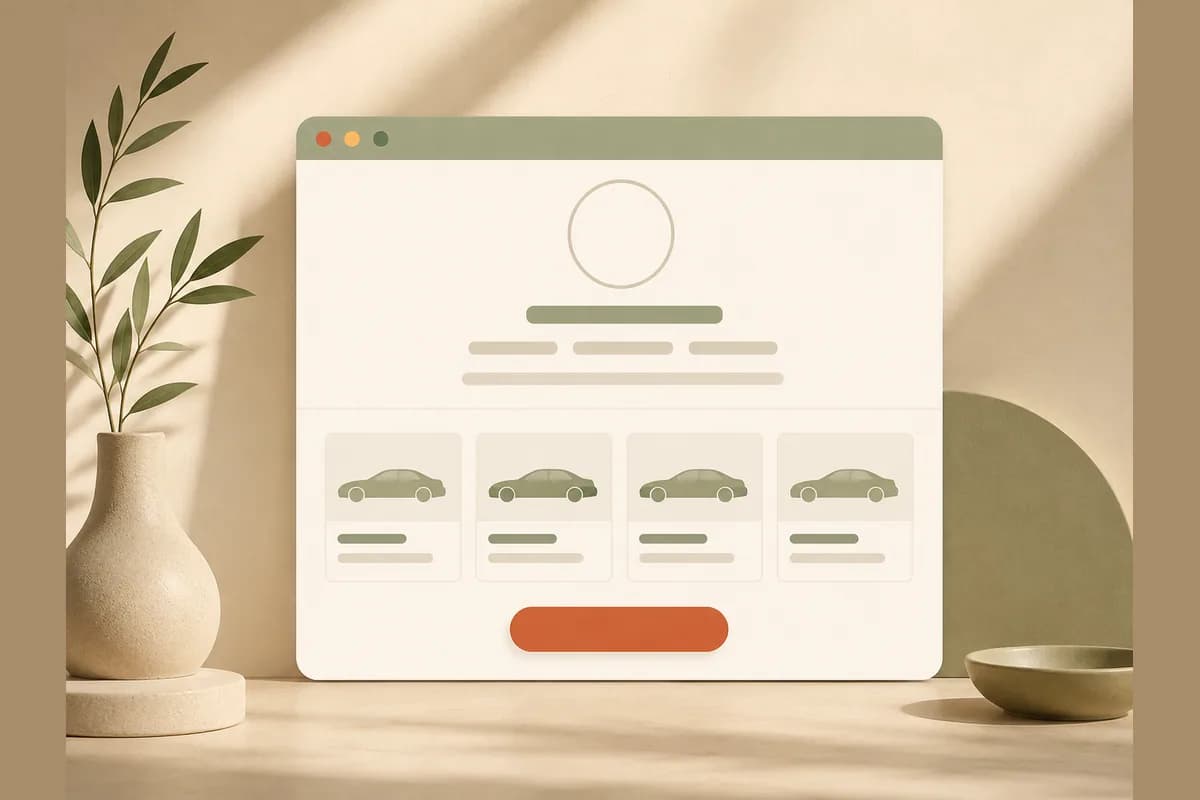
If you run a travel or tour business in Indonesia, hiring a travel website service (locally, jasa pembuatan website travel) is one of three real paths to getting online, and it isn't automatically the best one. A good travel website does three jobs at once: it shows off your packages through a gallery, explains itineraries clearly, and captures inquiries through a form that reaches your team right away. This guide walks through the features that genuinely matter, what a build typically costs, and when it makes more sense to build the site yourself with AI instead of paying someone.
The short version: travel websites are less complicated than people assume. What usually makes them expensive isn't the technology, it's the back-and-forth revisions and features that rarely get used. Let's separate the essentials from the things that only sound impressive.
What makes a travel website different
A travel business sells something the buyer can't hold before purchase. Nobody can taste a sunrise over Bromo or feel the calm of a Madinah morning from a paragraph of text. So a travel website leans on two things that matter far less on other kinds of sites: honest photos and proven trust.
Photos do the selling. A gallery of an open-trip group at the summit, a hotel room in Makkah, or a city tour in Yogyakarta is often more convincing than any description. Trust comes right behind it. For pilgrimage travel, that means license numbers, departure schedules, and past-traveler testimonials. For a local tour operator, it means Google reviews, photos from previous trips, and contact details that are easy to find.
An online store chases the shopping cart. A travel website chases the conversation. That difference changes how you lay out your pages, and it's also why some expensive features turn out to be irrelevant.
The features a tour and travel website actually needs
Before you're tempted by a vendor's "full-featured" package, here's the list that actually does the selling. The rest is optional.
| Feature | Why it matters |
|---|---|
| Destination & package gallery | Photos sell an experience words can't describe |
| Package detail pages | Itinerary, price, departure dates, what's included and what isn't |
| Reservation form | Captures buyers where you already reply |
| Trust signals | Licenses, permits, testimonials, real trip photos |
| Contact & location page | Phone, office address, operating hours |
| Basic SEO | So your trips appear when people search Google |
Notice that almost all of this is "well-organized information," not "complex software." That's exactly why an effective travel website doesn't have to be expensive. You aren't building an airline reservation system, you're building a storefront that nudges people to message you.
Tip: Make one page per flagship trip instead of stacking every package on a single long page. Separate pages are easier to share over WhatsApp, easier to advertise, and each one gets its own shot at ranking for a search like "Bali open trip package" or "Ramadan pilgrimage from Surabaya."

Galleries and itineraries: where photos really close the deal
If one part of a travel site deserves extra attention, it's the gallery and itinerary pages. This is where decisions get made.
A good gallery doesn't just pile up images. It tells a story: where the trip starts, where it stops, and what the peak moment looks like. For pilgrimage travel, a sequence from the airport to the mosque gives buyers a full sense of the journey. For an open trip, a sunrise shot and a shared meal at camp sell the atmosphere, not just the location.
Itinerary pages complete the gallery with the details serious buyers look for: which day goes where, what star hotel, what the price covers, and the most-asked question of all, what it doesn't cover. The more honest the itinerary, the less the chat goes in circles and the faster people decide. If you want the fundamentals of a page that converts a browser into a buyer, our guide to small business website essentials covers the structure.
About online booking: the honest bit vendors skip
Here's something you probably won't hear from anyone selling you a "powerful booking system." Most travel businesses don't need a booking engine with online payment, at least not at the start.
Look at how a booking actually happens. A pilgrimage buyer rarely clicks "pay" and is done. They message first, ask about dates, ask about rooms, negotiate the deposit, then transfer manually. Open-trip customers do the same: confirm the spot over chat, send proof of a deposit, done. A paid booking engine with a payment gateway often adds friction and a monthly cost to a flow that already works comfortably over a conversation.
What you actually need is a clean reservation form that collects the name, the trip they want, the dates, and the number of travelers, then sends all of it straight to your team. A human takes it from there. If you want the pattern for turning site visitors into those conversations, we break it down in turn visitors into WhatsApp leads.
Note: An online booking system with payment is genuinely worth it in specific cases, like selling high-volume daily tickets or limited seats that must lock in real time. But for package and pilgrimage travel that needs a personal discussion, it's often complexity that doesn't produce more bookings.
What a travel website service (jasa pembuatan website travel) costs
Prices for building a travel website vary widely, and the number depends heavily on who does the work. Here's a rough picture of common market patterns, not a fixed rate.
| Option | Cost range | Notes |
|---|---|---|
| Freelancer | A few hundred to a couple thousand dollars | Fast for simple sites, revisions usually capped |
| Agency | Higher, sometimes much higher | Fully custom, longer timeline, best for established brands |
| Ready-made template | Relatively cheap | Economical, but you still fill and arrange it yourself |
| Build it yourself with AI | Monthly subscription | Full control, edit anytime with no per-change fee |
The cost people miss is what comes after launch. Add annual hosting and a domain, add a fee every time you want to swap a package photo or update departure dates, and add the time you spend waiting on a vendor to respond. For a travel business whose packages and prices shift every season, those change fees can quietly stack up past the original build cost. We lay out the full math in our guide to how much a website costs.
The alternative: build your travel website with AI
This is where the third option comes in. An AI website builder like Forgelo creates a travel website from a short description of your business. You type "halal travel and pilgrimage operator in Solo with regular and premium packages," and the AI drafts the page structure, writes the starting copy, and hands you a site ready to publish in a few minutes.
The big shift is how you edit. You don't open design software or send a brief to anyone. You just type the change you want: "add a 12-day Ramadan pilgrimage package," "swap the hero photo for a city tour scene," "move the reservation form higher." The site updates. The lead form it builds routes straight to your WhatsApp, so every package question lands where you already reply.
A few things matter specifically for travel operators:
- Basic SEO is built in, so your trips have a chance of getting found without you learning the technical side of search.
- Publish to a free subdomain first to test, then move to your own domain (say, yourtravel.com) when you're ready.
- If you're an agency or sub-agent reselling sites to other operators, there's an Agency plan for running them all in one place, with full white label on the roadmap.
- Pricing is a monthly subscription starting at $9, $19, and $39, and unlimited edits are included, so updating seasonal departure dates never adds to the bill.
The honest caveat: AI builders work from proven patterns, so you get a solid, professional site, not a piece of art nobody has seen before. For most travel businesses, that's exactly what's needed. What sells your trips is the photos, clear prices, and an easy way to reach you, not elaborate animation.
Travel website service or DIY: which fits you
There's no single answer, but the pattern is clear enough. Choose a service if you have a genuinely custom need or don't want to touch the site at all. Choose DIY if you want control, speed, and predictable cost.
Hiring a travel website service makes sense when you need a truly distinctive brand and have the budget for it, when you need complex integrations like a real-time ticket inventory connection, or when you'd simply rather delegate the whole thing. Building it yourself with AI fits better when your packages and dates change often, when you need to launch fast because peak season is close, or when you want to edit the site yourself without waiting and without per-change fees.
A lot of travel operators actually belong in that second group, especially the ones still growing and needing to move quickly. And remember, starting cheap doesn't lock you out of anything. Launch fast with AI, collect your first bookings, and consider a custom service later if the business truly demands it. By then you'll brief far better, because you'll know which package sells best and which pages get the most attention.
The takeaway
An effective travel website doesn't need complicated technology. It needs an honest gallery, clear package pages, trust signals, and a reservation form wired straight to your inbox. The rest, including a paid booking engine, is often complexity that adds no bookings.
If you have the budget and a special need, a good travel website service is worth its fee. If you want to launch fast, edit it yourself, and keep costs in check, building it with AI is worth trying first. Check Forgelo's pricing for the real numbers, then decide based on the way you actually like to work. Whatever you pick, don't let your travel website keep slipping. Even the best package won't sell if a would-be customer never finds it.