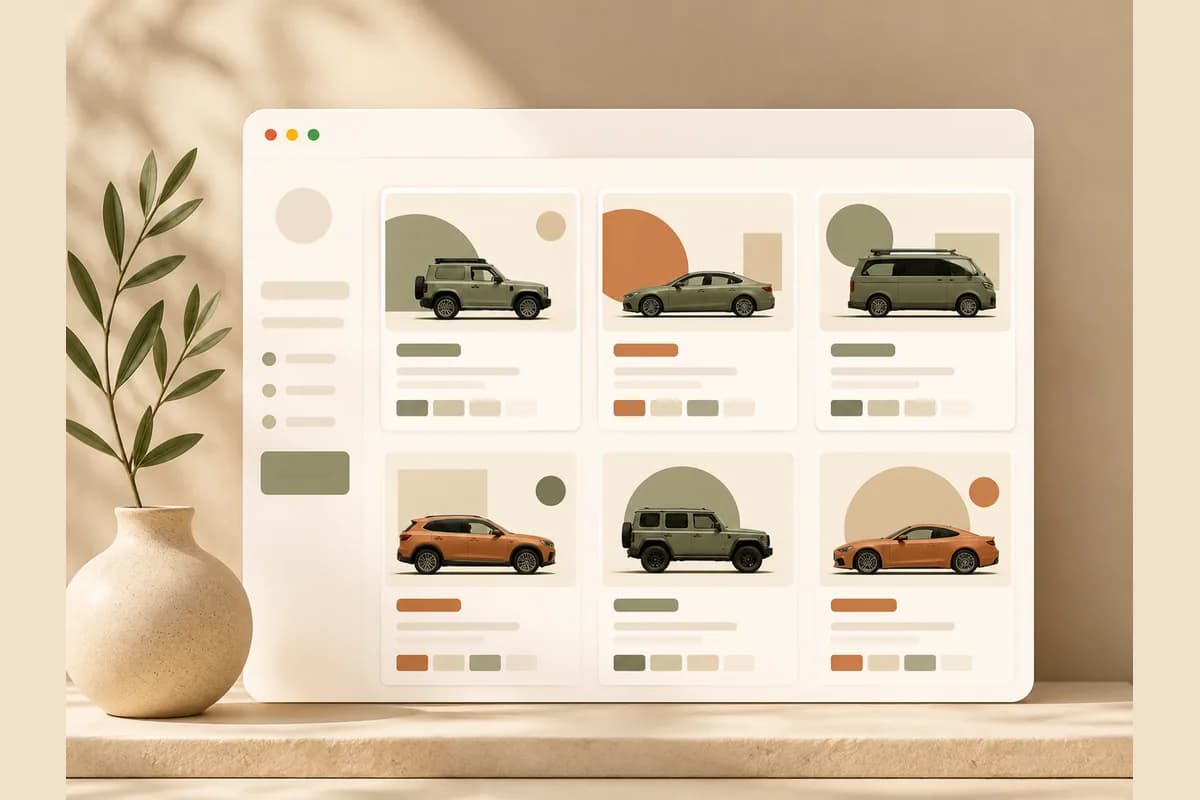
If you sell cars for a living and you have searched "jasa pembuatan website sales mobil", the Indonesian phrase for car-salesperson website services, you are already ahead of most people on your showroom floor. Plenty of reps still rely on messaging-app statuses, flyers dropped in group chats, and paid leads from marketplaces that keep getting pricier and are often split among five sellers at once. A personal website changes that. When a buyer types a brand and your city into Google, the page that shows up can be yours, complete with your photo, pricing, a payment estimate, and a contact button that reaches you directly.
This guide covers all of it, honestly: why a salesperson should have their own site, what belongs on it, the two ways to build it (hire a vendor or do it yourself with AI), what it costs, how to get found on Google, and the mistakes that make a car-sales website pointless. The goal is one thing: turning a Google search into a conversation that ends in a sale.
Why a car salesperson needs their own website
The dealership's official site is built for the brand, not for you. It rarely features individual reps, and the leads it captures usually drop into a call center or get rotated across the whole team. You help drive traffic to the brand, but you do not necessarily get the prospects.
Car marketplaces are not a full answer either. Leads from listing platforms are often sold to several salespeople at once, so by the time you call, the buyer has already heard from three other reps. The price climbs while the quality falls. You are competing in the same shared pool as everyone else.
A personal website moves you out of that pool. It is an asset you own, it works around the clock, and every visitor who reaches out through it is an exclusive prospect of yours. People buy cars from a person they trust, and a tidy page with your photo, testimonials, and clear answers builds that trust before the conversation even starts.
Note: A good car-salesperson website does not replace your messaging app and social profiles. It gives them a home. Every bio link, status, and digital flyer points to one page that sells, instead of scattered posts that get buried.
What belongs on a car salesperson's website
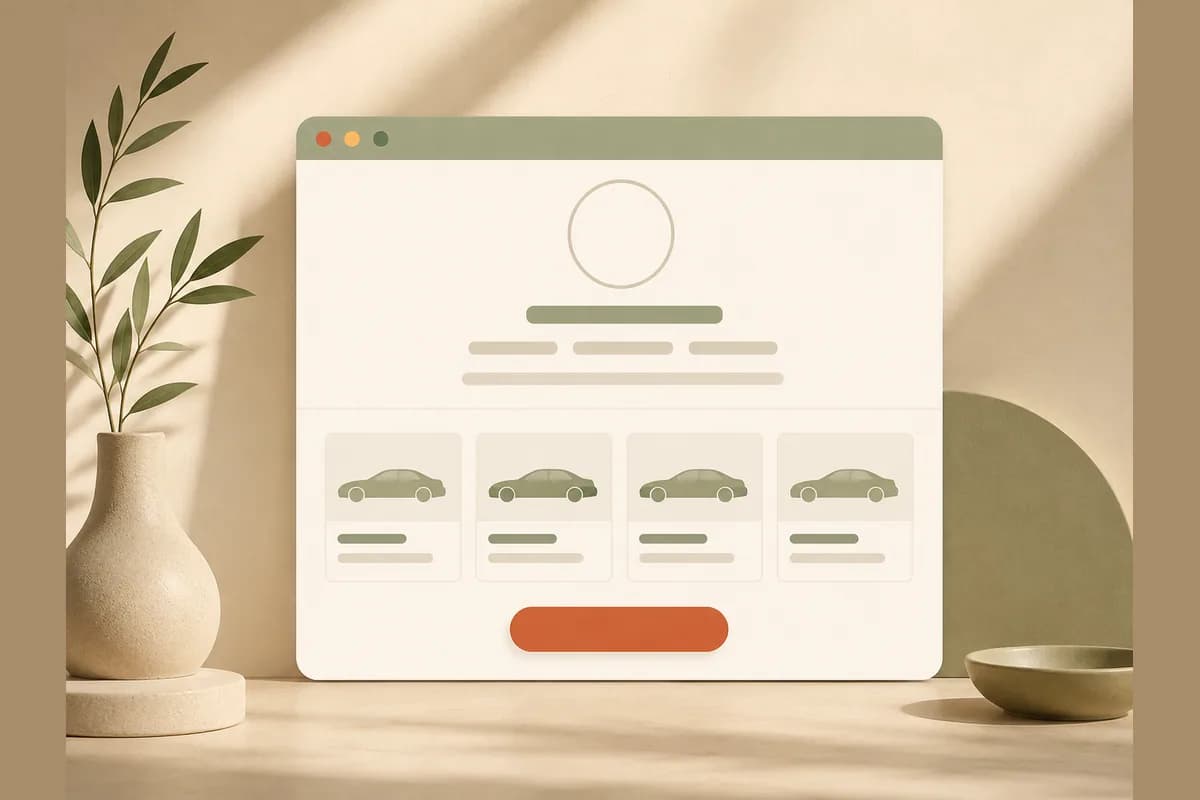
Do not picture a ten-page site. Picture one sharp page that answers everything a buyer asks before they will message you. Here is the minimum.
| Section | Content | Why it matters |
|---|---|---|
| Short profile | Photo, name, brand/dealership, service area | Buyers want to know they are talking to a real person, not an anonymous account |
| Models + pricing | Popular models, current prices | The first question is always price, so answer it up front |
| This month's promo | Discounts, bonuses, low down payment, gifts | The reason they contact you now rather than next month |
| Payment estimate | Rough down payment and monthly figures | Most car buyers finance and want a quick picture |
| Testimonials | Quotes from past buyers, handover photos | Social proof that closes doubt |
| Contact button | Sticky, straight to your number | This is the lead's front door, so never hide it |
Notice what is missing: no "company history" section, no gallery of fifty photos. The car-sales pages that win are usually the leanest ones. The faster a buyer finds pricing, the promo, and the contact button, the more likely they are to tap it.
Two ways to build it: hire it out or build it with AI
There are two sensible routes here, and both are valid depending on your needs.
The first is hiring a vendor or freelancer. You give a brief, they design and build, then you review. This makes sense if you need a very specific design or simply do not want to touch the technical side. Our guide on landing page services walks through choosing a vendor.
The second is building it yourself with an AI website builder. You describe your business in one sentence, a finished site is ready to publish in a few minutes, and you edit any part just by typing the change. "Shorten the headline." "Add a finance estimate section." "Move the contact button to the top." No code, no revision queue.
| Factor | Hire a vendor | Build with AI |
|---|---|---|
| Time to live | Days to weeks | The same minute you start |
| Cost | One-off fee plus edit charges | Monthly subscription, unlimited edits |
| Updating promos | Message the vendor, wait | Type it yourself, changes instantly |
| Custom design | Fully open | Good, within patterns that convert |
| Control | In the vendor's hands | Fully in yours |
Take a concrete example. A rep who sells one popular brand needs to swap the promotion at the start of every month because the down-payment offer changes. With a vendor, that means sending a message, waiting, and sometimes paying a per-change fee. With an AI builder, they open the page, type "change the promo to a lower down payment on the family model", and it is done before the coffee cools. For work where promos and prices change constantly, that update speed is not a bonus feature. It is the whole point.
How to show up on Google for local searches
Buyers do not type "car salesperson website". They type things like "family car price [city]", "low down payment finance [model]", or "trusted [brand] salesperson [city]". Your site needs to speak that language.
Three fundamentals move the needle most. First, put the brand, popular models, and your city clearly in the page title and body text, not just inside images. Second, name the specific areas you serve, such as "serving the north and west sides of the city and the nearby suburbs". Third, keep the page light and fast on phones, because almost every car search happens on mobile and Google penalizes slow pages.
Tip: One focused page answering "price, promo, monthly payment, and how to reach you" for a single brand in a single city climbs Google far more easily than a heavy site trying to sell every brand in every city at once. Focus beats coverage.
If you want the technical basics, we cover them in our SEO basics guide. The good news is that a site built with SEO baked in (clean titles, a correct heading structure, a sitemap, fast pages) has already handled most of that technical work for you from day one.
Turning visitors into leads that reach you
Traffic without conversion is just a number. The whole point of a car-sales website is turning the people who arrive into messages that land in the app you actually check.
The pattern is simple. Alongside a sticky contact button, offer one small form, like "request a finance estimate" or "book a test drive". The moment a visitor drops their name and number, it forwards straight to your messaging app. No inbox to check on a schedule, no dashboard to open. The prospect lands in the app you already hold all day. In Forgelo, this flow is built in: lead forms route straight to WhatsApp.
We break down how to structure a page that actually converts in how to build a selling website, and we cover turning traffic into direct messages in turn visitors into WhatsApp leads. For a salesperson, those two things are the backbone of the entire site.
What it costs
On the numbers, compare two scenarios, not just the sticker price but the total over the next year.
Through a vendor or freelancer, service fees typically start at a small amount for a simple landing page and rise to several hundred dollars for something fuller. That figure usually excludes the yearly domain, hosting, and revision fees every time you need to swap a promo or add a new model. For work that changes as often as a monthly promotion, those revision fees quietly stack up. There is a fuller price comparison in our guide on website pricing.
Through an AI website builder, the cost is a predictable monthly subscription. Forgelo starts at nine dollars a month (about Rp 149,000), stepping up to nineteen and thirty-nine dollars (about Rp 299,000 and Rp 599,000) for more features. That subscription covers hosting, publishing to a free subdomain or a custom domain, built-in SEO, and unlimited edits. You can see the details on the pricing page. For a rep who changes the promotion every month, "unlimited edits" is where the value shows up most.
The mistakes that waste a sales website
Let us be honest, because a lot of sales websites get built and then forgotten. Here are the traps that come up most.
- Too many pages, no clear call to action. Visitors do not know what to click. One dominant contact button beats ten menu items.
- The promo never gets updated. The site still shows January's offer in August, and trust evaporates on the spot.
- Copying the dealership site word for word. Buyers do not need the manufacturer's history. They need a reason to buy from you, the person.
- Rushing to run ads before the page converts. Paying to send people to an unclear page just burns money. Fix the page first, then push traffic.
Here is the contrarian take. Plenty of reps will happily buy expensive marketplace leads that get shared around, yet balk at spending an afternoon building one simple page that delivers exclusive leads for far less every month. The leads you capture from your own site are not resold to anyone. Over a few months, that difference is usually bigger than the price of the builder subscription itself.
The takeaway
As a car salesperson, your biggest assets are trust and how fast you respond. A personal website strengthens both: you look professional when a buyer checks your name, and prospects flow straight to your messaging app when they are ready to talk. You do not need a grand website. You need one sharp page with pricing, promos, a payment estimate, testimonials, and a contact button that is easy to tap.
Hire a vendor if your needs are genuinely custom and you have the budget. For most salespeople, building it yourself with AI is the fastest, cheapest way to get live this week while still letting you update it yourself at the start of every month. The worst choice is delay. A simple page that is already live beats a perfect one that only exists in your head. Start now, and let Google bring buyers to your door.