If you run a warung, a home bakery, a coffee stall, or a frozen-food side hustle, sooner or later you hit the same wall: Instagram alone isn't enough. That is where a website UMKM makanan, a website for a small food business, comes in. Not a flashy site with animations everywhere, just one clear page that shows what you sell, what it costs, and how to order in a single tap. The menu is visible any time, orders land straight in WhatsApp, and the customer who found you on Google doesn't wander off to the place next door.
This guide covers what a food business website actually needs, not the expensive features nobody uses. We will walk through the online menu, WhatsApp ordering, three real models of a food website, building it yourself with AI versus hiring someone, a little local SEO, and the practical steps to get your site live this week.
Why a food business needs its own website, not just Instagram
Here is an opinion that might sting a little: leaning only on Instagram and delivery apps is like renting a stall in someone else's mall. Busy, sure. But you don't hold the keys. Your feed gets buried by the algorithm, app commissions eat your margin, and if your account runs into trouble, your whole storefront can vanish overnight.
A food business website changes that. It is an asset you fully own. Your menu, prices, brand story, and order button live permanently at one address you control. When people search for "nasi box" or "iced coffee near me" on Google, you have a chance to show up, instead of just floating among hundreds of accounts on social media.
This doesn't mean abandoning Instagram or delivery apps. Quite the opposite. The website becomes the hub, and social media becomes the path to it. Your Instagram bio links to the site, promo stories point to the menu page, and serious customers get every detail without scrolling through hundreds of posts. That combination is far stronger than social media alone. If you want the short list of what every site should have, our guide to small-business website essentials lays it out.
Note: You can still sell on delivery apps. A website doesn't replace them, it serves the people who want to order direct, pick up themselves, or place a large order for an event. These two channels reach different customers.
Your online menu is a storefront that sells around the clock
The menu is the heart of a food website. If only one thing has to be right, it's the menu. People come to your site not to read a long company history, but to learn one thing: what can I order, and how much is it?
A good online menu shares a few simple traits. It is grouped clearly (food, drinks, bundles, add-ons), prices are shown up front so nobody has to ask, and even plain photos still look appetizing. You don't need an expensive studio shoot. Phone photos in good light are plenty for most warungs and cafes.
Here is what people forget: a food menu is alive. Prices rise, seasonal items come and go, things sell out. A website that is a pain to update goes stale fast, and a stale menu is worse than no menu. Picture a customer showing up because they saw a "15k value meal" on your site, when the price went up three months ago. That breaks trust.
This is where editing matters. With a tool like Forgelo, you update the menu just by typing, for example "set the grilled chicken to 22k" or "mark iced latte as sold out". The site changes instantly. No design software, no waiting on a vendor to reply. That is what keeps a food menu honest without turning it into a burden.

WhatsApp ordering: from hungry to checkout in one tap
Many food business owners assume they need a full checkout system with a payment gateway. For most warungs, caterers, and cafes, that is overkill and it actually scares customers away. What fits best: WhatsApp ordering.
The flow is smooth. A customer views the menu, picks what they want, and taps the order button. A WhatsApp chat opens with the order summary already written, ready to send. You receive it, confirm stock and delivery, point them to a transfer or pay-on-arrival, and you're done. No long forms, no accounts to create, no customer abandoning a cart halfway.
Why does this suit food so well? Because food decisions are fast and personal. People want to ask "can I get it without chili?", "what time is it ready?", or "do you deliver to my area?". A chat answers that instantly, something an automated cart can't. With Forgelo, lead forms and order buttons point straight to your WhatsApp number, so every question lands where you already reply.
Tip: Set up quick-reply templates in WhatsApp for your most common questions (delivery fee, opening hours, minimum order). The website sends people to the chat, but your reply speed closes the sale. To go deeper on this, read turn visitors into WhatsApp leads.
Three real models of a website UMKM makanan
Not every food business needs the same site. Here are three of the most common models of a website UMKM makanan, so you can picture which one is closest to your own business.
Warungs and casual restaurants. The focus is the daily menu and location. One page with a full menu and prices, an address plus a Google Maps link, opening hours, and a WhatsApp order button for delivery or reservations. Example: a soto spot that lists its menu and photos, plus an "Order Delivery" button that opens WhatsApp pre-filled with "Hi, I'd like to order soto...".
Coffee shops and cafes. Here the brand and atmosphere sell too. Alongside the drinks and snacks menu, there is usually a photo of the space, a short story about the coffee, and info about events or seating. The WhatsApp button handles table reservations or pre-orders for events. The visual impression matters because customers are choosing a place, not just a drink.
Catering and frozen food. This model needs the most detail. Catering has to show packages (boxed meals, buffets, party trays), minimum orders, and delivery areas. Frozen food needs a product list, per-item prices, and shelf-life info. WhatsApp ordering becomes essential here because orders are often custom and need a conversation about quantity, date, and delivery.
All three share the same backbone: a clear menu, easy WhatsApp contact, and location info. Only the emphasis differs. The good news is you don't have to decide everything now. Start simple, then add sections as your business grows.
Build it yourself with AI vs hiring someone
The question that comes up most: build it yourself or hand it to a professional? For a small food business, the answer leans toward building it yourself with AI, mainly because menus change so often. Here is the honest comparison.
| Factor | Build it yourself with AI | Hire an agency or freelancer |
|---|---|---|
| Cost | Monthly subscription, from around 9 dollars | One-time fee of a few hundred dollars upward, plus revisions |
| Time to launch | Minutes to a few hours | A few weeks |
| Menu and price updates | You type it, changes instantly | Send to the vendor, wait in line |
| Control | Fully in your hands | Depends on the vendor's schedule |
| Basic SEO and mobile | Set up automatically | Depends on the package you buy |
| Best for | Warungs, cafes, catering, frozen food | Large F&B brands, heavy custom features |
The main reason AI wins for food isn't just price, it's update speed. Food businesses are dynamic. Menus change, ingredient costs climb, weekend promos appear. If every small change has to go through a vendor and a revision fee, your site falls behind fast. Building it yourself means you can fix a price at ten at night when it crosses your mind, without waiting on anyone. If you want to see the full cost breakdown, our guide on how much a website costs digs into the numbers.
Hiring still makes sense if you are a large F&B brand with many outlets, need point-of-sale integration, or a complex custom ordering system. But for warungs, cafes, and home caterers, most of the agency fee goes toward work that can now be automated.
Local SEO so hungry people nearby actually find you
A great food website that nobody finds is like a delicious warung down a dead-end alley with no sign. The good news is that local SEO for a food business isn't complicated. The core idea is to help Google understand what you sell and where.
A few basics make a big difference: name your city or area in the page title and body text (for example "Boxed-Meal Catering in Sleman"), list your full address and opening hours, and keep that info consistent with your Google Business Profile. A fast site that is clear about its menu and firm about its location has a good chance of showing up when someone types "fried chicken near me" or "coffee near here".
Site speed matters too, especially since almost everyone opens these sites on a phone while hungry and impatient. A heavy, slow-loading site gets abandoned before the menu even appears. A good AI website builder sets up this technical foundation automatically, so you don't need to know the jargon. Google favors sites that are fast and tidy, no matter who built them. Our website SEO basics guide covers the essentials without the technical overload.
Tip: Add a short FAQ section to the page: delivery area, minimum order, payment methods, and the last time you take orders. Besides helping customers, these questions often match what people type into Google, so they help your SEO too.
How to launch your website UMKM makanan this week
Here is the best part: you don't have to wait weeks. Launching your website UMKM makanan now is far faster than most owners expect. Here is the practical order.
First, gather the basics: your menu and prices, a few food photos from your phone, your address, opening hours, and an active WhatsApp number. This is the most time-consuming part, so prepare it before you touch the website at all.
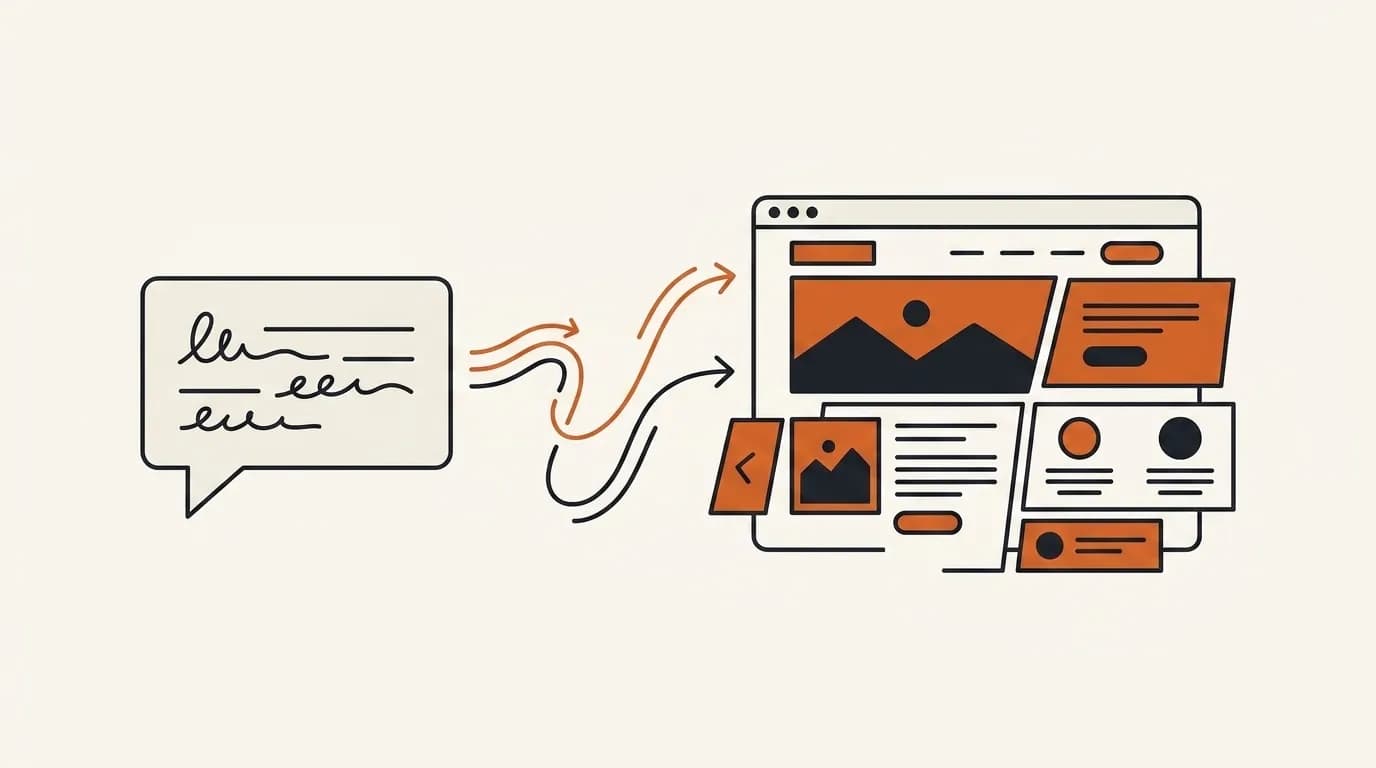
Second, describe your business in one sentence to Forgelo, for example "a grilled-chicken warung in Sleman that does delivery and catering". A complete site with a menu structure, a contact section, and a WhatsApp button appears in a few minutes. From there you just refine it: drop in your real menu, swap the photos, fix the prices, all by typing what you want.
Third, publish. You can start free on a subdomain to judge the result, then add your own domain (like yourwarung.com) once you're confident. After it goes live, paste the link into your Instagram bio, WhatsApp status, and Google Business Profile. Check the pricing to find the plan that fits your scale.
Don't wait until everything is perfect. The menu can keep improving, photos can be swapped later, and promos can be added any time because editing is just typing. What matters is that your site is live and taking orders today. A simple food website that is already online beats a perfect one that is still a plan in your head. Start with what you have now, and let hungry customers find you.