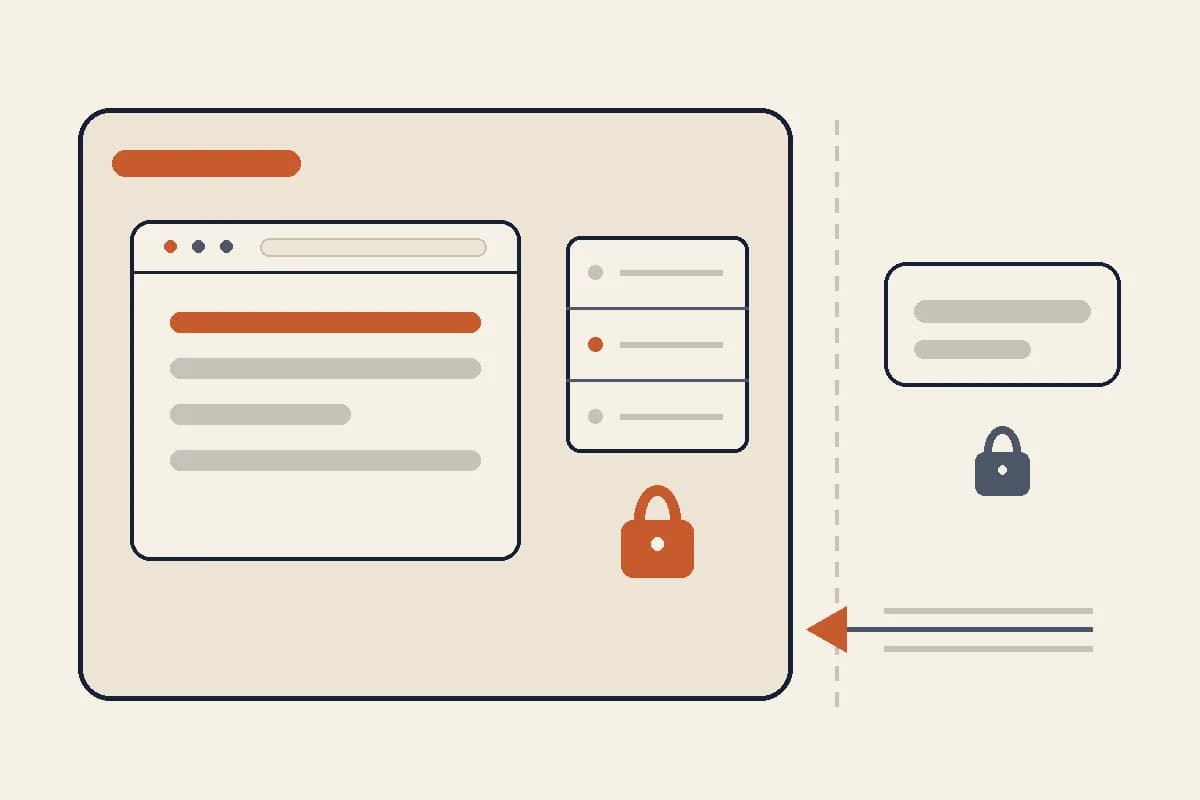
A custom domain and a free subdomain both make your website reachable. The difference lies in who owns the address, how professional it looks, how flexible it is for promotion, and your long-term strategy. A free subdomain suits a fast start. A custom domain suits the point where the website becomes the official face of your business.
Here is an example. brightcoffee.forgelo.com is a free subdomain. brightcoffee.com is a custom domain. Both can point to the same page, but people see them differently. One feels like a page on a platform, the other feels like the business's main address.
There is no single answer for every case. The best choice depends on your business stage. If you are just testing an idea, a free subdomain can make a lot of sense. If you are already running ads, printing brochures, or want to build long-term SEO, a custom domain is usually the better fit.
What is a free subdomain?
A free subdomain is a website address that sits under the platform's domain. You do not buy a domain yourself. The platform gives you an address you can use right away, usually once the website is published.
Its main advantage is speed. You do not need to check domain availability, buy a domain, configure DNS, or wait for propagation. Within minutes, the website has a link you can share.
A free subdomain also works well for previews. You can send the link to partners, your team, or a small group of potential customers for feedback. For test pages, a temporary portfolio, invitations, small events, or validating an offer, it is enough.
The downside is that your address still carries the platform's name. That is not a big problem for a test, but it can make you look less serious when used for ads, proposals, or a long-term brand.
What is a custom domain?
A custom domain is a website address you own. You buy it from a domain registrar, then point it at the platform or hosting that runs your website. Examples include ayuflowers.com, studioarka.co, or legalpartner.co.uk.
The main advantages of a custom domain are ownership and credibility. The address is easier to remember, looks cleaner in print, and is better suited to being the center of your brand. Visitors are also more used to trusting an address that stands on its own.
A custom domain matters for consistency too. You can use the same address on your Google Business Profile, Instagram bio, business cards, ads, invoices, and professional email. The more often the same address appears, the stronger the brand memory it builds.
The effect on your brand
For branding, a custom domain almost always wins. A website with its own address feels like an official asset. A free subdomain feels like a temporary page, even when the design is good.
Picture two links on a brochure:
brightcoffeeshop.forgelo.combrightcoffeeshop.com
The second is shorter, cleaner, and easier to say out loud. When a customer asks "what's your website?", a custom domain is the more natural answer.
Still, do not let branding become a reason to delay your website. Many businesses spend weeks hunting for the perfect domain while their sales page never goes live. If you are unsure, start on a subdomain. Once your offer is clear, pick a strong domain.
The effect on SEO
For long-term SEO, a custom domain is healthier, because reputation signals build up at a domain you own. Every backlink, mention, and brand signal points to an address you control.
A free subdomain can still be indexed, depending on the platform and its technical setup. But if you move to a custom domain one day, you need to make sure redirects and canonicals are set up correctly so the signals do not scatter.
If your goal is to be found on Google for years, a custom domain deserves priority. If your goal is only to test a landing page for two weeks, a free subdomain is enough.
The effect on ads and campaigns
For ads, a custom domain is more convincing. People tend to trust a link that looks like an official brand. Ad platforms and analytics are also easier to keep tidy when your domain stays consistent.
A free subdomain can be used for internal campaigns, message testing, or pages that do not depend much on trust. But for paid ads aimed at a cold audience, a custom domain usually makes a more serious impression.
A custom domain is also easier to use with UTM parameters, campaign landing pages, and cross-channel tracking. Every channel points to the same property, not a temporary address that might change later.
The effect on professional email
A custom domain opens the door to professional email such as hello@yourbusiness.com. A free subdomain is usually not suitable for official email. For businesses that send proposals, invoices, or sales follow-ups, email on your own domain adds another signal of trust.
Email is not required on day one, but it is often a strong reason to get a domain. A website and email on the same domain make your business identity feel more complete.
When is a free subdomain enough?
A free subdomain is enough if you are still testing an idea, are not sure about your brand name, are building an internal demo, are making a temporary event page, or want to send a preview to a few people. It also works when you need a page today and have not had time to buy a domain.
In this context, speed matters more than perfection. A website you can test now is more useful than a good domain with no page behind it.
When should you use a custom domain?
Use a custom domain once the website starts becoming a core business asset. The signs are clear: you list the website on business cards, social profiles, proposals, your Google Business Profile, invoices, ad materials, or SEO content.
It is also best to switch to a custom domain before you get serious about backlinks and long-term content. The earlier signals build up on your own domain, the less migration work you face in the future.
How to choose without overthinking it
Use a simple rule. If you are not yet sure about your offer, name, or page structure, start on a free subdomain. If you are sure the website will be used publicly and seriously, choose a custom domain.
Do not buy a domain just out of fear of missing out, but do not stay on a subdomain too long once the business is active either. The cost of a domain is usually small compared with the trust it adds.
How Forgelo supports both
With Forgelo, you can start on a free subdomain to get a live page up quickly. Once the page is ready for serious use, you can connect a custom domain. This path means you do not have to decide everything at the start.
It suits small businesses that want to move fast. Build the website first, check the copy and layout, share it with a few people, then upgrade the address once you are confident.
Example decisions by business stage
If you are just building a page to test an offer, a free subdomain is a sensible choice. Say you want to know whether people are interested in a new consulting package. Build a landing page, send it to a few potential customers, measure the response, then refine the message. At this stage, learning fast matters more than a perfect address.
If you already have a running business and the website will be used in your Instagram bio, Google Business Profile, Meta ads, proposals, or catalog, use a custom domain. A short address makes every channel feel consistent. People also find it easier to remember and share.
If you are still changing your brand name, do not rush to buy lots of domains. Pick one main domain once you are reasonably sure of the name. One clear domain used consistently is better than five cheap domains that were never pointed anywhere properly.
Risks when moving from a subdomain to a custom domain
Moving from a subdomain to a custom domain can be safe if it is done carefully. Make sure old pages redirect to the new address if the platform supports redirects. Make sure canonicals point to the new domain. Submit the new domain's sitemap in Search Console. Check the home page, key articles, and contact form once the domain is active.
Risks appear when the old address is left live with no redirect, or when two versions of a page are both accessible without a clear canonical. That can split your SEO signals. For a small website, this is easy to prevent with a careful publishing checklist.
Do not forget to update links in your social profiles, proposals, catalogs, QR codes, ad materials, and Google Business Profile. Plenty of businesses have switched domains but are still spreading the old subdomain link elsewhere.
Conclusion
A free subdomain wins on speed and validation. A custom domain wins on brand, long-term SEO, ads, and trust. The best choice is not the most technical one, but the one that fits your business stage.
If you are still testing an idea, start on a subdomain. If the website has become the official face of your business, use a custom domain. Most importantly, do not let the domain decision stop your website from ever going live.