Plenty of business owners assume a landing page and a website are the same thing with two names. In reality the landing page vs website distinction is fundamental, and getting it wrong can waste your time, your money, or a customer who was actually ready to buy. A landing page is built for one single goal. A website is a complete home for everything about your business. This article breaks down the function, the structure, and most importantly: when you need which one.
Here's the short version. If you want someone to take one specific action, like sign up, buy, or fill a form, the landing page wins. If you want someone to browse, compare, and get to know your business in full, a website is what you need. Most small businesses actually need both, just at different moments. Let's unpack it.
What a landing page is and what a website is
A landing page is a single page built to get a visitor to make one decision. No menu leading elsewhere, no exit links that let people wander off, no distractions. The content runs in a straight line: the problem you solve, why you're the answer, some proof, then a call to action. The classic example is a "Sign Up for the Free Webinar" or "Get Today's Discount Bundle" page. People arrive from an Instagram ad or a WhatsApp broadcast, read for a moment, then click one button. Done.
A website is something broader. It's made of many pages connected by a navigation menu: home, about, services or products, portfolio, blog, and contact. A website represents your entire business, not one offer. People can enter from anywhere, click around, and form a full picture of who you are. A dental clinic, for instance, has a website with a list of dentists, types of treatment, prices, hours, and educational articles about oral health.
The core difference isn't size, it's intent. A landing page narrows to one action. A website widens to many possibilities.
Landing page vs website in one table
Before we go deeper, here's the picture at a glance.
| Aspect | Landing page | Website |
|---|---|---|
| Number of pages | Usually one | Many connected pages |
| Goal | One action (conversion) | Full information |
| Navigation menu | Minimal or none | Present, the backbone |
| Traffic source | Ads, social, broadcast | Google search, direct, referral |
| Content focus | One specific offer | The whole business |
| Best for | Campaigns, promos, product tests | Long-term presence |
| Success metric | Conversion rate | Traffic, engagement, conversion |
No row is automatically "better." They solve different jobs. What goes wrong is using one for a task the other should handle.
Function: one goal vs many doors
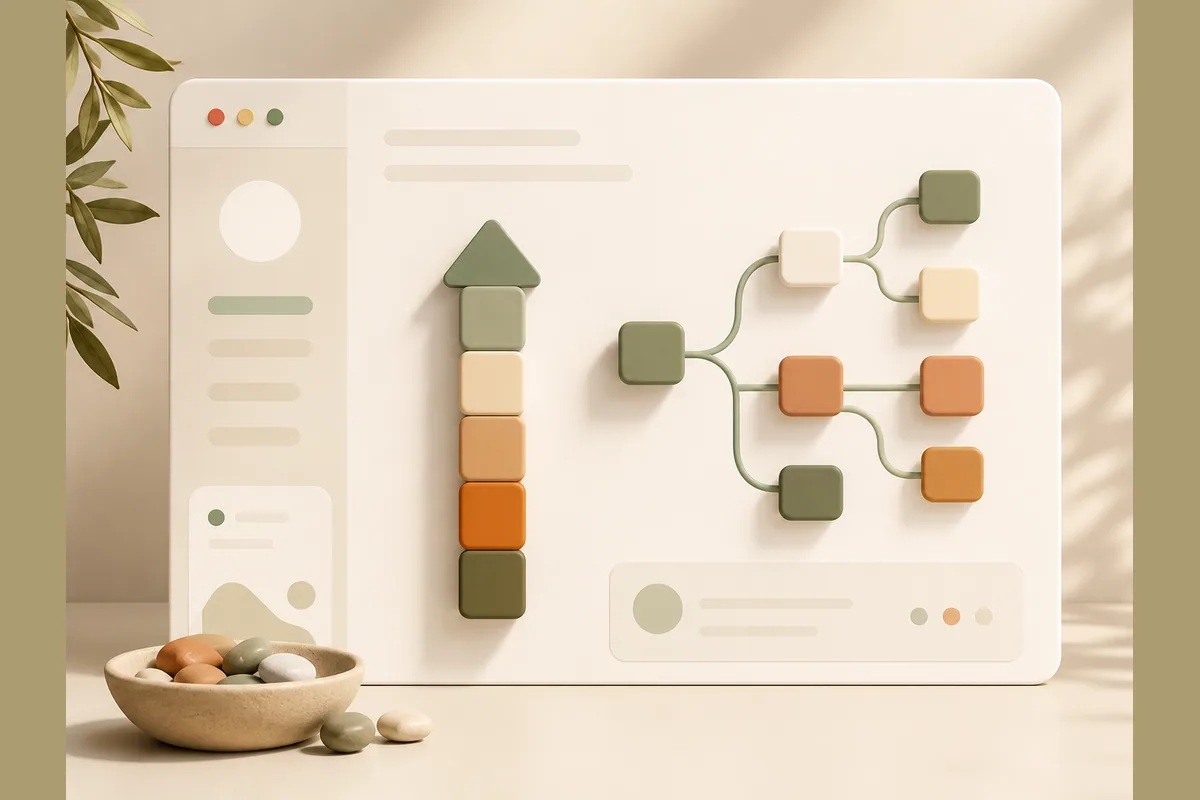
A landing page is like a single checkout counter at a trade show booth. Everything points to one spot: pay, sign up, or leave your contact. Because there's no other path, an interested person finds it easier to finish the action. This is why marketing teams that take ads seriously almost always send ad clicks to a landing page, not to the website home page. A home page has too many doors, and every door is a chance for someone to get lost.
A website works the opposite way, and that's its strength. It serves people who are researching, comparing, or just getting to know you. A prospective wedding photography client might open the website, look at the portfolio, read the pricing, check testimonials, then send a message. That journey needs several pages. If you force all of it into one landing page, it becomes a confusing wall of text and nothing gets read to the end.
Tip: If you run paid ads, watch where you send the traffic. Sending ad clicks to your home page often burns budget, because visitors have too many options and forget why they clicked. A focused landing page usually converts better for the same ad spend.

Structure: how each one is put together
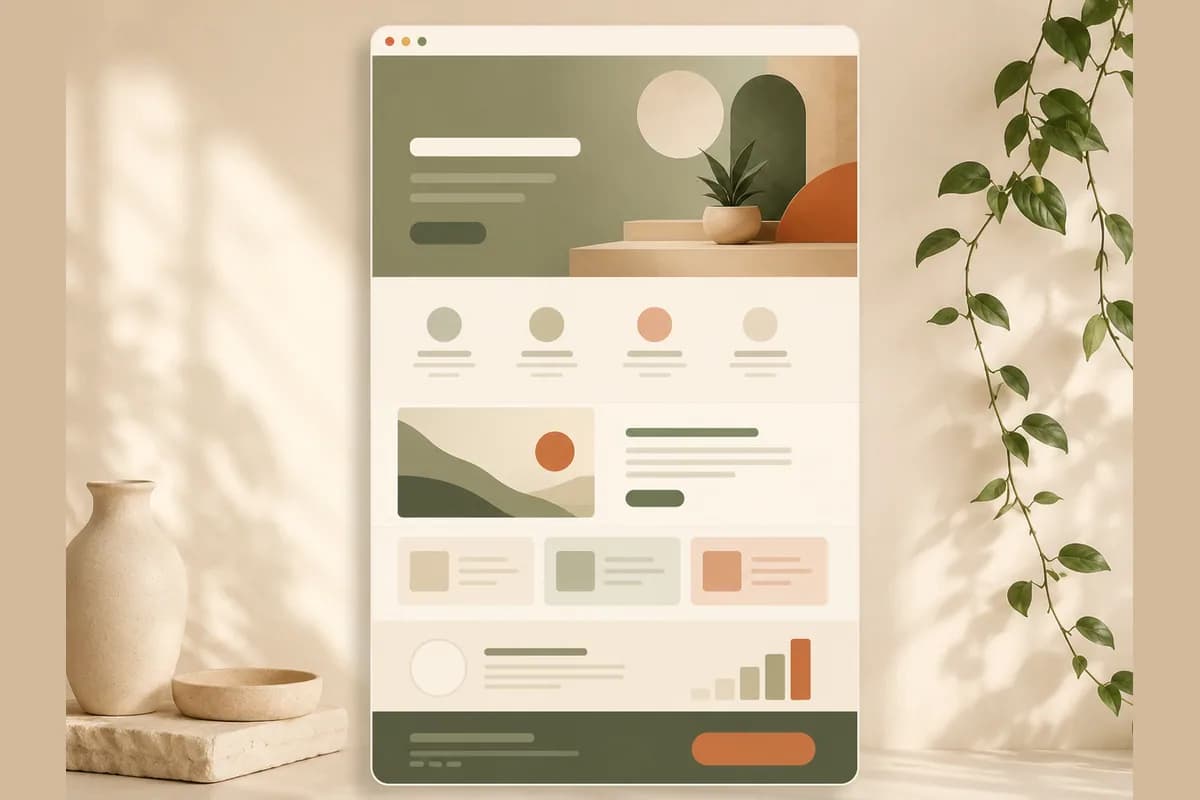
A landing page follows a fairly standard psychological flow. At the top is a headline promising one outcome, then a sub-headline that clarifies it. Below that: the problem the reader feels, the solution you offer, proof (testimonials, numbers, client logos), objection handling, and a call to action repeated a few times. Everything guides the eye downward toward one button. If you're curious what that looks like in practice, examples of effective landing pages show this arrangement in action.
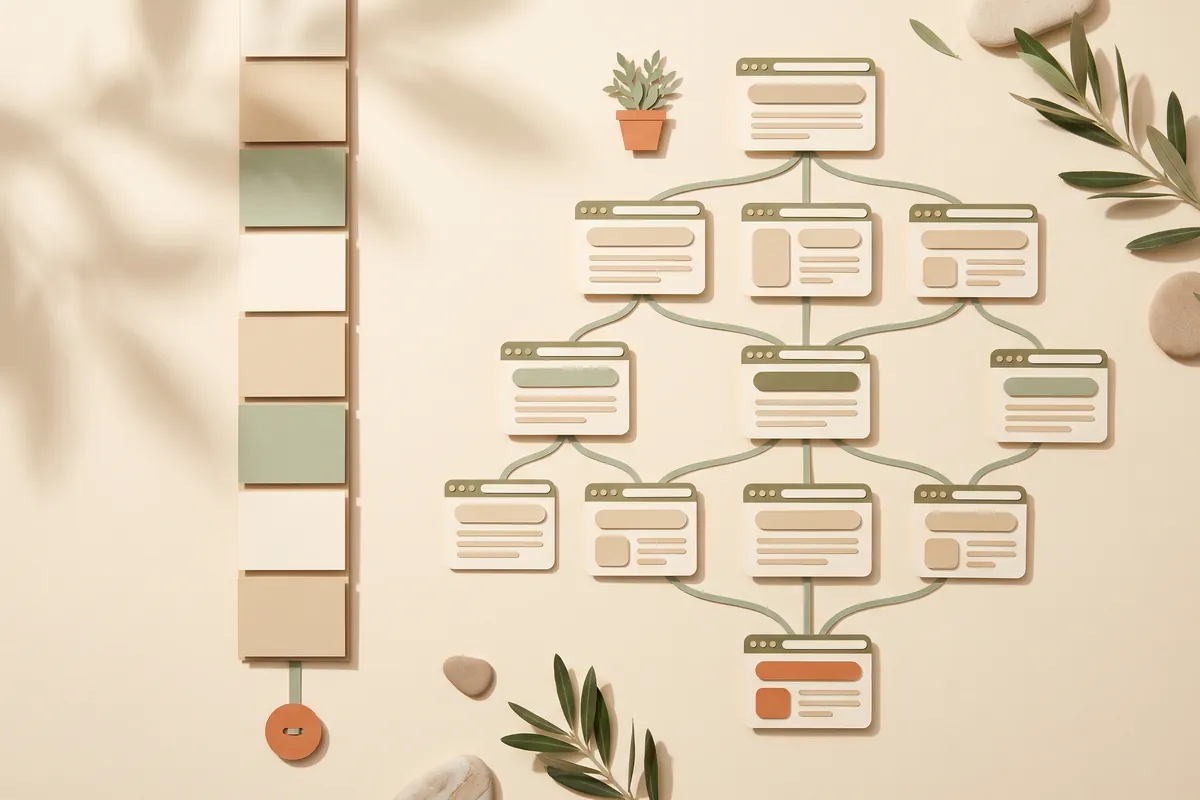
A website's structure branches far more. There's a hierarchy: home at the top, then categories like Services that can split further into sub-pages per service. There's a menu that stays consistent on every page so people don't get lost. There's a footer with contact info and important links. A good website is designed so a visitor can enter from any page (many land straight on a blog article from Google) and still know where to go next. That clean structure is also what helps search engines understand your site, as covered in website SEO basics.
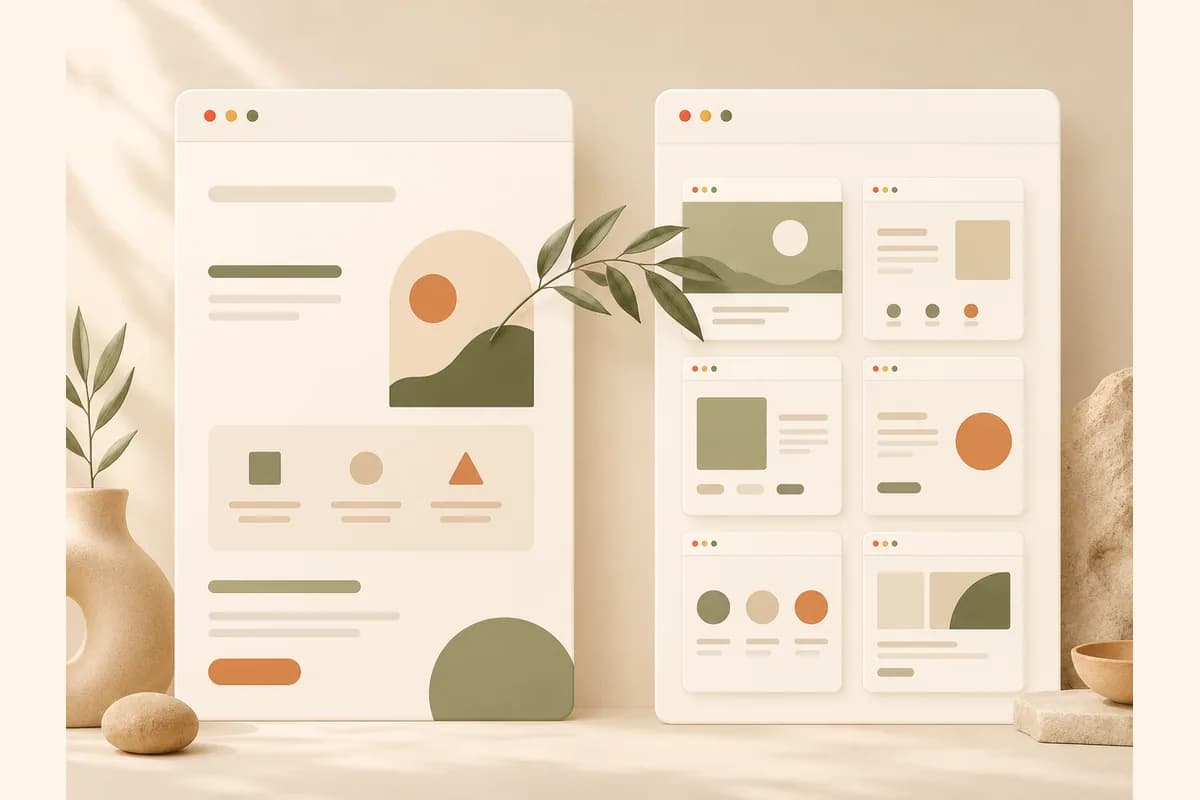
This structural difference is exactly why the two can't just swap in for each other. A landing page is built for focus. A website is built for navigation.
When you need a landing page, when you need a website
This is the most practical part. Choose a landing page when:
- You're running paid ads and need a page that converts clicks into action.
- You're testing one product idea before building a full business.
- You have a single promo, event, or seasonal offer.
- You're collecting leads from one specific campaign, like "download the free ebook."
Choose a website when:
- You want to be found by people searching for your service on Google.
- You have several services or products that need explaining.
- You're building long-term credibility, not just a one-off sales push.
- You want one place that represents your entire business, from about to contact.
A concrete example: a home-based catering business. To show up every day and be found by customers typing "daily catering near me" on Google, it needs a website. But when a holiday approaches and it offers a limited gift-box package, a dedicated landing page focused on that one package will convert far better than tucking the promo into the home page. Same business, two different needs, two different tools.
A five-question check before you build
Still unsure which one a specific page should be? Answer these five questions about the page you are about to make, not about your business as a whole.
- How many actions do you want from this page? If the honest answer is one, it is a landing page. If you want people to browse, read, compare and then decide, it belongs on a website.
- Where will visitors come from? Traffic you pay for or push yourself, such as ads, a broadcast message or a social post, usually arrives with one intent and suits a landing page. Visitors from Google searches arrive with many different questions and need several pages to get answers.
- How long will the page live? A promo that ends next month is landing page material. Information that stays true for years, like your services, location and team, belongs on the website.
- Does the visitor need to explore before deciding? A buyer comparing packages, reading reviews and checking your past work needs room to move. Someone claiming a limited offer does not.
- How will you judge success? If one number tells you whether the page worked (sign-ups, orders, form submissions), you are describing a landing page. If success means people finding you, reading more and coming back, you are describing a website.
If your answers point both ways, you probably need both: the website as the permanent home, and a landing page for the specific campaign, linked from one to the other.
The mistake that blurs the landing page vs website line
Here's my honest opinion. A lot of people treat a landing page as a "cheap, small version of a website." That assumption is wrong and it leads to bad decisions. A landing page is not a trimmed-down website. It's a different tool with a different goal. Treating it as a "mini website" makes people cram too much information into a landing page (so it loses focus) or makes their actual website too thin (just one long page that can't rank on Google).
Another common mistake: using the website home page as an ad destination. The home page is built for strangers who need to explore, while people who click an ad usually already have a specific intent. Sending them to the home page is like telling a guest who came to buy a concert ticket to wander the lobby first. Most will leave.
Note: You don't have to pick one forever. The healthiest pattern for a small business is to have one main website as the information hub, then build separate landing pages whenever you run a campaign or launch a product. The website handles long-term discovery, the landing pages handle campaign conversion. They link to each other.
A slightly contrarian take: if your budget and time are genuinely tight and you're not running any ads yet, don't worry about a landing page at first. One clean business website with a clear contact page is enough to start getting inquiries. The landing page comes later, when you actually have a campaign for it to support.
Building both without coding
The good news is you don't need separate tools for each. Businesses used to hire out one job for the website and another for the campaign landing page, and the costs stacked up. Now a single AI website builder can produce both from a short description.
With Forgelo, you just describe your business in one sentence, and a ready-to-publish website is generated in a few minutes. Want a focused landing page version for a campaign? Just describe the specific offer, and the result can go live on a free subdomain or your custom domain. Every edit is as simple as typing the change you want, no code required. The lead forms route straight to your WhatsApp, so inquiries land where you already reply, which matters just as much for a campaign landing page as for a website's contact page.
If you'd rather start with the campaign landing page first, the guide on how to make a landing page walks through the steps. And because pricing is subscription-based (starting at $9 per month, see the full pricing), you can build a main website plus as many campaign landing pages as you need without a per-page bill.
The bottom line: the landing page vs website question isn't about which is better, it's about matching the tool to the job. Need one action? Landing page. Need a full presence? Website. Need both, like most growing businesses do? Use a tool that builds either one, then start with whatever's most urgent today.