A white label website builder lets you sell finished websites under your own brand while the software behind them stays invisible to your client. You do the client conversations, the branding, and the invoice. The tool does the production. For freelancers and small agencies, this is the difference between turning down website work because you have no developers, and quietly adding a profitable service line this month.
This guide walks through how the model works, what to look for in a tool, how the money actually adds up, and where the approach has honest limits. It is written for the person who keeps hearing "can you also do our website?" from clients and keeps saying no.
What is a white label website builder?
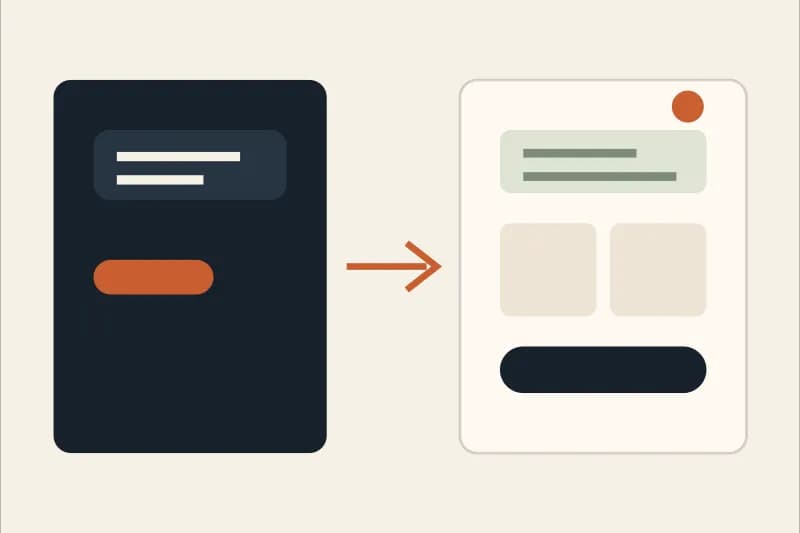
A white label website builder is a site-building tool that lets you deliver the finished product without the tool's branding on it. The client sees a website on their own domain, built and managed by you. They never see a third-party logo, a "made with" badge, or a login page that belongs to someone else's product.
The concept is old. Agencies have resold hosting, email tools, and ad management this way for years. What changed recently is the production side. Classic builders still required someone to drag sections around for hours. AI builders reduce that work: with Forgelo, you describe the client's business in one sentence and a complete draft is generated in the background in a few minutes. Edits happen by typing what you want changed. That turns website production from a project into a focused task.
The combination matters. White label solves the branding question. AI generation solves the labor question. Together they make it realistic for a one-person shop to sell websites at agency polish without agency headcount.
Note: White label is not about deceiving clients. It is standard service packaging. Your accountant does not disclose their spreadsheet software, and your printer does not disclose their press brand. Clients pay you for outcomes and accountability, not for tool disclosure.
Product note: Forgelo does not currently offer a white label agency portal. Its paid plans can remove the Forgelo badge and connect a custom domain, which can support client delivery, but account ownership, billing, and handoff still need to be managed by the agency. Treat the checklist below as a category guide, not a promise that every feature is available in Forgelo today.

Why agencies sell websites this way
If you run a marketing, design, SEO, or social media service, your clients already trust you with their brand. When their website is outdated, you are the first person they ask. Historically you had three bad options: hire a developer you cannot keep busy, subcontract to a freelancer whose quality you cannot control, or decline and watch the budget go elsewhere.
White label reselling is the fourth option, and it fixes the structural problems of the other three:
- No payroll risk. You pay a monthly subscription, not a salary. If website work dries up for a month, your cost is a few dollars, not a developer's wage.
- You keep the client relationship. Subcontracting always risks the freelancer being one email away from your client. With white label, there is no third human in the room.
- Delivery speed becomes a selling point. "First draft this week" is a line most local competitors cannot say. With AI generation the first draft can genuinely exist the same day you sign the deal.
- Recurring revenue attaches naturally. A website needs updates, and you are the only one who can make them. A monthly care fee is the easiest retainer you will ever sell.
There is also a defensive reason. If you run ads or SEO for a client whose website is broken, your results suffer and you get blamed. Owning the website means owning the landing experience your other services depend on. Our piece on what a small business website actually needs doubles as a useful scoping checklist for those client conversations.

What to look for in a white label website builder
Not every builder that says "white label" delivers the same thing. Evaluate against this list before committing:
| Requirement | Why it matters for resellers |
|---|---|
| No visible tool branding on published sites | The entire premise; verify on a real published page |
| Custom domain publishing | Client sites must live on the client's domain |
| Fast production | Your margin is your time; hours per site kill the model |
| Simple edits after launch | Update requests are constant; they must take minutes |
| Built-in SEO fundamentals | Clients expect to be findable without extra plugins |
| Lead capture that clients actually check | Forms feeding a dashboard nobody opens waste the site |
| Predictable flat pricing | You are quoting fixed prices; your costs must be fixed too |
Two of these deserve emphasis. First, edit speed: post-launch changes are where reseller margins usually die, because a twenty-minute change request that takes two hours breaks your pricing. Edit-by-prompt fixes this, since "change the opening hours and add the new service" is literally the edit. Second, lead capture: Forgelo routes form submissions straight to WhatsApp, which is where small business owners already live. A lead that lands in a chat gets answered; a lead that lands in an unread inbox does not. We wrote more on that in turning visitors into WhatsApp leads.
If you are still comparing tools broadly, our rundown of the best AI website builders covers the wider field.
The economics: pricing websites you build in minutes
Here is where the model gets interesting, because your cost structure looks nothing like a traditional web shop's.
Your input costs are the current builder subscription plus your time, which AI generation can compress to a few hours per site including client back-and-forth and quality control. Check the live pricing page before quoting because plans and limits can change. Your output price, meanwhile, is anchored to what websites cost in your market, not to what they cost you.
A worked example, with numbers you should adapt to your own market:
| Line item | Illustrative amount |
|---|---|
| Setup fee you charge the client | $400 to $800 one-time |
| Monthly care fee you charge | $30 to $75 per month |
| Your tool cost | A single subscription covering your work |
| Your time per site | A few hours, mostly conversation and polish |
Price on value, never on effort. The client is not buying your hours; they are buying a professional presence that produces inquiries. A cafe owner comparing your $500 quote against a traditional agency's $2,000 quote sees a bargain. They do not see, and do not care, that the initial draft was produced in a few minutes. If pricing feels uncomfortable, read our honest breakdown of how much a website costs and position yourself inside the range clients already expect.
Tip: Lead with the monthly care fee, not the setup fee. Ten clients on modest monthly care is dependable recurring revenue that smooths out the feast-and-famine cycle every freelancer knows. The setup fee is nice; the retainer is the business.
A delivery workflow that scales without a dev team
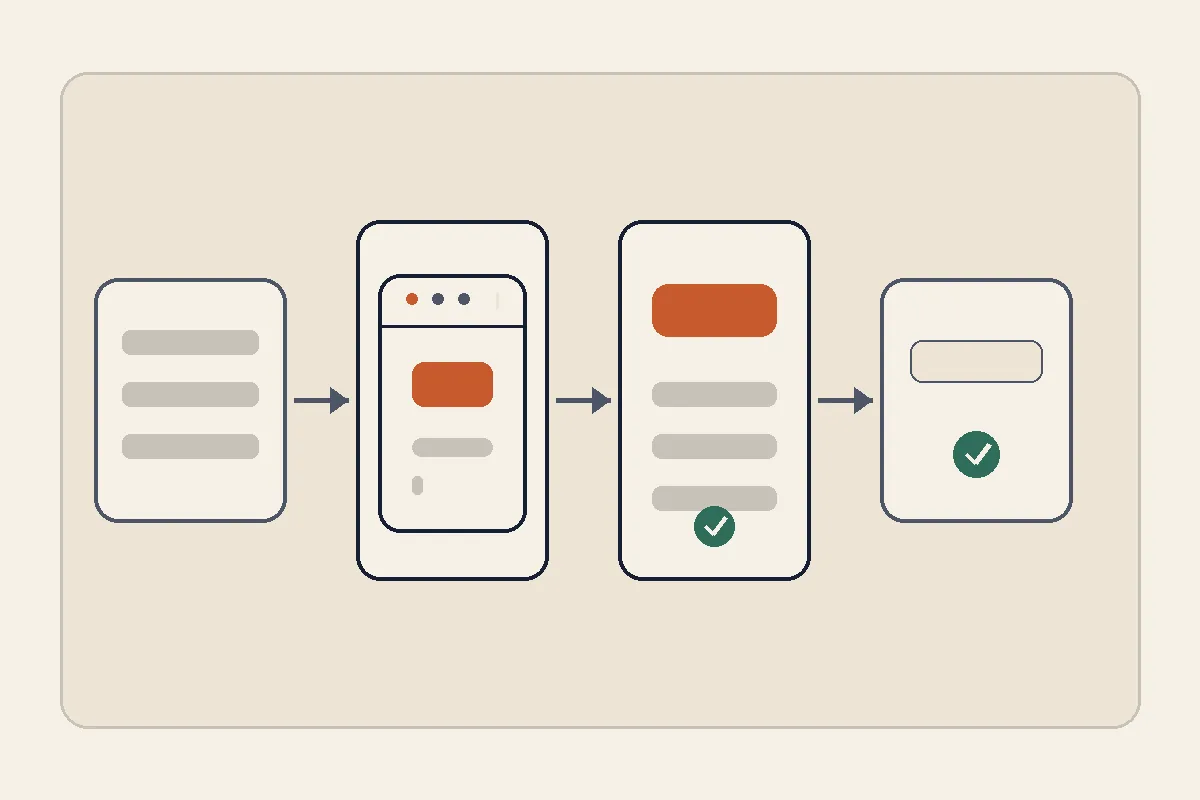
Selling is half the model. The other half is a repeatable process so each site takes hours, not weeks:
- Intake, 30 minutes. One call or form: what the business does, who it serves, services and prices, photos, contact details, and the one action visitors should take.
- Generate. Feed a one-sentence description of the business into the builder. Forgelo runs the job in the background and the complete draft is typically ready in about 4.5 minutes.
- Refine by prompt. Type the changes: swap the headline, insert real prices, adjust sections to match the intake notes. This is taste work, and it is where you earn your fee.
- Client review, one round. Send a preview link. Collect feedback in a single batch instead of drip-fed messages, and apply it in minutes.
- Publish. Connect the client's custom domain, confirm the WhatsApp lead form works by sending a test inquiry, and hand over.
- Care plan. Monthly updates on request. Because edits are typed, a five-minute change really takes five minutes.
The step most resellers skip is the test inquiry in step five. Do not skip it. A site whose lead form silently fails is worse than no site, and catching it takes thirty seconds.
Where white label reselling goes wrong
An honest section, because this model has failure modes.
Overpromising custom work. An AI builder produces excellent standard business sites. It is not the right tool for a custom booking engine, a members-only portal, or an online store with thousands of products. Take those projects and you will burn your margin fighting the tool. Scope discipline is the skill that separates profitable resellers from exhausted ones.
Competing on price. Here is the contrarian take: the biggest mistake resellers make is passing the savings on. Because the site costs you little to produce, the temptation is to charge $100 and undercut everyone. Now you have attracted the most price-sensitive clients in the market, who also generate the most support requests, and you have trained them that websites are nearly free. Charge normal market rates and compete on speed and service instead. Cheap positioning is a race you win by losing.
Neglecting quality control. The tool guarantees a competent baseline, not a finished product. Default-looking text, generic phrasing, or a wrong phone number will read as careless, and it is your brand on the invoice. Fifteen minutes of review per site protects the reputation that makes the whole model work.
Ignoring SEO basics. Clients will judge the site partly on whether it shows up in search. The fundamentals are built in, but you should still set sensible page titles and descriptions per client. Our website SEO basics guide covers the checklist in plain language.
Getting started this week
You do not need a business plan to test this. You need one client.
Pick an existing client whose website embarrasses them, or a local business you know. Build their site as a demo before you pitch; with generation taking a few minutes, the demo costs you little beyond review time. Then show them the finished thing instead of describing it. A live preview of their own business closes deals that proposals never could.
From there the path is boring in the best way: standardize your intake form, set two or three fixed packages, put every client on a care plan, and let referrals do what referrals do. Compare current plan limits on Forgelo's pricing page, then make sure the plan you choose covers the number of sites and AI actions in your client workflow. The gap between "agency that offers websites" and "freelancer who says no" is one afternoon of setup.