The short answer: building a company profile website yourself in a single day is very realistic, as long as your materials are ready and you pick the right route. A company profile is the simplest type of website and the one businesses need most: one site that explains who you are, what you offer, and how to reach you. With the AI route, the first draft is built in the background from one sentence and finished within minutes, so the rest of your day goes into filling in your company's real details, not laying out pages from scratch.
This guide takes you from zero to live in one working day. You will learn which sections a company profile needs, what to prepare before you start, how three ways of building one compare, the fastest version step by step, and the mistakes that most often make a company profile look thrown together.
What a company profile website is and why your business needs one
A company profile website works as your company's digital business card: it introduces the business, shows your services or products, builds trust, and directs prospects to get in touch. Unlike an online store, which focuses on transactions, a company profile focuses on presentation and credibility.
Why does it matter? Because almost every serious prospect will check you on Google before contacting you. A business with no website, or a messy one, loses trust in the first second. A tidy company profile, on the other hand, makes even a small business look established: a clear address, structured services, a portfolio, and a WhatsApp or call button that works in one tap.
The good news is that, of all website types, a company profile is the one that makes the most sense to build yourself. Its content is presentation, not a complex system. There is no shopping cart, no customer login, no payment integration. That is why a one-day target is not a gimmick but a comfortable limit. If you are still weighing up hiring a service against doing it yourself, the guide to website design services explains when each route is the better fit.
The sections every company profile needs
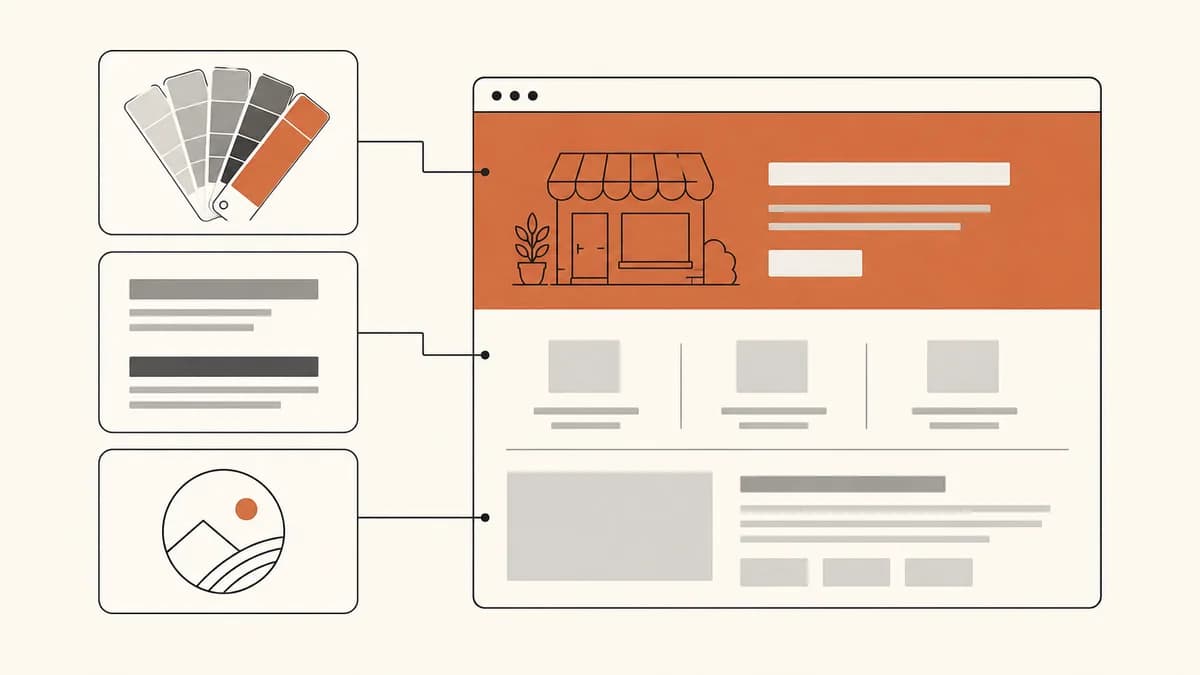
Before talking about tools, agree on the content. An effective company profile does not need many pages; it needs the right sections in a sensible order. These five are the backbone:
- Hero. The top section that immediately answers three things: who you are, what you offer, and what the visitor should do next. One strong headline, one supporting sentence, one call-to-action button.
- About us. A short company story: when you started, who you serve, and what sets you apart. Two or three paragraphs are enough; this is not the place for your full history.
- Services or products. A list of what you offer, each with a short explanation and its benefit. This is the section prospects read most.
- Social proof. Client logos, portfolio, key figures, or testimonials. One real testimonial with a full name is worth more than five anonymous compliments.
- Contact. Address, opening hours, and the contact route you answer fastest. In markets where customers expect to message a business, such as Indonesia, a WhatsApp button is close to mandatory.
A common debate: one long page or many separate pages? For most small and mid-sized businesses, one tidy long page is actually more effective. Visitors just scroll, all the information flows as one story, and you do not have to manage complicated navigation. Separate pages only become relevant when you have many services and each one needs an in-depth explanation.

Building a company profile website: what you are actually doing
People describe this job in different ways that mean the same thing: build a company profile website, make one, create one. There is no difference. The only thing that varies is how much of it you do yourself.
Broken down, building a company profile website is really only three jobs:
- Preparing the content. Who your company is, what it sells, why people should trust it, and how to get in touch. This takes the most time, and no tool can fully replace it because the information only exists in your head.
- Arranging the layout. Turning that content into a page that reads well and earns trust.
- Publishing. Domain, hosting, and making sure Google can find it.
Jobs 2 and 3 are what used to make company profile projects take weeks, and those two are exactly what can now be handed to AI. The remaining one, job 1, is still yours. That is why this guide puts preparing materials first, before touching any tool.
Prepare these materials first, then start building
This is the part most people skip, and it matters most. Website projects that drag on for weeks almost always stall on content, not on building. However fast the tool, it cannot help if you do not know what to write yet. Before touching any platform, gather:
- One sentence that explains your business: type of business, location, and who you serve.
- A list of your main services or products, each with a one-sentence explanation.
- A short company profile: year founded, number of clients or projects, main strengths.
- Your company logo, plus a few real photos: office, team, products, or finished work.
- Names of clients or projects you are allowed to show, and one or two testimonials if you have them.
- Full contact details: WhatsApp or phone, email, address, opening hours, and social media links.
Set aside one to two hours in the morning to complete this list. It feels tedious, but it is what makes the rest of the day run smoothly. With complete materials, building the website is just a matter of placing content, not making it up as you go.
Three ways to build a company profile website: which one really takes a day
There are three common ways to get a company profile made, and their time implications are very different.
The first route is hiring a service. You pay someone else to do everything. The result can be good, but the process rarely finishes in a day: there is a queue, back-and-forth revisions, and every small change later means contacting the provider again. This route makes sense for complex needs, and we cover it honestly in company profile website services.
The second route is a CMS with a template. You install a platform such as WordPress, choose a theme, and fill everything in yourself. It is flexible, but you start from an empty shell: arranging layouts, matching colours, and wrestling with settings that are not always beginner-friendly. It can be done in a day if you are experienced; for a first-timer it usually takes longer.
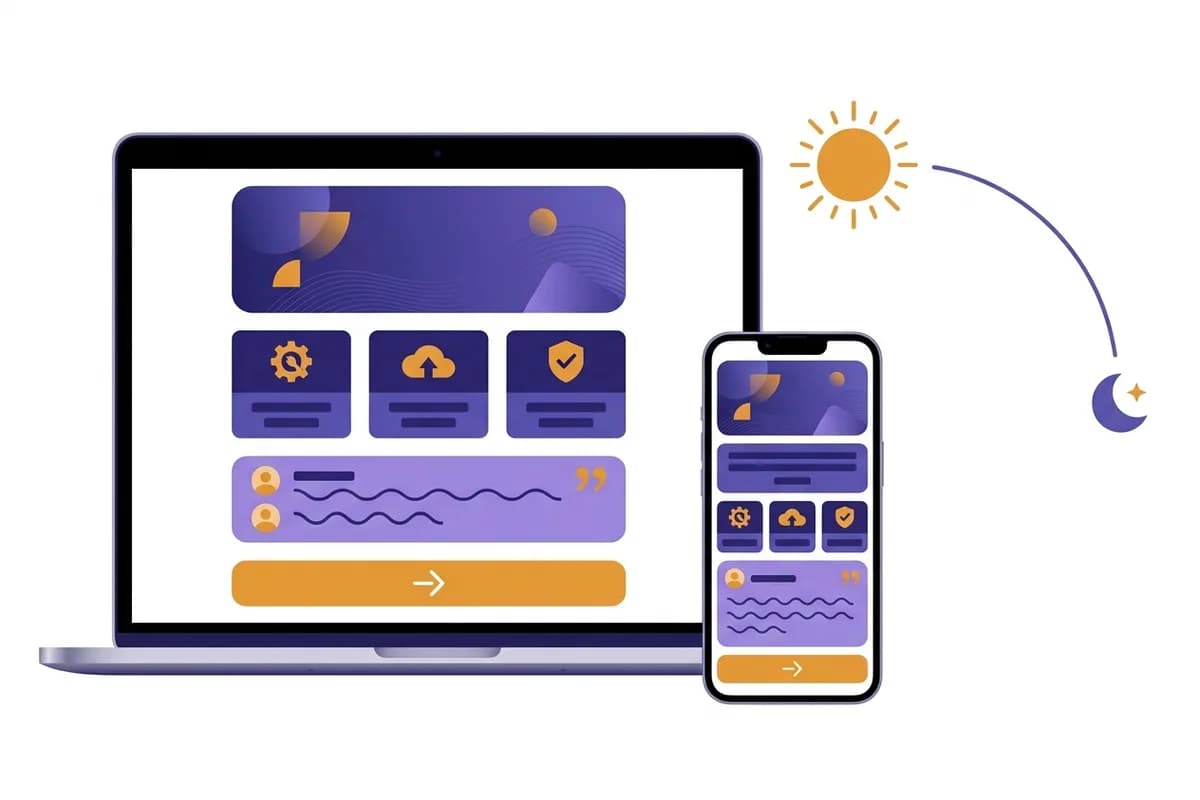
The third route is an AI website builder. You describe your company in one sentence, and the AI assembles a complete company profile in the background within minutes, with a hero, services, social proof, and contact sections already filled with relevant copy. You are not laying out from scratch; you are refining something that already has shape. For a one-day target, this route leaves the most room.
| Aspect | AI website builder (Forgelo) | Design service | CMS + template |
|---|---|---|---|
| First draft | Minutes from one sentence | Days to weeks | Fill it in yourself from scratch |
| Total time to live | Minutes to a few hours | A day to several weeks | More than a day, depending on experience |
| Cost | Affordable subscription, can start free | A sizeable one-off project fee | Hosting, theme, and learning time |
| Later revisions | Type an instruction, it changes right away | Contact the provider, wait in the queue | Change it manually yourself |
| Technical skill needed | None | None, but you depend on the provider | Some to moderate |
Step by step: from one sentence to live
Now the core part. This is what a realistic one-day flow looks like on the AI route, assuming the materials from the checklist above are in hand.
Morning: build the skeleton. Open Forgelo and write one sentence about your company. The more specific the better: name the type of business, the location, and who you serve. For example: "a tax consultancy in Manchester serving freelancers and small firms". Within minutes, a complete company profile website is built: hero, about us, services, social proof, and contact, all filled with copy that fits your business. The hardest part of building a website, starting from a blank page, is done before your coffee gets cold.
Midday: fill in the real data. This is the part that takes the most time, and that is how it should be. Replace all sample text with the materials you prepared: your actual company profile, full service list, key figures, testimonials, and contact details. Upload your logo and real photos. If a section feels off, click it and type an instruction, for example "make the services section three columns with shorter descriptions". Only that section is rebuilt; the rest stays intact. No dragging boxes, no rearranging the layout from scratch.
Afternoon: tidy up and publish. Read everything once from top to bottom, putting yourself in the shoes of a prospect hearing your name for the first time. Is it clear within the first five seconds what you offer? Is the contact button easy to find? Once you are sure, publish. You can start on a free subdomain to see the result online, then connect your own domain when you are ready to go all in. By evening, your company profile can be sent to prospective clients.
If you want to understand this approach more deeply before you start, the guides build your own website and build a website in one day complete the picture.
Mistakes that make a company profile look thrown together
From the many company profiles we have looked at, what makes a site look amateur is almost never the tool used to build it. The same patterns come up again and again:
First, sample text nobody replaced. Placeholder sentences or generic descriptions that never mention the company name are still there. This is the most embarrassing mistake and the easiest to avoid: reread every section before publishing. Second, talking too much about yourself. An effective company profile frames services around the customer's problem, not a list of the company's achievements. Third, careless photos. Blurry photos or overly generic stock images lower trust; fewer photos that are real are better.
Fourth, contact that is hard to use. A long form with no quick contact button makes prospects give up, especially in markets where people expect to message a business on WhatsApp; contact should be one click away. Fifth, never updating it. A company profile whose latest portfolio item is three years old raises questions. So choose a route that lets you change the content any time without depending on anyone; this is where building it yourself clearly beats hiring a service.
After launch: domain, Google, and next steps
A live website is only the starting line. There are three things worth doing afterwards, and all of them are light.
First, connect your own domain. An address that ends in your company name looks far more professional on business cards, email, and proposals than a free subdomain. Second, make sure the SEO basics are in place so your company shows up when people search on Google, at least for your own name. The structure Forgelo produces already includes the basics, and website SEO basics sums up what to check. Third, share the address: put it in your Instagram bio, your Google Business Profile, your email signature, and your marketing materials. A website only works if people know it exists.
One note so your expectations are accurate: Forgelo is not a one-shot generator whose output is frozen, and it is not a drag-and-drop canvas that makes you learn how to arrange elements. It is a self-serve platform where your website is born from one sentence and you keep refining it through conversation, today or six months from now when your services grow.
Start with one sentence, finish before the day ends
A company profile is the website project with the best return on effort a small business can take on: one working day for an asset that greets every prospective customer for years. There are two keys: prepare your materials first, and pick a route that does not force you to lay everything out from scratch.
Try Forgelo for free, write one sentence about your company, and watch a complete company profile get built within minutes. The rest you refine by typing, and your company website goes live before today is over.