The short answer: building a website in one day is realistic, and for most small businesses it can be much faster than that. A clear company profile or landing page can be online within a day by almost any route. With AI, the first draft appears within a few minutes from a single sentence, so the rest of your day goes into filling in real details rather than laying out pages from nothing. The real question is not whether it can be done, but which route actually finishes in a day without sacrificing quality.
This guide looks at that question as it is. You will learn the three common routes to a fast website and their time limits, what can realistically be finished in a day, the traps behind rush-service promises, and why the AI route turns the one-day benchmark into a matter of minutes. At the end there is a checklist so your website actually goes live within the day, not half-finished.
Realistic or not depends on the route you choose
The question "can it be done in one day?" has no single answer, because the outcome depends heavily on how you build. There are three common routes, and each has a different time limit.
The first route is a rush service. Plenty of providers offer a finished website within 24 hours. That is realistic for a simple site, but it is usually built on a reused template, and "one day" often only counts the time until a draft is live, not the revisions until it is actually right. The second route is a ready-made template. You download or choose a theme, then fill in every section yourself. It can be done in a day if your content is ready, but you are working from an empty shell.
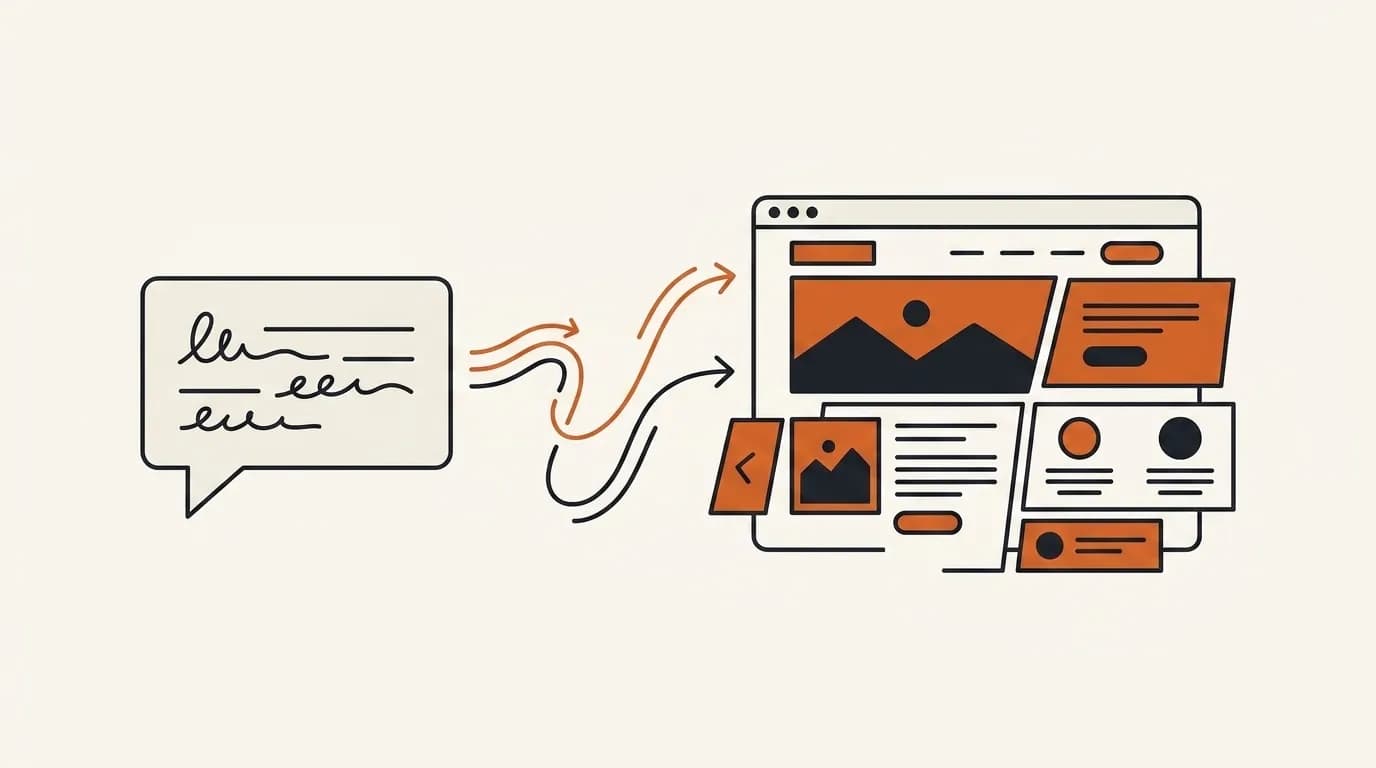
The third route is an AI website builder. Here you do not start from an empty template and you do not wait for anyone else. You describe your business in one sentence, the AI assembles a complete site within a few minutes, and you refine it from there. This is the route that makes one day feel loose, because the hardest part, starting from nothing, is behind you from the first minute.
What actually decides how fast it goes
How fast a website gets built is rarely down to the tool alone. A few factors decide whether one day is enough, and knowing them helps you set expectations in the right place.
The first factor is content readiness. Even the fastest website stalls if you do not yet know what to write, have no product list, or have not prepared photos. The second factor is how complex the need is. A one-page company profile is far quicker than an online store with hundreds of products and a payment system. The third factor is how you change the result. This is where many tools get stuck: the first draft is quick, but tidying it up feels heavy because you have to rearrange every element or wait in a provider's revision queue.
If you look closely, that third factor is the one that quietly eats the most time. A draft that appears in an instant does not mean much if every small change takes real effort. The truly fast route is the one that makes refining as light as creating.
What is realistic in a day, and what is not
To set your expectations correctly, it helps to separate what is reasonable to finish in a day from what is not. These can realistically be done in one working day:
- Company profile. A page that explains who you are, what you offer, and how to reach you. This is the most common need and the quickest.
- Landing page. A single focused page for a promotion, product, or campaign, with a clear call to action.
- A simple small shop. A storefront with a few products and ordering via WhatsApp, a good fit for a small business that does not need complex payments yet.
- Event or portfolio site. A work gallery, an invitation, or an event page whose content you already have.
On the other hand, some needs reasonably take more than a day and should not be forced. A large online store with a long catalogue and automated payments, a web app with logins and a database, and integrations with internal systems all need planning and testing that cannot be squeezed into a day. Knowing the difference keeps you from being disappointed by expecting something that was never realistic.
The fastest route: from prompt to live in minutes
If the goal is genuinely fast, the AI route changes the question. Instead of asking whether one day is enough, you will be surprised how much gets done in the first hour. This is Forgelo's main strength: speed from prompt to ready to publish. Here is how it goes.
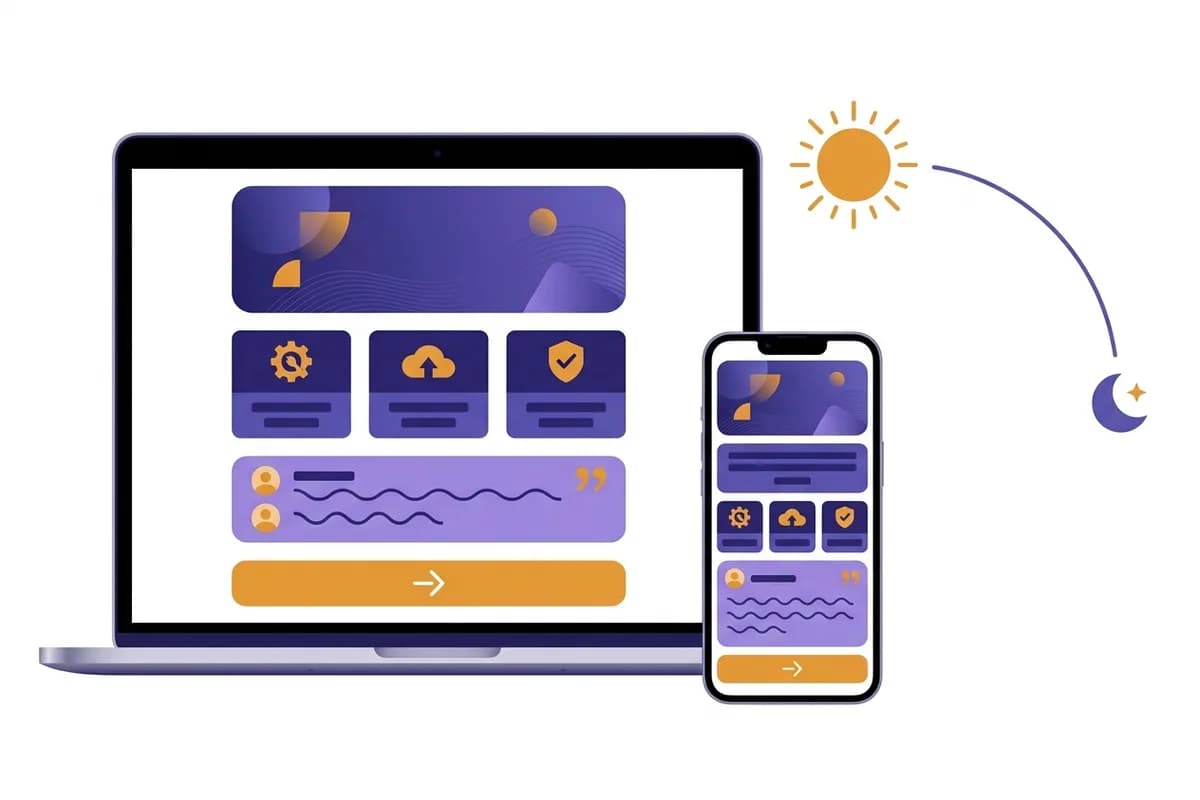
Start with one sentence that describes your business: name the type of business, the location, and what you want visitors to do. For example: "a coffee shop in Leeds with a menu and ordering by WhatsApp". From that sentence, the AI forges a complete website within a few minutes, not just an empty page. You immediately see a hero, services, social proof, and contact sections already filled with relevant copy.
Once the draft exists, you refine each section just by typing instructions. Click the hero, say "make the headline focus on online ordering", and only that section is rebuilt while the rest stays intact. No dragging boxes, no waiting for revisions. The rest of your time goes into replacing sample text with real data: product names, prices, opening hours, and your WhatsApp number. Then you publish, starting on a free subdomain to try things out, and connecting your own domain when you are ready to look fully professional. If you want to see each step in more detail, the guide build a website with AI, step by step lays it out.
One note so your expectations are accurate. Forgelo is not a one-shot generator whose output is frozen, and it is not a drag-and-drop canvas that makes you learn how to arrange every element. It is a self-serve platform where your first site is born from one sentence and you keep refining it through conversation. That is why "one day" is rarely the constraint; what matters more is how ready your content is.
Be careful with "website in one day" promises from rush services
Many services use "one day" as their headline selling point, and not all of them are wrong. But there are a few things worth checking so you are not disappointed. A one-day promise often only counts the time until a draft goes live, not until the site genuinely represents your business with finished content.
It is also common for that speed to be propped up by a uniform template reused for many clients, so your site ends up looking like dozens of others. On top of that, every small change later usually means contacting the provider again and waiting, sometimes for an extra fee. Before you order, confirm three things: who owns the domain and the site's content, whether the content is written for your business or is just a template, and how much each revision will cost later. If you want to compare hiring a service with handling it yourself, read fast website design services and website design services for the full picture.
Building a website in one day: comparing the routes
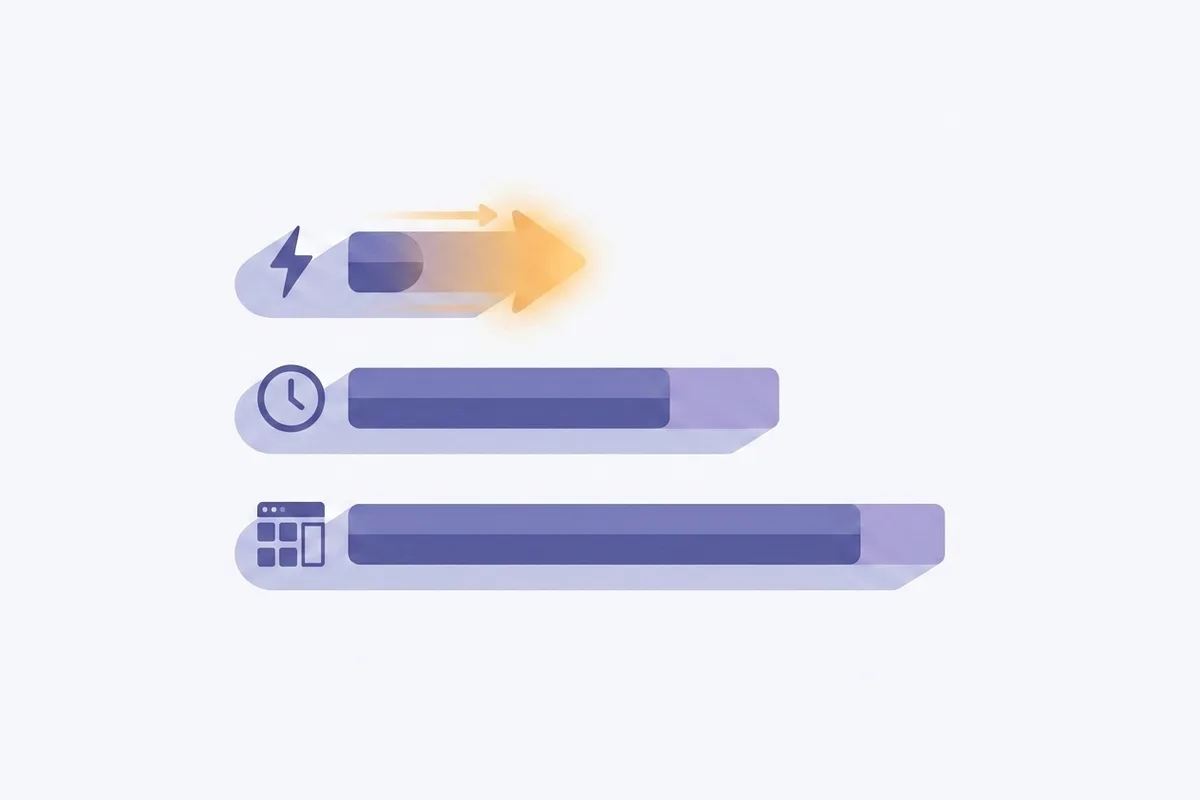
The table below sums up the three routes and their realistic limits, so you can choose based on your needs and your time.
| Aspect | AI website builder (Forgelo) | 24-hour rush service | Ready-made template |
|---|---|---|---|
| First draft | A few minutes from one sentence | A few hours to a day | Fill it in yourself from scratch |
| Total time to live | Minutes to an hour | A day, often plus revisions | A day if content is ready |
| How you change it | Type an instruction, that section is rebuilt | Send revisions, wait for the provider | Change it manually yourself |
| Day-to-day control | High, directly in your hands | Low, through someone else | High, but takes effort |
| Risk | Forgetting to replace sample content | Uniform template, revision fees | Needs layout skills |
| Best for | Company profiles, landing pages, small businesses | People who do not want to handle it | People comfortable tinkering |
The pattern is consistent. For a presentation site that needs to be online fast and easy to manage yourself, the AI route is usually the quickest and the one you control most. For people who truly do not want to touch anything, a rush service makes sense as long as you understand its limits. If you want to know when hiring an expert is still the better choice, AI website builder vs web designer covers it in more depth.
When one day really is not realistic
It is only fair to admit that not every website should be forced into a single day. If your needs go beyond a presentation site, pushing for a one-day target risks a half-baked result.
An online store with a large catalogue needs products, categories, stock, and payments set up in a way that cannot be compressed overnight. A web app with user accounts, a database, and custom flows needs planning and testing. Integrations with internal systems, such as a CRM or ERP, take their own time too. For needs like these, a professional service and phased development are the honest choice. The guide how to build a website for your business helps you judge when a simple site is enough and when you need something more complex.
Checklist so it really gets done in a day
However fast the route, it still needs preparation so the result is not half-done. Get these ready before you start, and one day is more than enough:
- One sentence that names your type of business, your location, and the main thing you want visitors to do.
- A list of your core products or services, with prices if you have them.
- The WhatsApp number or contact you want prospects to reach.
- A few real photos of your products, premises, or team, if available.
- Short copy about your business: what you offer and why people should choose you.
- The domain name you want, if you are ready to look professional.
With these in hand, most of your time goes into pasting in content that is already prepared, not thinking it up from scratch. That is why a finished website can go live well before the day ends. If you want to make sure your site is ready to be found on Google from day one, website SEO basics sums up what to pay attention to.
Prove it yourself today
The quickest way to answer "realistic or not" is to try it. Write one sentence about your business, watch a complete website appear within a few minutes, then refine it until it feels right, all free and with no credit card. If it fits, connect your own domain and your business is officially online, long before the day is over.
Try Forgelo for free and turn one sentence into a website that is ready to publish. From prompt to website, then refine it by typing.