Building a website for your business is simpler than many owners expect. You do not have to code, hire an expensive team, or wait for weeks. The decisive factor is knowing what the website must do. With an AI website builder, one clear sentence can become a complete site in a few minutes, and each section can then be refined through prompts.
This guide covers the full route from goal and platform choice to essential sections, domain, hosting, realistic costs, SEO, conversion, and maintenance. Cost ranges are broad global estimates because scope and market conditions vary.
Does your business really need a website?
For almost every business, the honest answer is yes, but the website may be smaller than you imagine. Many owners postpone a web presence because they picture a long, expensive project when one focused and credible page would meet the immediate need.
Social channels remain valuable, but they are rented space. Their rules, formats, and reach can change, and potential customers may struggle to find specific information. A website is a digital asset you control. It gives people a stable place to verify that the business is real, understand the offer, and take the next step.
A small business website often builds trust before it sells. Someone hears your name, searches for it, and decides within a few minutes whether the result feels credible. The useful question is not whether you need a site, but how quickly you can publish a trustworthy one without unnecessary cost or complexity.
Identify the moment the website supports
Picture the visitor immediately before arriving. They may have seen a vehicle, received a recommendation, compared three providers, or searched for an urgent local service. Each situation creates different questions. A referred visitor may mainly want confirmation and contact details. A comparison shopper may need prices, proof, and a clear difference. An urgent visitor needs availability and a fast action.
Build the first page around the most valuable of these moments. This keeps the message specific and gives you a practical standard for deciding what belongs. Content that does not help that visitor understand, trust, or act can usually wait.
Four ways to build a business website and which one fits
The wrong route can make a simple site expensive or leave it unfinished.
| Route | Best for | Strength | Limitation |
|---|---|---|---|
| Freelancer or agency | Complex projects and special integrations | Managed professional delivery | Highest cost, longer timeline, updates may depend on the supplier |
| Drag and drop builder | Owners who want manual control | Flexible visual editing | Requires learning the editor and assembling the page |
| CMS such as WordPress | Large content libraries | Broad ecosystem and extensibility | Hosting, themes, plugins, security, and upkeep need attention |
| AI website builder | Most small businesses that value speed | Complete draft from one sentence, prompt based editing | Deep custom systems may exceed its scope |
A service profile or standard landing page rarely needs the overhead of an enterprise build. Choose based on actual complexity, budget, and how often you want to update content yourself. Website development services vs AI explores that decision further.
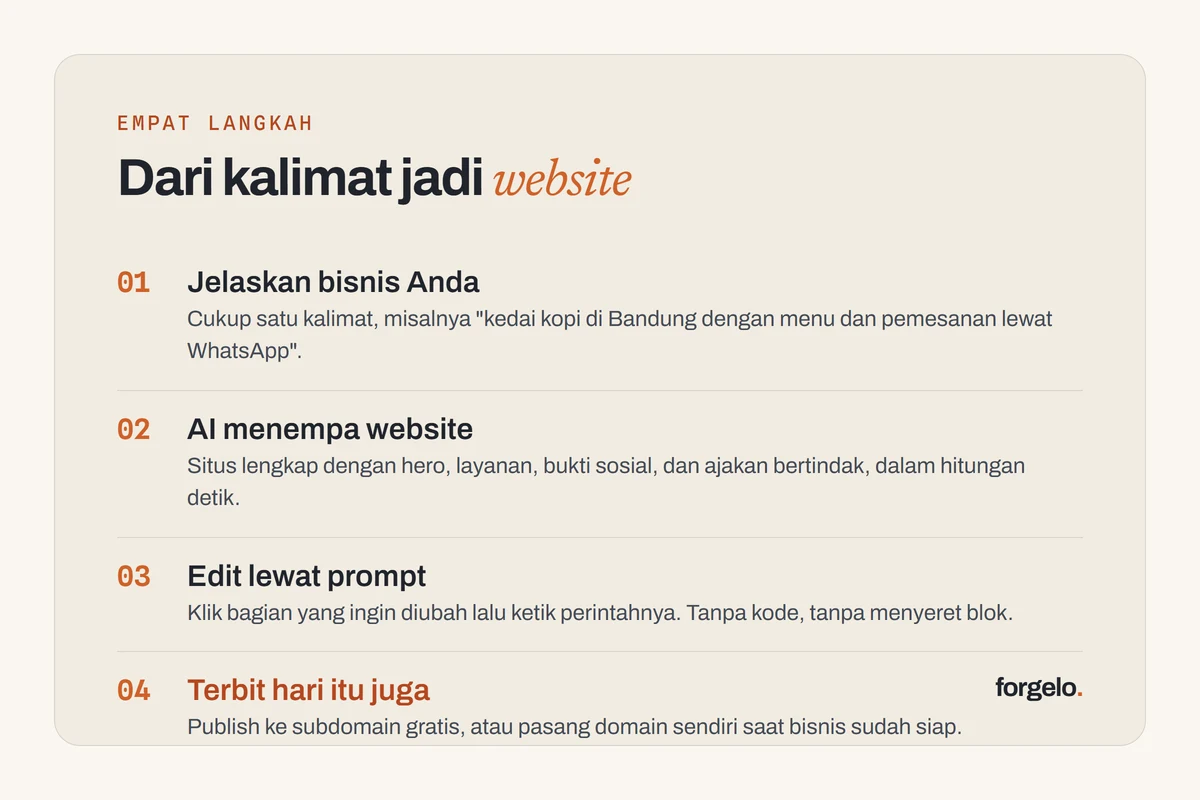
Steps to build a business website from scratch
These seven steps apply whichever route you select.
1. Define one main goal. Decide whether visitors should enquire, book, buy, submit a form, or view a portfolio. A site with several competing priorities often accomplishes none of them well.
2. Gather essential material. Prepare the name, logo if available, services, products, operating details, contact information, and several accurate sentences about the offer. Missing content delays projects more often than technology.
3. Choose a name and domain. Prefer something short, pronounceable, and close to the business name. You can launch on a subdomain first.
4. Select the build route. For many small businesses, AI is the quickest because it removes the long brief and revision queue. Build your own website compares DIY routes.
5. Plan the page structure. Start with a hero, services, proof, and contact section. Add pages only when they answer a real visitor need.
6. Write clear content. Explain the business as you would to a prospective customer. Specific, plain language is more persuasive than polished jargon.
7. Publish and improve. A live website can be indexed, tested, and used. Launch a strong first version and refine it with evidence from real visitors.
Owners who complete the first two steps carefully tend to move through the rest quickly. Choosing a tool before the goal and material are clear often creates endless revisions.
Validate the plan with a five minute customer test
Show the proposed page outline to someone who resembles the target customer. Tell them the situation that brought them to the site, then ask what they would expect to find before making contact. Do not explain the outline while they answer. Missing information will become obvious quickly.
This test can prevent expensive rework. A contractor may discover that visitors need to see the service radius before project photographs. A consultant may learn that the expected first step is a short fit call rather than a long enquiry form. Use the feedback to adjust sequence and calls to action before polishing copy.
The fastest route: from one sentence to a website
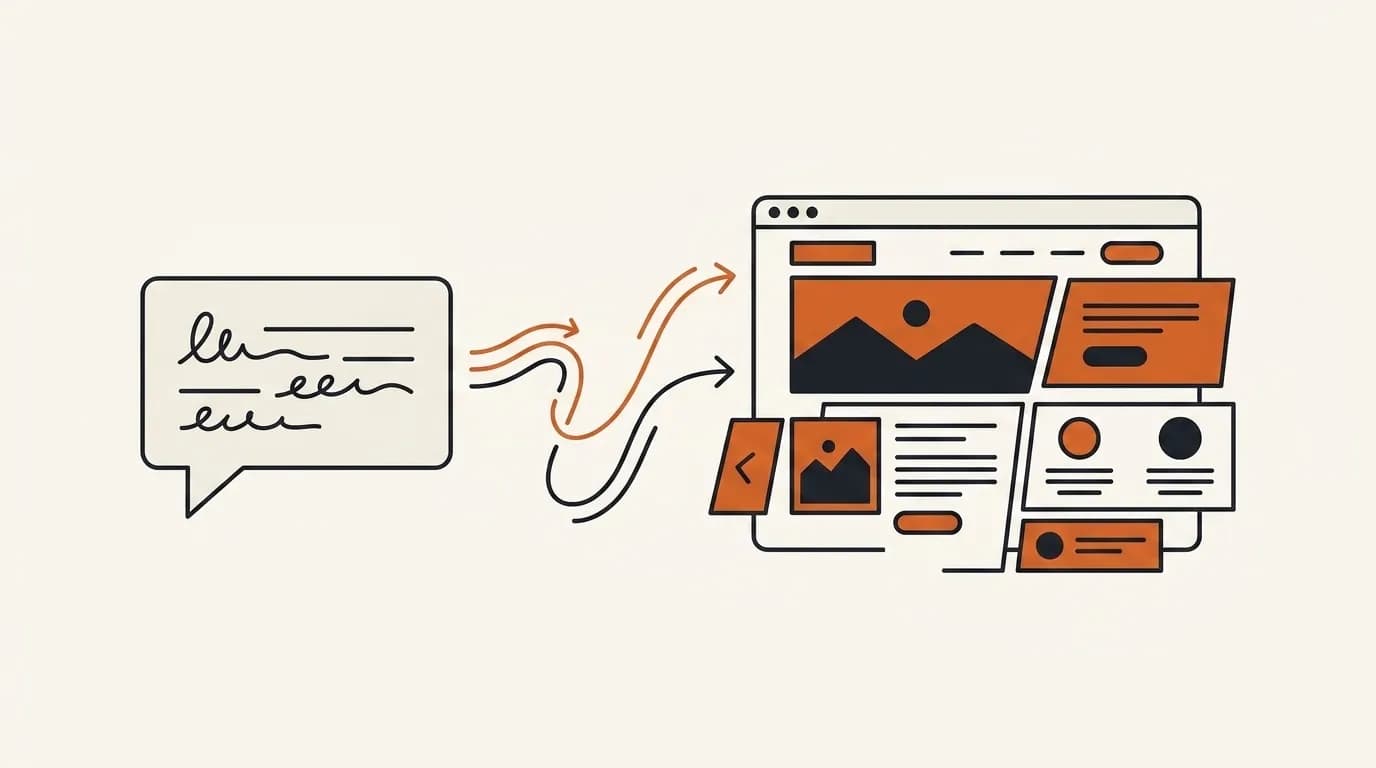
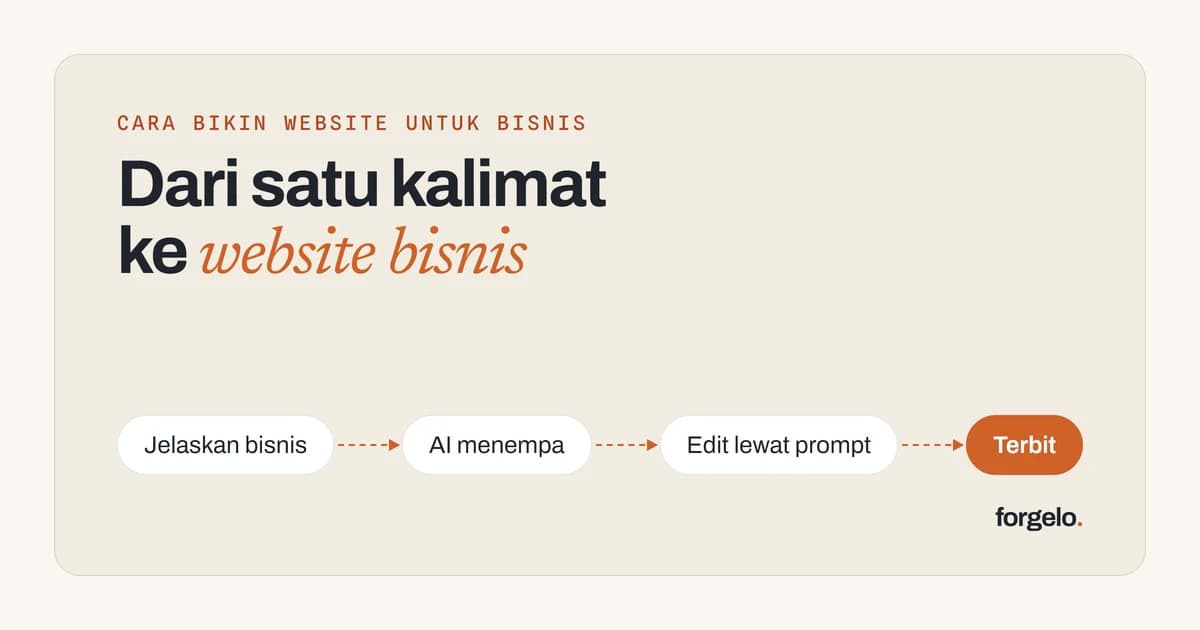
AI changes the time required to create a business website. Instead of sending a brief and waiting, describe the business in one sentence and generate a full structure with a hero, services, proof, and calls to action.
Forgelo is built for non developers. A prompt such as "an independent coffee shop in Dublin with a seasonal menu and table booking" becomes a complete site. To revise it, select a section and ask for a more direct headline, a price table, or an additional booking action. Forgelo rebuilds that section only. Read how AI generates a website or see how it works.
Generated speed should not mean cutting foundations. Logical headings, responsive behavior, and basic SEO are included. What disappears is the waiting and manual canvas work. Fast website delivery compares realistic timelines.
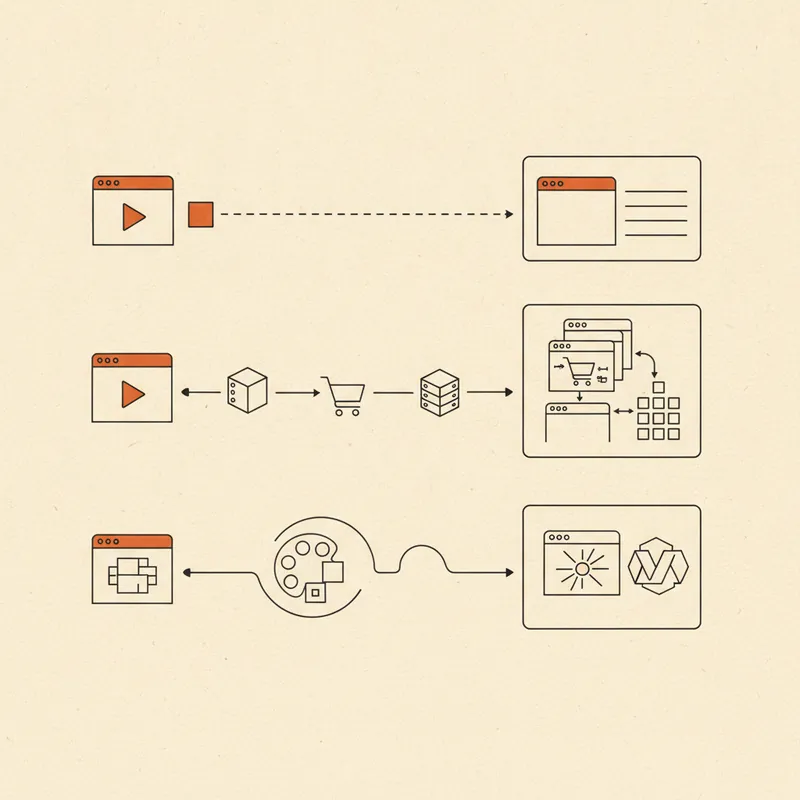
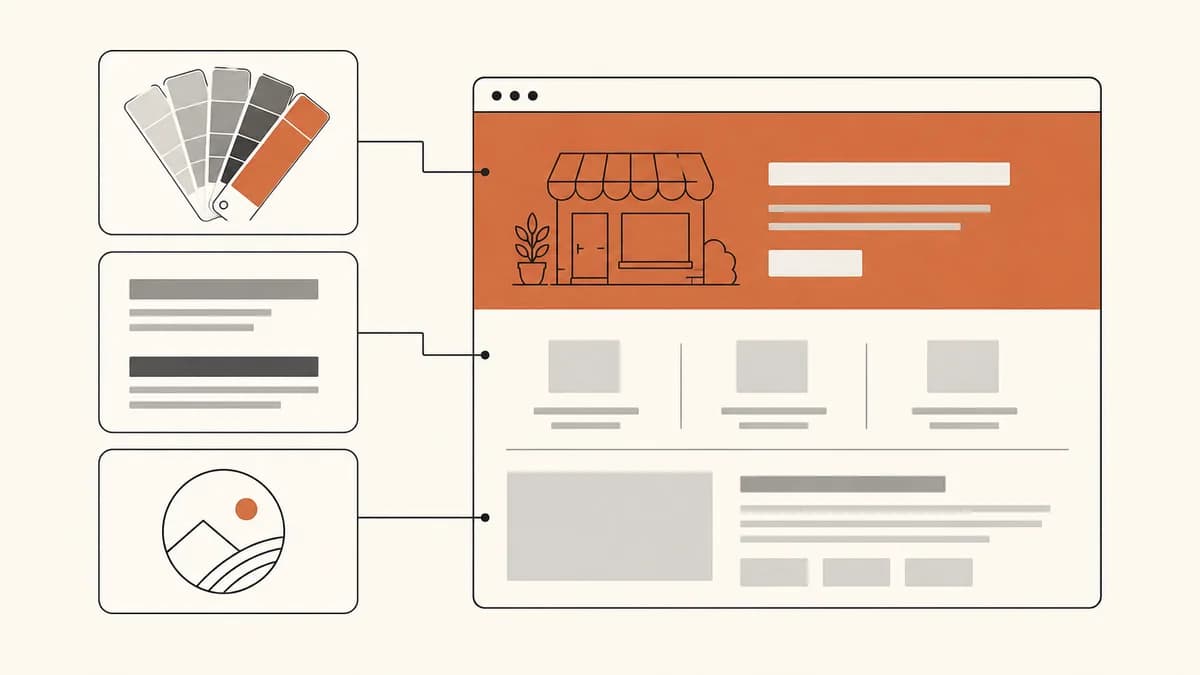
Essential pages and elements for a business website
A focused small site often beats a large confusing one. Start with these elements:
- A hero that explains the offer immediately. State who you are, what you provide, and for whom.
- Clear services or products. Use customer language and show a starting price when practical.
- Trust evidence. Add genuine testimonials, customer numbers, credentials, case results, or client logos.
- An easy contact path. Use email, phone, booking, forms, chat, or WhatsApp according to customer behavior.
- One clear call to action. Repeat the primary action where it is contextually useful.
See small business website essentials for the complete checklist and turn visitors into WhatsApp leads for messaging based conversion.
Avoid a long navigation menu on a one page website. Fewer relevant choices make the intended action easier.
Use proof that a visitor can evaluate
Specific proof is stronger than a row of unsupported superlatives. Show a brief case result with context, a testimonial tied to a recognizable type of customer, an industry credential, a real process photograph, or a transparent policy. If a result varies by customer, explain the conditions rather than presenting it as a guarantee.
New businesses without testimonials can still establish confidence. Explain the work process, show the people responsible, state response times that can be maintained, and answer common risk questions. Never invent reviews or customer numbers to make the page look established. Trust gained through false evidence is fragile and creates legal and reputational risk.
Domain and hosting: what you need to manage
A domain is the public address, such as yourbusiness.com. Hosting stores and delivers the website. Traditional WordPress setups can require separate hosting, DNS configuration, certificates, updates, and security. Modern managed builders include hosting.
You can begin on a free subdomain and receive visitors immediately. Connect a custom domain once the business is ready for a permanent, credible address. Do not lose days searching for a theoretically perfect domain. A clear available name attached to a live site creates more value than a perfect idea that never launches.
Business website costs: what is reasonable?
Consider the full cost over time, including updates and maintenance.
| Route | Initial cost | Ongoing cost | Notes |
|---|---|---|---|
| Agency | About $2,000 to $20,000 or more | Domain, hosting, support | Custom work, with revisions often limited by scope |
| Freelancer | About $500 to $8,000 or more | Domain, hosting, maintenance | Wide variation by market, skill, and scope |
| DIY builder | Low | Often $10 to $50 monthly | You assemble and maintain the site |
| AI website builder such as Forgelo | Free to start | Predictable plan when needed | Hosting included and self service section edits |
Cheap at launch is not always cheap over a year. If every text update requires a paid request, a low initial quote can become expensive. The small business website cost and website service pricing guides explain total cost considerations.
Starting free, proving the idea, and upgrading after it creates value is usually safer than committing a large budget before the requirement is understood.
After launch: SEO, leads, and maintenance
First, establish basic SEO with descriptive titles, logical headings, fast loading, mobile usability, and helpful content. A capable builder handles much of the technical baseline, but your subject knowledge provides the value. Start with website SEO basics.
Second, create a conversion path. Every page should offer an easy next step that matches how customers buy. Test the form, phone, booking, checkout, or messaging link yourself.
Third, perform light maintenance. Prices, offers, proof, and services change. With section level prompt editing, you can select the affected section and describe the update instead of waiting in a revision queue. The ability to maintain accuracy is often more valuable than adding another page.
The website development services guide can help if you are still deciding when professional support is necessary.
Conclusion
Building a business website is now less about technical skill and more about a clear business goal. Define one action, gather accurate material, choose a route that matches the real complexity, publish promptly, and improve with evidence.
Complex custom systems still justify professional services. For most standard small business sites, AI offers the shortest and simplest route. Browse Forgelo solutions by industry, then try Forgelo for free. One business sentence can become a publishable site, and every section remains editable through natural language prompts.
If you take work by appointment, start from the website guide for salons and beauty studios. It covers service lists, price ranges, and the booking flow that turns a browser into a confirmed slot.