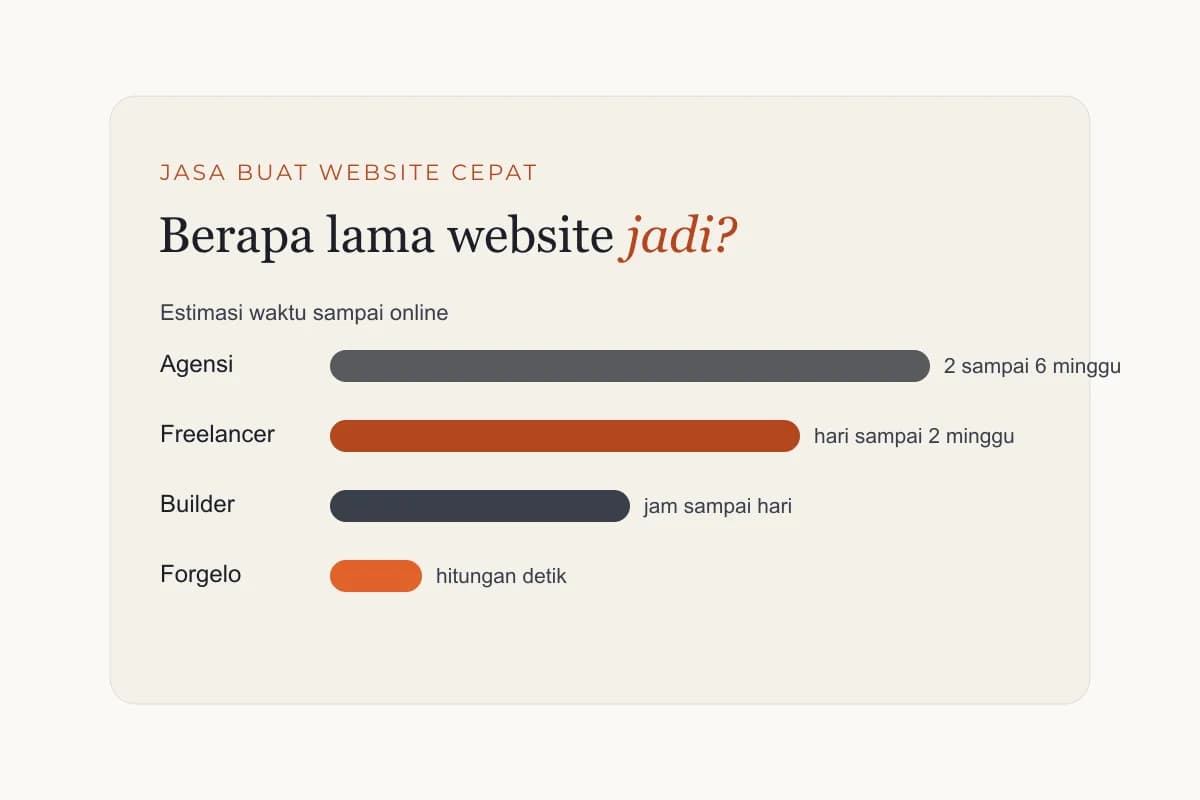
If you run a web agency, you already know the uncomfortable part of the business: client websites are the work that scales worst. A website builder for agencies exists to fix exactly that. Every project eats designer hours, developer hours, revision rounds, and project management, and the quote you sent three weeks ago quietly shrinks with every "one more small change" email. The agencies that stay profitable are not the ones that work more hours. They are the ones that changed how a site gets produced.
This guide walks through how the production model works, where the margin actually leaks in a traditional build, and how to route client projects so the fast tool handles the standard work and your senior people handle the work that deserves them.
Where the margin leaks in a traditional client build
Start with an honest audit of a typical small business site project. The client pays a fixed fee. Your cost is everything that happens between the kickoff call and the invoice. The U.S. Small Business Administration finance guide recommends tracking revenue, expenses, and cash flow. An agency should apply that same discipline to production hours and post-launch support.
The first leak is production time. Wireframes, design mockups, development, content population. Even with a good template library, a small site swallows real days of work.
The second leak is revisions. Clients rarely know what they want until they see something. Every revision round in a traditional workflow means a designer or developer touching files, which means hours, which means cost. Two revision rounds are in the quote. The fourth and fifth ones come out of your margin.
The third leak is the long tail. Six months after launch, the client emails about changing their opening hours or swapping a photo. It takes twenty minutes plus context switching, and most agencies never bill for it because invoicing twenty minutes feels petty. Multiply that across thirty clients and you have a part-time job that pays nothing.
Note: Most agencies track profitability per project but not per client per year. Do the second calculation once and the long tail of free micro-edits usually turns out to be the biggest hidden cost in the books.
None of this is mismanagement. It is just what happens when every change to a website requires a skilled human operating manual tools.
What a website builder for agencies actually changes
An AI-powered website builder for agencies attacks all three leaks at once, and it does it by changing who and what is required to produce a site.
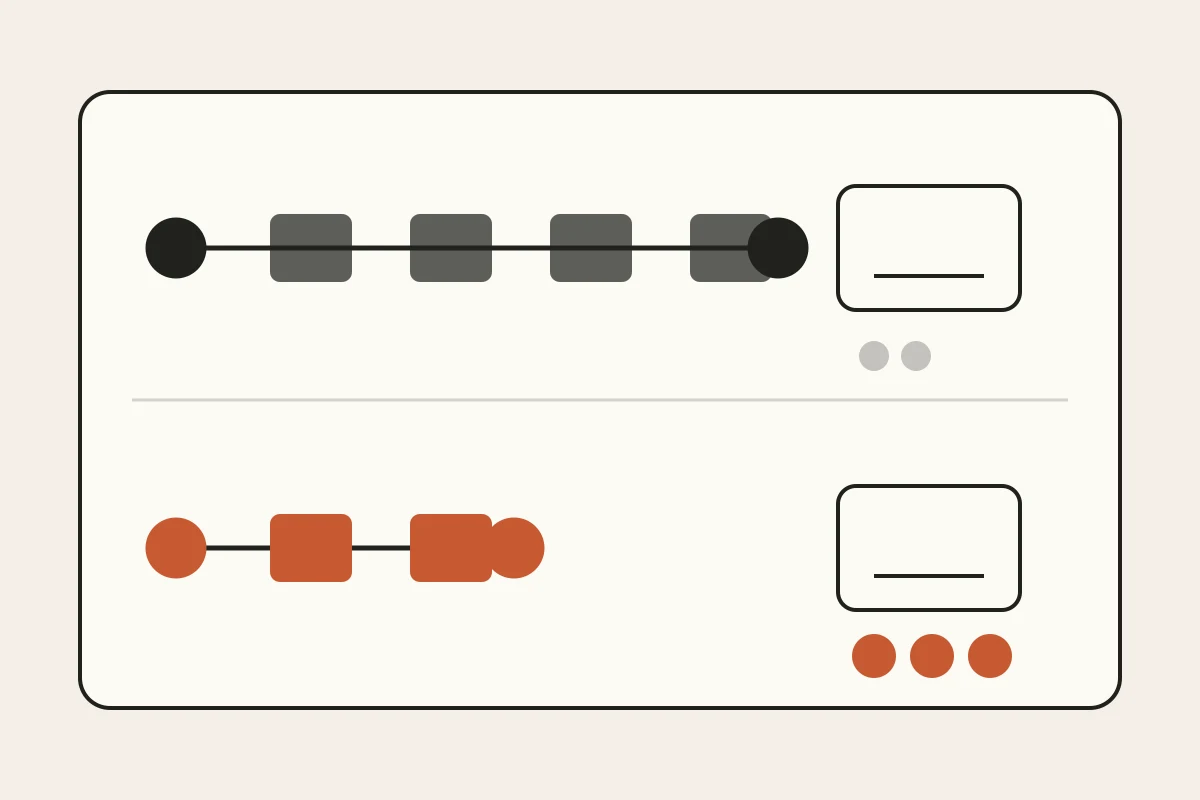
Production time collapses first. With Forgelo, you describe the client's business in one sentence and a complete, publish-ready website is generated in a few minutes. That first draft is not a wireframe or a moodboard. It is a real site with structure, copy, and design that you then shape to the client's brand. The work that used to be days of assembly becomes an editing session.
Revisions stop requiring specialists. Forgelo edits by prompt: you type "make the hero headline about emergency plumbing repairs" or "add a testimonials section under the services" and the change happens. That means an account manager or a junior team member can handle revision rounds directly, sometimes live on a call with the client. The revision loop shrinks from days to minutes, and your developers stop being the bottleneck for text changes.
The long tail becomes trivial. That opening-hours email now takes less time to fix than to read. When a change costs you two minutes, keeping thirty client sites fresh stops being a burden and starts being a retention tool.
The practical features matter for agency work too: lead forms send inquiries straight to the client's WhatsApp, SEO fundamentals are built in, and each site publishes to a free subdomain during review before moving to the client's custom domain at launch. Forms still need plain labels and short instructions. The W3C accessible forms tutorial explains why those details help more people complete a task. Performance is also a delivery requirement, not decoration. Google's Core Web Vitals guidance covers loading, interactivity, and visual stability as real-world user experience metrics.

The economics, side by side
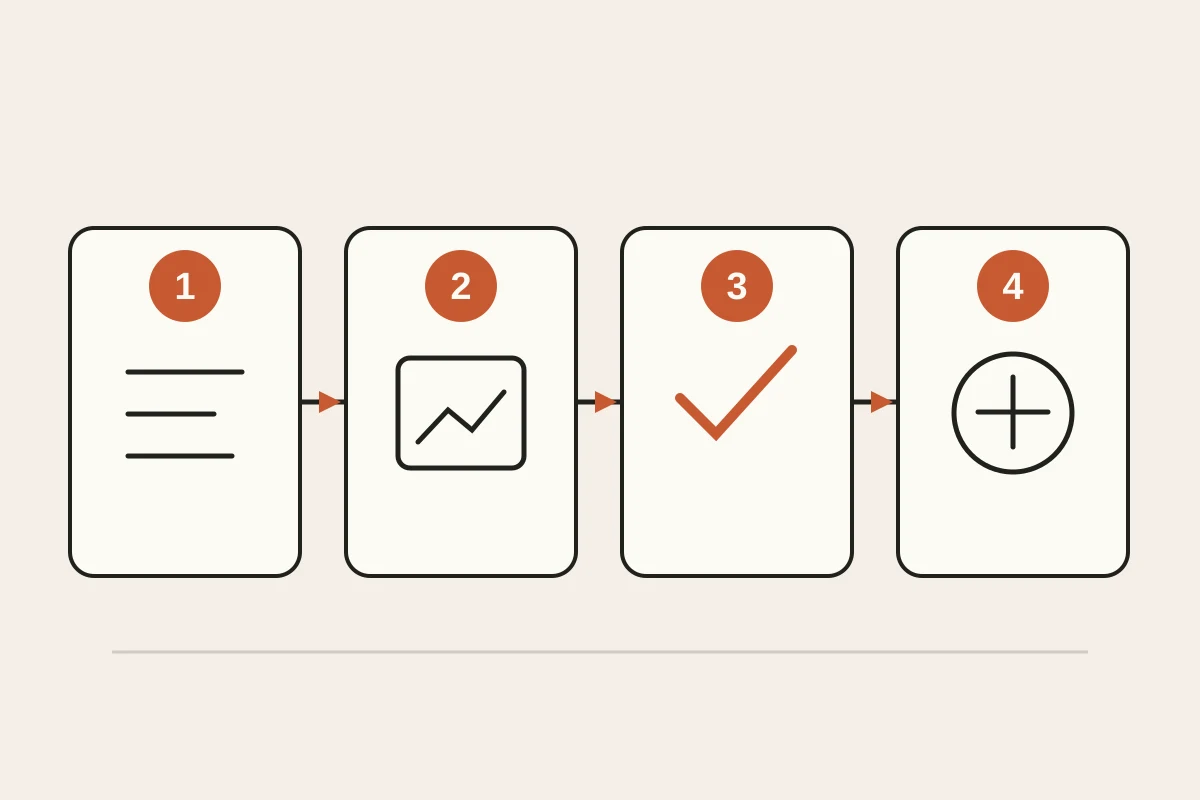
Here is the honest comparison for a standard small business site, the kind that makes up most agency pipelines.
| Factor | Traditional build | AI builder workflow |
|---|---|---|
| First draft ready | Days to weeks | a few minutes, then refinement |
| Who handles revisions | Designer or developer | Anyone on the team, by prompt |
| Cost per revision round | Billable hours | Minutes, effectively zero |
| Post-launch micro-edits | Unbilled time sink | Trivial, done on the spot |
| Tool cost | Dev stack and licenses | $9 to $39 per month, or custom agency pricing |
| Sites one person can run | A handful | Dozens |
The tool cost line deserves a pause. Forgelo's self-serve plans run $9, $19, and $39 per month, while agency accounts use custom volume pricing. Against agency billable rates, even a paid month can cost less than a single production hour. The constraint on your throughput stops being production capacity and becomes sales capacity, which is a much better problem to have.
For a deeper breakdown of what clients are comparing you against, our guide on how much a website costs covers the full market picture.
White-label: where your brand fits in
Agencies rightly worry about tools that advertise themselves on client deliverables. A client who sees another company's badge on their new site starts wondering what exactly they paid you for.
A full white-label mode, where the sites you ship carry your branding, is on the Forgelo roadmap and resolves this cleanly. Today the Agency plan already keeps every client site in one dashboard, so delivery and account management stay yours. The client experiences your agency's service, your account management, and your quality control. The builder is production infrastructure, as invisible to the client as your project management software.
This matters more than it first appears, because the agency's real product was never the pixels. It is judgment: knowing what a plumber's site should say, which offer goes above the fold, why the phone number belongs in the header. The builder produces the artifact fast. You supply the thinking that makes it convert. When you add proof, use real customer experiences rather than invented praise. The FTC consumer reviews and testimonials guidance explains the practices agencies and their clients must avoid. White label, once it ships, keeps the production division invisible, and the client relationship is already entirely yours.
Tip: Use the speed as a sales weapon, not just a cost saving. Generating a live draft of a prospect's new site during the pitch call, then editing it in front of them by typing changes, closes deals that a slide deck never will.
How to price sites when the build takes an hour
Here is the contrarian take, and it is the part most agencies get wrong: the collapse in production time is not a reason to charge less. It is a reason to change what you charge for.
Clients do not buy hours. They buy a website that brings them customers. If the site does that, whether it took you six weeks or one afternoon is irrelevant to its value. A local clinic that gets three extra patient inquiries a week from its new site does not care about your production method. Anchor your price to that outcome and your positioning, not to a timesheet.
The stronger move is structural: shift from one-off project fees to a monthly plan. Charge a setup fee for the initial build and strategy, then a monthly amount that covers hosting, updates, content tweaks, and being on call. Stripe's recurring revenue guide notes that predictable income still depends on continued value delivery and retention. That is the right constraint for an agency care plan. Because your marginal cost of an edit is now minutes, a plan that used to be barely profitable can become a healthy recurring service, while the client gets a site that does not go stale.
Agencies that keep selling hours will find the market repricing them downward, because the client can increasingly see that the hours are not there anymore. Agencies that sell outcomes and ongoing care get to keep the created value.
When a website builder for agencies is the wrong call
Honesty keeps clients, so here is where the builder should not be your tool.
- Custom web applications. Client portals, marketplaces, SaaS products. This is software development, not website building.
- Complex e-commerce. Hundreds of products, inventory logic, multi-currency checkout. Use a dedicated commerce platform.
- Deep integrations. If the site must talk to a specific ERP or a custom booking engine, you need developers.
- Brand-first flagship builds. When a funded company wants a site that looks like nothing else on the internet, that is bespoke design work, and it pays accordingly.
The mistake is not owning both tracks. Route the standard sites, which are most of the pipeline for most agencies, through the builder. Route the genuinely complex work to your development team, and charge properly for it. If you are weighing that split for a specific project, our comparison of an AI website builder vs a web designer maps the decision from the client's side of the table.
A workflow to ship your next client site this week
A production process that agencies are running successfully looks like this:
- Discovery stays human. A short call to extract the client's offer, audience, and the one action a visitor should take. This is where your expertise earns its fee.
- Generate the draft. One clear sentence describing the business into Forgelo, and a complete draft site exists a few minutes later.
- Shape it by prompt. Apply brand colors, rewrite key sections with the client's language from the call, set up the structure. An hour of focused prompting, no code.
- Wire the leads. Point the lead form at the client's WhatsApp so inquiries land where they already reply. If lead capture is the goal, our guide on turning visitors into WhatsApp leads goes deeper.
- Review on the free subdomain. Send the client a live link, take feedback, and make the changes while they watch.
- Launch on their domain. Connect the custom domain, confirm the SEO basics, and hand over a finished site.
Tip: Keep step one sacred. The agencies that get mediocre results from AI builders are the ones that skipped discovery and typed a generic prompt. The quality of the input sentence is your craft now.
Total senior time invested: a few hours. Client experience: a site live within days of signing, revisions handled in real time, and an agency that seems faster than anything they have worked with before.
The takeaway
A website builder for agencies is not about replacing your team. It is about refusing to spend expensive human hours on work a machine now does in a few minutes, so those hours can go where they still beat the machine: strategy, positioning, copy judgment, and client relationships. Production stopped being the bottleneck. Sales and service are the new constraints, and those are constraints that grow an agency instead of grinding it down.
If you want to test the math on a real project, start free with Forgelo, generate a client-site draft, and measure the hours saved before choosing a plan. Paid plans start at $9 per month, while agency accounts use custom volume pricing.